-
SpringMVC系列(七)之自定义注解
目录
一. Java注解简介
注解是JDK1.5版本开始引入的一个特性,是附加在代码中的一些元信息,用于对代码进行说明,可以对包、类、接口、字段、方法参数、局部变量等进行注解。注解相关类都包含在java.lang.annotation包中。它主要的作用有以下四方面:
- 生成文档,通过代码里标识的元数据生成javadoc文档。
- 编译检查,通过代码里标识的元数据让编译器在编译期间进行检查验证。
- 编译时动态处理,编译时通过代码里标识的元数据动态处理,例如动态生成代码。
- 运行时动态处理,运行时通过代码里标识的元数据动态处理,例如使用反射注入实例。
1.1 Java注解分类
- JDK基本注解
- JDK元注解
- 自定义注解
1.2 JDK基本注解
@Override
检查该方法是否是重写方法。如果发现其父类,或者是引用的接口中并没有该方法时,会报编译错误。
@Deprecated
标记过时方法。如果使用该方法,会报编译警告。 这个不是报错,只是警告,提醒我们这个方法可能会有问题,可能有更好的方法来实现!
@SuppressWarnings
指示编译器去忽略注解中声明的警告,其参数有:
deprecation,使用了过时的类或方法时的警告
unchecked,执行了未检查的转换时的警告
fallthrough,当 switch 程序块直接通往下一种情况而没有 break 时的警告
path,在类路径、源文件路径等中有不存在的路径时的警告
serial,当在可序列化的类上缺少serialVersionUID 定义时的警告
finally ,任何 finally 子句不能正常完成时的警告
all,关于以上所有情况的警告
1.3 JDK元注解
用于修饰注解的注解,称为元注解,需要注意,元注解只能修饰注解,不能修饰成员变量、方法、类。
- @Retention - 标识这个注解怎么保存,是只在代码中,还是编入class文件中,或者是在运行时可以通过反射访问。
- @Documented - 将此注解包含在 javadoc 中 ,它代表着此注解会被javadoc工具提取成文档
- @Target - 标记这个注解应该是哪种 Java 成员。
- @Inherited - 标记这个注解是继承于哪个注解类(默认 注解并没有继承于任何子类)
- @Retention:定义注解的保留策略
- @Retention(RetentionPolicy.SOURCE) //注解仅存在于源码中,在class字节码文件中不包含
- @Retention(RetentionPolicy.CLASS) //默认的保留策略,注解会在class字节码文件中存在,但运行时无法获得,
- @Retention(RetentionPolicy.RUNTIME) //注解会在class字节码文件中存在,在运行时可以通过反射获取到
- @Target:指定被修饰的Annotation可以放置的位置(被修饰的目标)
- @Target(ElementType.TYPE) //接口、类
- @Target(ElementType.FIELD) //属性
- @Target(ElementType.METHOD) //方法
- @Target(ElementType.PARAMETER) //方法参数
- @Target(ElementType.CONSTRUCTOR) //构造函数
- @Target(ElementType.LOCAL_VARIABLE) //局部变量
- @Target(ElementType.ANNOTATION_TYPE) //注解
- @Target(ElementType.PACKAGE) //包
- 注:可以指定多个位置,例如:
- @Target({ElementType.METHOD, ElementType.TYPE}),也就是此注解可以在方法和类上面使用
- @Inherited:指定被修饰的Annotation将具有继承性
- @Documented:指定被修饰的该Annotation可以被javadoc工具提取成文档.
从 Java 7 开始,额外添加了 3 个注解:
- @SafeVarargs - Java 7 开始支持,忽略任何使用参数为泛型变量的方法或构造函数调用产生的警告。
- @FunctionalInterface - Java 8 开始支持,标识一个匿名函数或函数式接口。
- @Repeatable - Java 8 开始支持,标识某注解可以在同一个声明上使用多次。
1.4 自定义注解
注解分类(根据Annotation是否包含成员变量,可以把Annotation分为两类):
标记Annotation:
没有成员变量的Annotation; 这种Annotation仅利用自身的存在与否来提供信息元数据Annotation:
包含成员变量的Annotation; 它们可以接受(和提供)更多的元数据;如何自定义注解?
使用@interface关键字, 其定义过程与定义接口非常类似, 需要注意的是:
Annotation的成员变量在Annotation定义中是以无参的方法形式来声明的, 其方法名和返回值类型定义了该成员变量的名字和类型,
而且我们还可以使用default关键字为这个成员变量设定默认值;二. 自定义注解示例
枚举类:
- public enum TranscationModel {
- Read, Write, ReadWrite
- }
枚举是Java1.5引入的新特性,通过关键字enum来定义枚举类。枚举类是一种特殊类,它和普通类一样可以使用构造器、定义成员变量和方法,也能实现一个或多个接口,但枚举类不能继承其他类。
示例一:获取类与方法上的注解值
MyAnnotation1自定义注解类
- package com.xissl.annotation.demo1;
- import java.lang.annotation.*;
- /**
- * MyAnnotation1注解可以用在类、接口、属性、方法上
- * 注解运行期也保留
- * 不可继承
- */
- @Target({ElementType.TYPE, ElementType.FIELD,ElementType.METHOD})
- @Retention(RetentionPolicy.RUNTIME)
- @Documented
- public @interface MyAnnotation1 {
- String name();
- }
MyAnnotation2自定义注解类
- package com.xissl.annotation.demo1;
- import java.lang.annotation.*;
- /**
- * MyAnnotation2注解可以用在方法上
- * 注解运行期也保留
- * 不可继承
- */
- @Target(ElementType.METHOD)
- @Retention(RetentionPolicy.RUNTIME)
- @Documented
- public @interface MyAnnotation2 {
- TranscationModel model() default TranscationModel.ReadWrite;
- }
MyAnnotation3自定义注解类
- package com.xissl.annotation.demo1;
- import java.lang.annotation.*;
- /**
- * MyAnnotation3注解可以用在方法上
- * 注解运行期也保留
- * 可继承
- */
- @Target(ElementType.METHOD)
- @Retention(RetentionPolicy.RUNTIME)
- @Inherited
- @Documented
- public @interface MyAnnotation3 {
- TranscationModel[] models() default TranscationModel.ReadWrite;
- }
测试代码:
- package com.xissl.annotation.demo1;
- /**
- * 获取类与方法上的注解值
- */
- @MyAnnotation1(name = "abc")
- public class Demo1 {
- @MyAnnotation1(name = "xyz")
- private Integer age;
- @MyAnnotation2(model = TranscationModel.Read)
- public void list() {
- System.out.println("list");
- }
- @MyAnnotation3(models = {TranscationModel.Read, TranscationModel.Write})
- public void edit() {
- System.out.println("edit");
- }
- }
- package com.xissl.annotation.demo1;
- import org.junit.Test;
- public class Demo1Test {
- @Test
- public void list() throws Exception {
- // 获取类上的注解
- MyAnnotation1 annotation1 = Demo1.class.getAnnotation(MyAnnotation1.class);
- System.out.println(annotation1.name());//abc
- // 获取方法上的注解
- MyAnnotation2 myAnnotation2 = Demo1.class.getMethod("list").getAnnotation(MyAnnotation2.class);
- System.out.println(myAnnotation2.model());//Read
- // 获取属性上的注解
- MyAnnotation1 myAnnotation1 = Demo1.class.getDeclaredField("age").getAnnotation(MyAnnotation1.class);
- System.out.println(myAnnotation1.name());// xyz
- }
- @Test
- public void edit() throws Exception {
- MyAnnotation3 myAnnotation3 = Demo1.class.getMethod("edit").getAnnotation(MyAnnotation3.class);
- for (TranscationModel model : myAnnotation3.models()) {
- System.out.println(model);//Read,Write
- }
- }
- }
list()方法测试效果:

edit()方法测试效果:

示例二:获取到类属性上的注解属性值
TestAnnotation自定义注解类
- package com.xissl.annotation.demo2;
- import java.lang.annotation.ElementType;
- import java.lang.annotation.Retention;
- import java.lang.annotation.RetentionPolicy;
- import java.lang.annotation.Target;
- //@Retention(RetentionPolicy.SOURCE)
- @Retention(RetentionPolicy.RUNTIME)
- @Target(ElementType.FIELD)
- public @interface TestAnnotation {
- String value() default "默认value值";
- String what() default "这里是默认的what属性对应的值";
- }
测试代码:
- package com.xissl.annotation.demo2;
- /**
- * 获取类属性上的注解属性值
- */
- public class Demo2 {
- @TestAnnotation(value = "这就是value对应的值_msg1", what = "这就是what对应的值_msg1")
- private static String msg1;
- @TestAnnotation("这就是value对应的值1")
- private static String msg2;
- @TestAnnotation(value = "这就是value对应的值2")
- private static String msg3;
- @TestAnnotation(what = "这就是what对应的值")
- private static String msg4;
- }
- package com.xissl.annotation.demo2;
- import org.junit.Test;
- public class Demo2Test {
- @Test
- public void test1() throws Exception {
- TestAnnotation msg1 = Demo2.class.getDeclaredField("msg1").getAnnotation(TestAnnotation.class);
- System.out.println(msg1.value());
- System.out.println(msg1.what());
- }
- @Test
- public void test2() throws Exception{
- TestAnnotation msg2 = Demo2.class.getDeclaredField("msg2").getAnnotation(TestAnnotation.class);
- System.out.println(msg2.value());
- System.out.println(msg2.what());
- }
- @Test
- public void test3() throws Exception{
- TestAnnotation msg3 = Demo2.class.getDeclaredField("msg3").getAnnotation(TestAnnotation.class);
- System.out.println(msg3.value());
- System.out.println(msg3.what());
- }
- @Test
- public void test4() throws Exception{
- TestAnnotation msg4 = Demo2.class.getDeclaredField("msg4").getAnnotation(TestAnnotation.class);
- System.out.println(msg4.value());
- System.out.println(msg4.what());
- }
- }
test1方法测试效果

test2方法测试效果

test3方法测试效果

test4方法测试效果

示例三:获取参数修饰注解对应的属性值
IsNotNull自定义注解类
- package com.xissl.annotation.demo3;
- import java.lang.annotation.*;
- /**
- * 非空注解:使用在方法的参数上,false表示此参数可以为空,true不能为空
- */
- @Documented
- @Target({ElementType.PARAMETER})
- @Retention(RetentionPolicy.RUNTIME)
- public @interface IsNotNull {
- boolean value() default false;
- }
测试代码:
- package com.xissl.annotation.demo3;
- /**
- * 获取参数修饰注解对应的属性值
- */
- public class Demo3 {
- public void hello1(@IsNotNull(true) String name) {
- System.out.println("hello:" + name);
- }
- public void hello2(@IsNotNull String name) {
- System.out.println("hello:" + name);
- }
- }
- package com.xissl.annotation.demo3;
- import org.junit.Test;
- import java.lang.reflect.Method;
- import java.lang.reflect.Parameter;
- /**
- * @author 小李飞刀
- * @site www.javaxl.com
- */
- public class Demo3Test {
- @Test
- public void hello1() throws Exception {
- Demo3 demo3 = new Demo3();
- for (Parameter parameter : demo3.getClass().getMethod("hello1", String.class).getParameters()) {
- IsNotNull annotation = parameter.getAnnotation(IsNotNull.class);
- if(annotation != null){
- System.out.println(annotation.value());//true
- }
- }
- }
- @Test
- public void hello2() throws Exception {
- Demo3 demo3 = new Demo3();
- for (Parameter parameter : demo3.getClass().getMethod("hello2", String.class).getParameters()) {
- IsNotNull annotation = parameter.getAnnotation(IsNotNull.class);
- if(annotation != null){
- System.out.println(annotation.value());//false
- }
- }
- }
- @Test
- public void hello3() throws Exception {
- // 模拟浏览器传递到后台的参数 解读@requestParam
- String name = "zs";
- Demo3 demo3 = new Demo3();
- Method method = demo3.getClass().getMethod("hello1", String.class);
- for (Parameter parameter : method.getParameters()) {
- IsNotNull annotation = parameter.getAnnotation(IsNotNull.class);
- if(annotation != null){
- System.out.println(annotation.value());//true
- if (annotation.value() && !"".equals(name)){
- method.invoke(demo3,name);
- }
- }
- }
- }
- }
hello1方法测试效果:
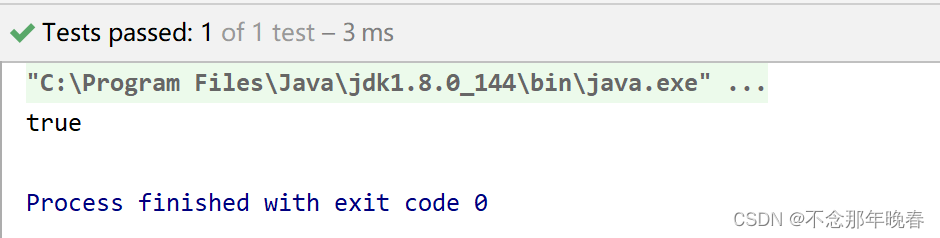
hello2方法测试效果:

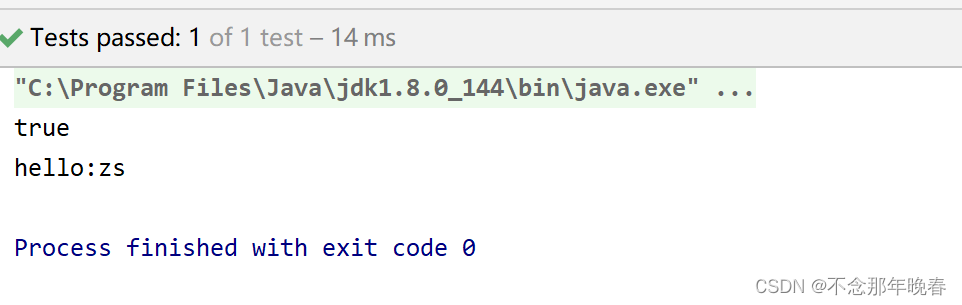
hello3方法测试效果:
三. aop自定义注解的应用
MyLog自定义注解类
- package com.xissl.annotation.aop;
- import java.lang.annotation.ElementType;
- import java.lang.annotation.Retention;
- import java.lang.annotation.RetentionPolicy;
- import java.lang.annotation.Target;
- @Target(ElementType.METHOD)
- @Retention(RetentionPolicy.RUNTIME)
- public @interface MyLog {
- String desc();
- }
MyLogAspect切面类
- package com.xissl.aspect;
- import com.xissl.annotation.aop.MyLog;
- import org.aspectj.lang.JoinPoint;
- import org.aspectj.lang.annotation.Aspect;
- import org.aspectj.lang.annotation.Before;
- import org.aspectj.lang.annotation.Pointcut;
- import org.aspectj.lang.reflect.MethodSignature;
- import org.slf4j.Logger;
- import org.slf4j.LoggerFactory;
- import org.springframework.stereotype.Component;
- @Component
- @Aspect
- public class MyLogAspect {
- private static final Logger logger = LoggerFactory.getLogger(MyLogAspect.class);
- /**
- * 只要用到了com.javaxl.p2.annotation.springAop.MyLog这个注解的,就是目标类
- */
- @Pointcut("@annotation(com.xissl.annotation.aop.MyLog)")
- private void MyValid() {
- }
- @Before("MyValid()")
- public void before(JoinPoint joinPoint) {
- MethodSignature signature = (MethodSignature) joinPoint.getSignature();
- logger.debug("[" + signature.getName() + " : start.....]");
- System.out.println("[" + signature.getName() + " : start.....]");
- MyLog myLog = signature.getMethod().getAnnotation(MyLog.class);
- logger.debug("【目标对象方法被调用时候产生的日志,记录到日志表中】:"+myLog.desc());
- System.out.println("【目标对象方法被调用时候产生的日志,记录到日志表中】:" + myLog.desc());
- }
- }
controller层
- package com.xissl.web;
- import com.xissl.annotation.aop.MyLog;
- import org.springframework.stereotype.Component;
- import org.springframework.stereotype.Controller;
- import org.springframework.web.bind.annotation.RequestMapping;
- @Controller
- public class LogController {
- @RequestMapping("/mylog")
- @MyLog(desc = "这是结合spring aop知识,讲解自定义注解应用的一个案例")
- public void testLogAspect(){
- System.out.println("这里随便来点啥");
- }
- }
测试结果:

-
相关阅读:
React Native Sectionlist item移除动画
Linux aarch64交叉编译之 Google filament引擎
王道数据结构C语言双链表基本操作实现
别再只会用折线图饼图了,我找到更好用的这5种图表,95%的人不会
【Ubuntu系统重启以后串口驱动丢失的问题】
如何使用PowerShell脚本进行数字签名?
golang 结合 cobra 使用 chatgpt qdrant 实现 ai知识库 cli
损失函数和评估函数
JavaScript中的深拷贝和浅拷贝
前端开发:Mac电脑修改hosts文件的方法
- 原文地址:https://blog.csdn.net/lijie1025/article/details/132887974
