-
LinkedList源码分析
概述
LinkedList也是我们经常使用的集合,本文就LinkedList的几个主要方法展开介绍,并结合几个图片来介绍几个重要操作。
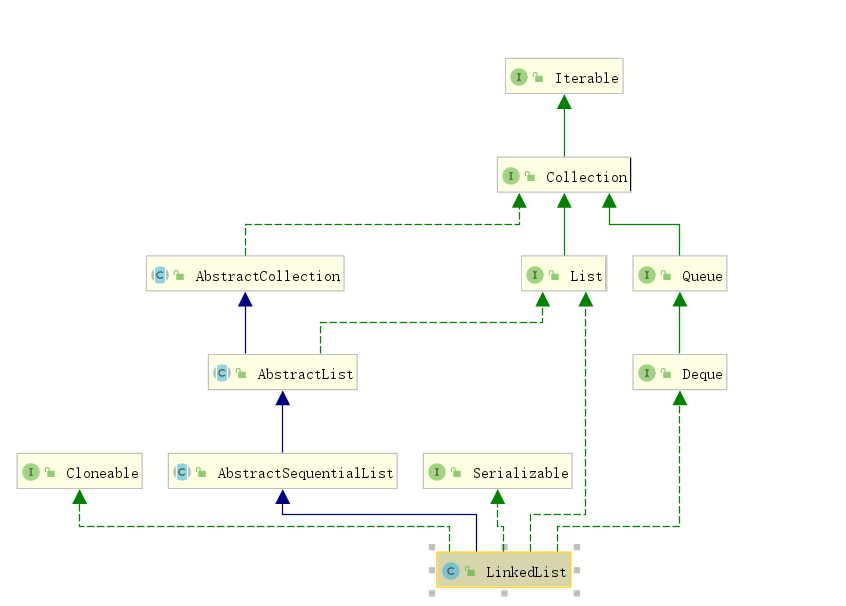
基础属性
transient int size = 0; //节点数量 /** * Pointer to first node. * Invariant: (first == null && last == null) || * (first.prev == null && first.item != null) */ transient Nodefirst; //第一个节点(头节点) /** * Pointer to last node. * Invariant: (first == null && last == null) || * (last.next == null && last.item != null) */ transient Node last;//最后一个节点(尾节点) //Node的数据结构 private static class Node { E item; //存放的对象 Node next; //下一个节点 Node prev; //上一个节点 Node(Node prev, E element, Node next) { this.item = element; this.next = next; this.prev = prev; } } - 1
- 2
- 3
- 4
- 5
- 6
- 7
- 8
- 9
- 10
- 11
- 12
- 13
- 14
- 15
- 16
- 17
- 18
- 19
- 20
- 21
- 22
- 23
- 24
- 25
- 26
- 27
- 28
基本数据结构图如下:

add方法
public boolean add(E e) { //调用linkLast方法,将节点添加到尾部 linkLast(e); return true; } //在index位置插入节点, 节点值为element public void add(int index, E element) { //校验index是否越界 checkPositionIndex(index); //如果索引为size,即将element插 入链表尾部 if (index == size) //调用linkLast将节点插入链表尾部 linkLast(element); //否则,将element插入原index位置节点的前面, //即:将element插入index位置,将原index位置节点移到index+1的位置 else //调用linkBefore插入index位置 linkBefore(element, node(index)); }- 1
- 2
- 3
- 4
- 5
- 6
- 7
- 8
- 9
- 10
- 11
- 12
- 13
- 14
- 15
- 16
- 17
- 18
- 19
- 20
add(E e):调用linkLast方法将元素添加到尾部(linkLast方法详解见下文)
add(int index, E element):- 检查index是否越界
- 比较index与size,如果index==size,则代表插入位置为链表尾部,调用linkLast方法(linkLast方法详解见下文),否则调用linkBefore方法(LinkBefore方法详解见下文)
get方法
public E get(int index) { //校验index是否越界 checkElementIndex(index); //根据index,调用node方法寻找目标节点,寻找目标节点的item return node(index).item; }- 1
- 2
- 3
- 4
- 5
- 6
根据index,调用node方法(见下文node方法详解)寻找目标节点,返回目标节点的item。
node方法
//根据index位置寻找node Nodenode(int index) { //如果index < size/2, 则代表index在链表的前半部分,从头结点开始遍历 if (index < (size >> 1)) { Node x = first; //从first节点遍历,直到index位置 for (int i = 0; i < index; i++) x = x.next; return x; //否则,index在链表的后半部分,从尾节点开始遍历 } else { Node x = last; //从last节 点遍历,直到index位 置 for (int i = size - 1; i > index; i--) x = x.prev; return x; } } - 1
- 2
- 3
- 4
- 5
- 6
- 7
- 8
- 9
- 10
- 11
- 12
- 13
- 14
- 15
- 16
- 17
- 18
如果index在链表的前半部,则从头节点开始遍历;否则从尾节点开始遍历。
set方法
//替换index位置节点的值为element public E set(int index, E element) { //检查index是否越界 checkElementIndex(index); //根据index, 调用node方法寻找到目标节点 Nodex = node(index); //节点的原值 E oldVal = x.item; //将节点的item属性替换为element x.item = element; //返回节点原值 return oldVal; } - 1
- 2
- 3
- 4
- 5
- 6
- 7
- 8
- 9
- 10
- 11
- 12
- 13
检查index是否越界
调用node方法寻找目标节点(见上文node方法详解)
将目标节点的item属性设为elementremove方法
public boolean remove(Object o) { //如果o为空,则遍历链表寻找item属性为空的节点 if (o == null) { for (Nodex = first; x != null; x = x.next) { //如果目标节点存在 if (x.item == null) { //则调用unlink方法将该节点移除 unlink(x); return true; } } //如果o不为空, 则遍历链表寻找item属性跟o相同的节点 } else { for (Node x = first; x != null; x = x.next) { //如果目标节点存在 if (o.equals(x.item)) { //则调用unlink方法将该节点移除 unlink(x); return true; } } } return false; } //移除index位置的节点 public E remove(int index) { //检查index是否越界 checkElementIndex(index); //移除index位置的节点 return unlink(node(index)); } - 1
- 2
- 3
- 4
- 5
- 6
- 7
- 8
- 9
- 10
- 11
- 12
- 13
- 14
- 15
- 16
- 17
- 18
- 19
- 20
- 21
- 22
- 23
- 24
- 25
- 26
- 27
- 28
- 29
- 30
- 31
- 32
remove(Object o):
- 判断o是否为null,如果o为null,则遍历链表寻找item属性为空的节点,并调用unlink方法将该节点移除(unlink方法详解见下文)
- 如果o不为null, 则遍历链表寻找item属性跟o相同的节点,并调用unlink方法将该节点移除(unlink方法详解见下文)
remove(int index):
- 检查index是否越界
- 调用unlink方法,移除index位置的节点(unlink方法详解见下文)
clear方法
//清除链表的所有节点 public void clear() { // Clearing all of the links between nodes is "unnecessary", but: // - helps a generational GC if the discarded nodes inhabit // more than one generation // - is sure to free memory even if there is a reachable Iterator //从头节点开始遍历,将所有节点的属性清空 for (Nodex = first; x != null; ) { Node next = x.next; x.item = null; x.next = null; x.prev = null; x = next; } //将头节点和尾节点设置为null first = last = null; //size清零 size = 0; modCount++; } - 1
- 2
- 3
- 4
- 5
- 6
- 7
- 8
- 9
- 10
- 11
- 12
- 13
- 14
- 15
- 16
- 17
- 18
- 19
- 20
从first节点开始,遍历将所有节点的属性清空
将first节点和last节点设为nulllinkLast方法
//将e放到链表的最后一个节点 void linkLast(E e) { //拿到当前的尾节点l节点 final Nodel = last; //使用e创建一个新的节点newNode, prev属性为l节点,next 属性为null final Node newNode = new Node<>(l, e, null); //将当前尾节点设置为上面新创建的节点newNode last = newNode; //如果l节点为空则代表当前链表为空,将newNode设置为头结点 if (l == null) first = newNode; //否则将l节点的next属性设置为newtNode else l.next = newNode; size++; modCount++; } - 1
- 2
- 3
- 4
- 5
- 6
- 7
- 8
- 9
- 10
- 11
- 12
- 13
- 14
- 15
- 16
- 17
- 拿到当前的尾节点 l 节点
- 使用e创建一个新的节点newNode,prev属性为l节点,next属性为null
- 将当前尾节点设置为上面新创建的节点newNode
- 如果l节点为空则代表当前链表为空, 将newNode设置为头结点,否则将l节点的next属性设置为newNode
过程如图所示

linkBefore方法
// 将节点e插入节点succ前面 void linkBefore(E e, Nodesucc) { // assert succ != null; //拿到succ节点的prev节点,赋值给pred节点 final Node pred = succ.prev; //使用e创建一个新的节点newNode, 其中prev属性为pred节点,next属性为succ节点 final Node newNode = new Node<>(pred, e, succ); //将succ 节点的prev属性设置为newNode succ.prev = newNode; //如果pred节点为null,则代表succ 节点为头结点, //要把e插入succ前面,只 需将first设置为newNode if (pred == null) first = newNode; //否则将pred节点的next属性设为newNode else pred.next = newNode; size++; modCount++; } - 1
- 2
- 3
- 4
- 5
- 6
- 7
- 8
- 9
- 10
- 11
- 12
- 13
- 14
- 15
- 16
- 17
- 18
- 19
- 拿到succ节点的prev节点
- 使用e创建一个新的节点newNode,其中prev属性为pred节点,next属性为succ节点
- 将succ节点的prev属性设置为newNode
- 如果pred节点为null,则代表succ节点为头结点,要把e插入succ前面,因此将first设置为newNode,否则将pred节点的next属性设为newNode
过程如图所示

unlink方法
//移除链表上的x节点 E unlink(Nodex) { // x节点的值 final E element = x.item; // x节点的下一个节点next节点 final Node next = x.next; // x节点的上一个节点prev节点 final Node prev = x.prev; //如果prev为空, 则代表x节点为头结点,则将first指向next即可 if (prev == null) { first = next; //否则,x节点不为头结点, } else { //将prev节点的next属性指向x节点的next属性 prev.next = next; //将x的prev属性清空 x.prev = null; } 如果next为空,则代表x节点为尾节点,则将last指向prev即可 if (next == null) { last = prev; //否则,节点不为尾节点 } else { //将next节点的prev属性指向x节点的prev属性 next.prev = prev; //将x的next属性清空 x.next = null; } //将x的值清空,以便垃圾收集器回收x对象 x.item = null; size--; modCount++; return element; } - 1
- 2
- 3
- 4
- 5
- 6
- 7
- 8
- 9
- 10
- 11
- 12
- 13
- 14
- 15
- 16
- 17
- 18
- 19
- 20
- 21
- 22
- 23
- 24
- 25
- 26
- 27
- 28
- 29
- 30
- 31
- 32
- 33
- 34
- 35
- 定义element为x节点的值,next为x节点的下一个节点,prev为x节点的上一个节点
- 如果prev为空,则代表x节点为头结点,则将first指向next即可;否则,x节点不为头结点,将prev节点的next属性指向x节点的next属性,并将x的prev属性清空
- 如果next为空,则代表x节点为尾节点,则将last指向prev即可;否则,x节点不为尾节点,将next节点的prev属性指向x节点的prev属性,并将x的next属性清空
- 将x的item属性清空,以便垃圾收集器回收x对象
过程如图所示

来自:LinkedList详解
-
相关阅读:
Git GUI使用笔记
1016 Phone Bills
js获取blob格式的json对象
day008--mysql中的字符串函数
防御安全第四次作业
【毕业设计】后端实现——设计数据库并存储数据
第27次CCF CSP认证【何以包邮?】
在Ubuntu系统下搭建TDengine集群
java .jks证书在php中的使用
数据可视化
- 原文地址:https://blog.csdn.net/liufang_imei/article/details/132712472