-
GoLang之iface 和 eface 的区别是什么?
GoLang之iface 和 eface 的区别是什么?
iface和eface都是 Go 中描述接口的底层结构体,区别在于iface描述的接口包含方法,而eface则是不包含任何方法的空接口:interface{}。从源码层面看一下:
type iface struct { tab *itab data unsafe.Pointer } type itab struct { inter *interfacetype _type *_type link *itab hash uint32 // copy of _type.hash. Used for type switches. bad bool // type does not implement interface inhash bool // has this itab been added to hash? unused [2]byte fun [1]uintptr // variable sized }iface内部维护两个指针,tab指向一个itab实体, 它表示接口的类型以及赋给这个接口的实体类型。data则指向接口具体的值,一般而言是一个指向堆内存的指针。再来仔细看一下 itab 结构体:_type 字段描述了实体的类型,包括内存对齐方式,大小等;inter 字段则描述了接口的类型。fun 字段放置和接口方法对应的具体数据类型的方法地址,实现接口调用方法的动态分派,一般在每次给接口赋值发生转换时会更新此表,或者直接拿缓存的 itab。
这里只会列出实体类型和接口相关的方法,实体类型的其他方法并不会出现在这里。如果你学过 C++ 的话,这里可以类比虚函数的概念。
另外,你可能会觉得奇怪,为什么 fun 数组的大小为 1,要是接口定义了多个方法可怎么办?实际上,这里存储的是第一个方法的函数指针,如果有更多的方法,在它之后的内存空间里继续存储。从汇编角度来看,通过增加地址就能获取到这些函数指针,没什么影响。顺便提一句,这些方法是按照函数名称的字典序进行排列的。
再看一下
interfacetype类型,它描述的是接口的类型:type interfacetype struct { typ _type pkgpath name mhdr []imethod }可以看到,它包装了
_type类型,_type实际上是描述 Go 语言中各种数据类型的结构体。我们注意到,这里还包含一个mhdr字段,表示接口所定义的函数列表,pkgpath记录定义了接口的包名。这里通过一张图来看下
iface结构体的全貌: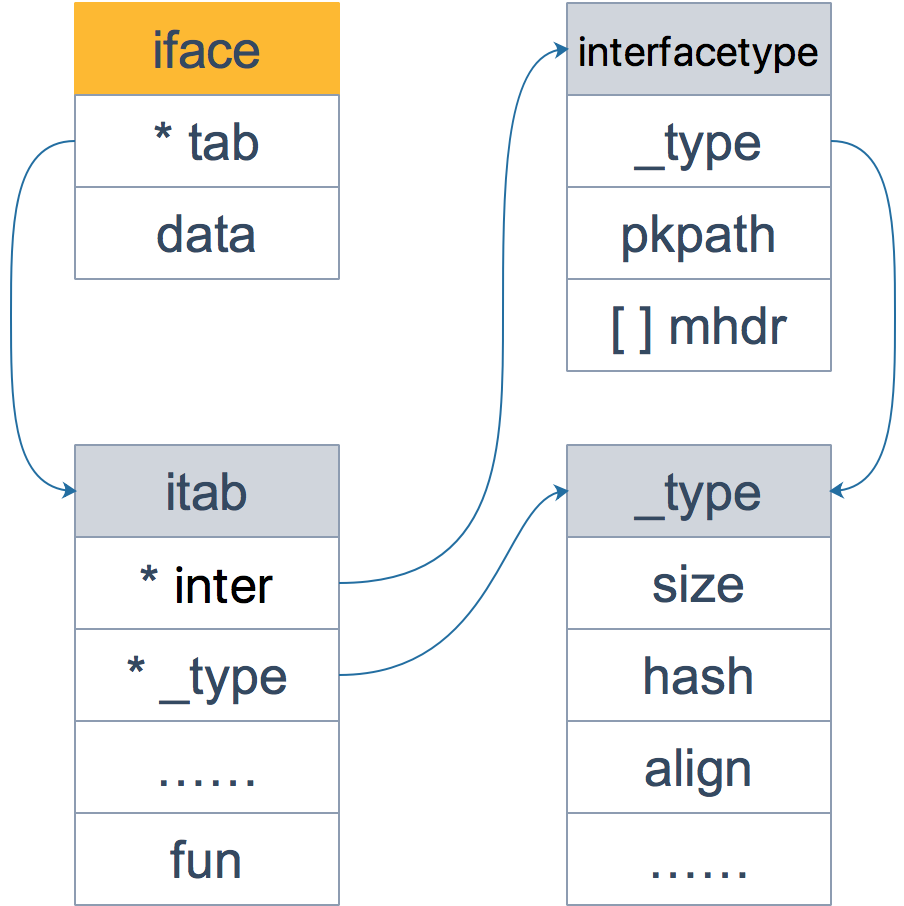
接着来看一下
eface的源码:type eface struct { _type *_type data unsafe.Pointer }相比
iface,eface就比较简单了。只维护了一个_type字段,表示空接口所承载的具体的实体类型。data描述了具体的值。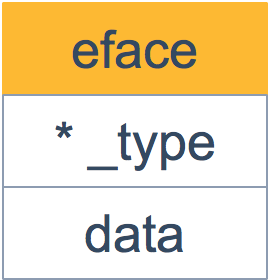
我们来看个例子:
package main

import "fmt"

func main() {
	x := 200
	var any interface{} = x
	fmt.Println(any)

	g := Gopher{"Go"}
	var c coder = g
	fmt.Println(c)
}

type coder interface {
	code()
	debug()
}

type Gopher struct {
	language string
}

func (p Gopher) code() {
	fmt.Printf("I am coding %s language\n", p.language)
}

func (p Gopher) debug() {
	fmt.Printf("I am debuging %s language\n", p.language)
}
执行命令,打印出汇编语言:
go tool compile -S ./src/main.go可以看到,main 函数里调用了两个函数:
func convT2E64(t *_type, elem unsafe.Pointer) (e eface)
func convT2I(tab *itab, elem unsafe.Pointer) (i iface)
上面两个函数的参数和
iface及eface结构体的字段是可以联系起来的:两个函数都是将参数组装一下,形成最终的接口。作为补充,我们最后再来看下
_type结构体:type _type struct { // 类型大小 size uintptr ptrdata uintptr // 类型的 hash 值 hash uint32 // 类型的 flag,和反射相关 tflag tflag // 内存对齐相关 align uint8 fieldalign uint8 // 类型的编号,有bool, slice, struct 等等等等 kind uint8 alg *typeAlg // gc 相关 gcdata *byte str nameOff ptrToThis typeOff }Go 语言各种数据类型都是在
_type字段的基础上,增加一些额外的字段来进行管理的:type arraytype struct { typ _type elem *_type slice *_type len uintptr } type chantype struct { typ _type elem *_type dir uintptr } type slicetype struct { typ _type elem *_type } type structtype struct { typ _type pkgPath name fields []structfield }这些数据类型的结构体定义,是反射实现的基础。
-
相关阅读:
Servlet 综合案例:表白墙
软考中级系统集成项目管理工程师自学好不好过,怎么备考,给点经验
Zookeeper学习二集群搭建
《大数据项目实战之搜索引擎用户行为分析》
【c++】Lambda表达式
倾斜摄影技术构建图扑 WebGIS 智慧展馆
ElementUI浅尝辄止29:Breadcrumb 面包屑
linux 性能分析工具perf
【QT】capture.obj:-1: error: LNK2019: 无法解析的外部符号 __imp_htons(解决方法)
SpringMVC:整合SSM
- 原文地址:https://blog.csdn.net/qq_53267860/article/details/127101278