-
C语言高级教程-C语言数组(二)
C语言高级教程-C语言数组(二)

本文的编译环境
本文的编译环境使用的是集成开发环境:Visual Studio 2019

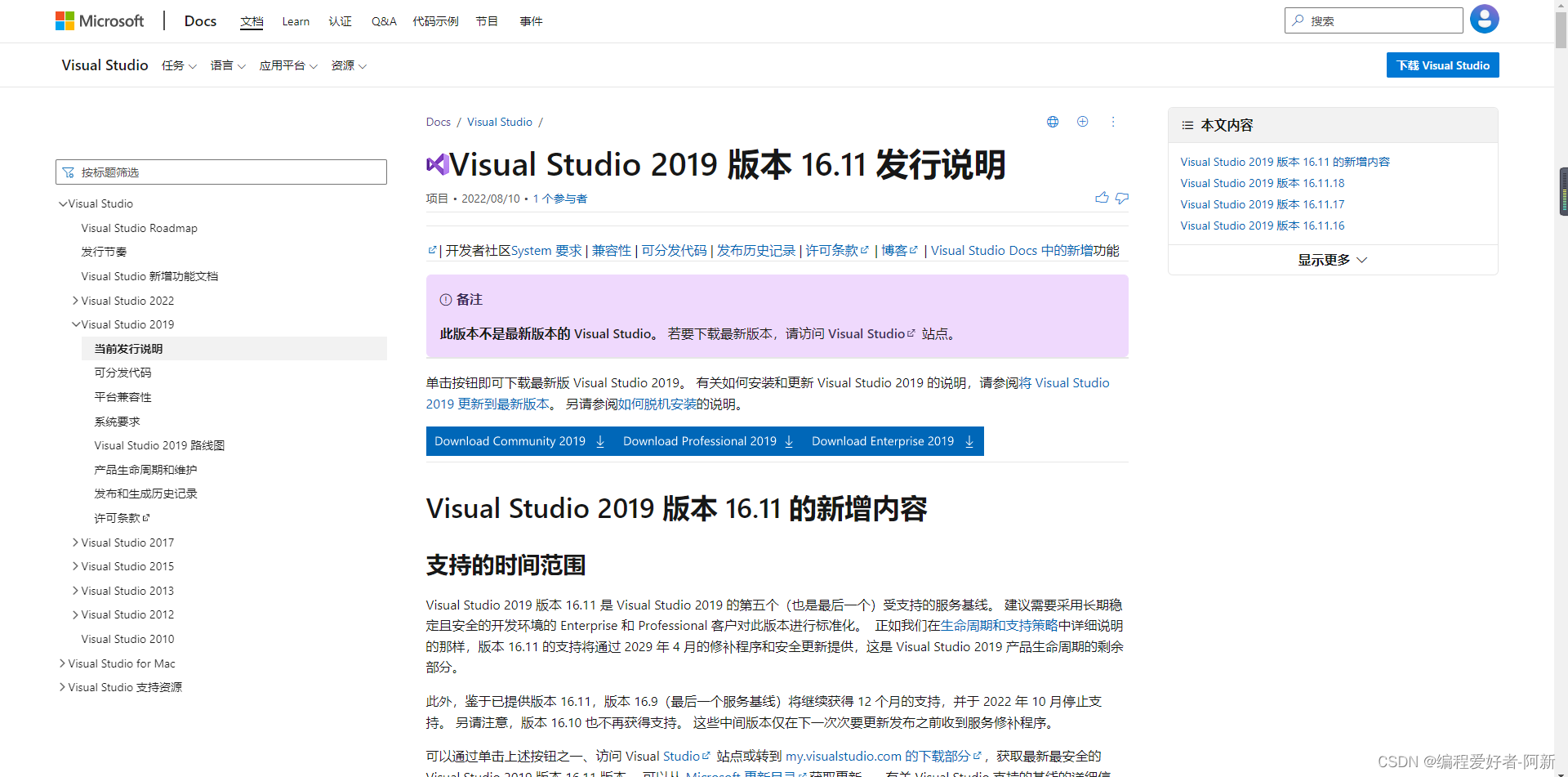
Visual Studio 2019官网链接如下
Visual Studio 2019集成的开发环境的特点有
- Visual Studio 2019默认安装Live Share代码协作服务。
- 帮助用户快速编写代码的新欢迎窗口、改进搜索功能、总体性能改进。
- Visual Studio IntelliCode AI帮助。
- 更好的Python虚拟和Conda支持。
- 以及对包括WinForms和WPF在内的.NET Core 3.0项目支持等 。
一、前文:C语言数组(一)的链接
在C语言数组(一)的教程中,简单的介绍了如下的几点
- 介绍如何在C语言程序中使用数组。
- 后在编写程序使用数组时,如何通过一个名称来引用一组数值。
- 通过程序实例来掌握了C语言一维数组的定义,使用方法。
C语言数组(一)的文章链接如下所示
二、C语言数组的寻址
寻址运算符&输出其操作数的内存地址。
-
&:它广泛用于scanf函数。
-
它放在存储输入的变量名称之前,scanf()函 数就可以利用这个变量的地址,允许将键盘输入的数据存入变量。
-
只把这个变量名称用作函数的参数,函数就可以使用变量存储的值。
-
而把寻址运算符放在变量名称之前,函数就可以利用这个变量的地址。
2.1 使用寻址运算符"&"
下面的程序输出一些变量的地址
#define _CRT_SECURE_NO_WARNINGS #include "Main.h" int main() { system("color 3E"); // Define some integer variables long a = 1L; long b = 2L; long c = 3L; // Define some floating-point variables double d = 4.0; double e = 5.0; double f = 6.0; printf("A variable of type long occupies %u bytes.", sizeof(long)); printf("\nHere are the addresses of some variables of type long:"); printf("\nThe address of a is: %p The address of b is: %p", &a, &b); printf("\nThe address of c is: %p", &c); printf("\n\nA variable of type double occupies %u bytes.", sizeof(double)); printf("\nHere are the addresses of some variables of type double:"); printf("\nThe address of d is: %p The address of e is: %p", &d, &e); printf("\nThe address of f is: %p\n", &f); system("pause"); return 0; }- 1
- 2
- 3
- 4
- 5
- 6
- 7
- 8
- 9
- 10
- 11
- 12
- 13
- 14
- 15
- 16
- 17
- 18
- 19
- 20
- 21
- 22
- 23
- 24
- 25
- 26
- 27
- 28
- 29
- 30
按F5进行编译,运行结果如下所示
A variable of type long occupies 4 bytes. Here are the addresses of some variables of type long: The address of a is: 00EFFC60 The address of b is: 00EFFC54 The address of c is: 00EFFC48 A variable of type double occupies 8 bytes. Here are the addresses of some variables of type double: The address of d is: 00EFFC38 The address of e is: 00EFFC28 The address of f is: 00EFFC18 请按任意键继续. . .- 1
- 2
- 3
- 4
- 5
- 6
- 7
- 8
- 9
- 10

声明3个long类型的变量和3个double类型的变量
// Define some integer variables long a = 1L; long b = 2L; long c = 3L; // Define some floating-point variables double d = 4.0; double e = 5.0; double f = 6.0;- 1
- 2
- 3
- 4
- 5
- 6
- 7
- 8
- 9
2.2 输出变量地址的格式
下来输出long变量占用的字节数,跟着输出这3个变量的地址
printf("A variable of type long occupies %u bytes.", sizeof(long)); printf("\nHere are the addresses of some variables of type long:"); printf("\nThe address of a is: %p The address of b is: %p", &a, &b); printf("\nThe address of c is: %p", &c);- 1
- 2
- 3
- 4
- 使用%u显示sizeof 生成的值,因为它是无符号的整数。
- 使用一个新的格式说明符%p,来输出变量的地址。
- 这个格式说明符指定输出一个内存地址,其值为十六进制。内存地址一般是32位或64位,地址的大小决定了可以引用的最大内存量。
输出double变量占用的字节数,接着输出这3个变量的地址
printf("\n\nA variable of type double occupies %u bytes.", sizeof(double)); printf("\nHere are the addresses of some variables of type double:"); printf("\nThe address of d is: %p The address of e is: %p", &d, &e); printf("\nThe address of f is: %p\n", &f);- 1
- 2
- 3
- 4
-
事实上,程序本身不如输出那么有趣。
-
看看显示出来的地址,地址值逐渐变小,是成“等差排列”,如下图所示。

-
在本例中,地址b比a低4,c比b低4。这是因为每个long类型的变量占用4个字节。
-
变量d、e、f也是如此,但它们的差是8。这是因为类型double的值用8个字节来存储。
三、输出数组里面变量的地址
3.1 输入数组里面存储的数据变量的地址
下面的程序将输出数组里面的10变量的地址
int arrays[10]; srand(time(NULL)); for (int i = 0; i < 10; i++) { arrays[i] = rand() % 20 + 1; } for (int i = 0; i < 10; i++) { printf("%d of the address--> %p\n", arrays[i], &arrays[i]); } printf("\n");- 1
- 2
- 3
- 4
- 5
- 6
- 7
- 8
- 9
- 10
- 11
- 12
- 13
按F5进行编译,运行结果如下所示
18 of the address--> 010FFE58 17 of the address--> 010FFE5C 4 of the address--> 010FFE60 15 of the address--> 010FFE64 6 of the address--> 010FFE68 12 of the address--> 010FFE6C 9 of the address--> 010FFE70 3 of the address--> 010FFE74 7 of the address--> 010FFE78 13 of the address--> 010FFE7C 请按任意键继续. . .- 1
- 2
- 3
- 4
- 5
- 6
- 7
- 8
- 9
- 10
- 11
- 12
- 13

- 有地址的变化规律可以看出int类型的地址占四个字节。
- 数组中存储的数据地址是呈现递增关系。
3.2 “&数组名”:代表数组首地址
&数组名:是取出数组的首个(第一个)数据的地址。
增加代码如下所示printf("The array of the address is %p\n", &arrays);- 1
按F5进行编译,运行结果如下所示
13 of the address--> 006FFAC8 18 of the address--> 006FFACC 9 of the address--> 006FFAD0 18 of the address--> 006FFAD4 19 of the address--> 006FFAD8 16 of the address--> 006FFADC 17 of the address--> 006FFAE0 7 of the address--> 006FFAE4 17 of the address--> 006FFAE8 17 of the address--> 006FFAEC The array of the address is 006FFAC8 请按任意键继续. . .- 1
- 2
- 3
- 4
- 5
- 6
- 7
- 8
- 9
- 10
- 11
- 12
- 13
- 14

- 可以看出"&数组名"就是将数组中的第一个变量的地址取出来。
四、完整程序
本文的完整程序如下所示
4.1 Main.h 文件程序
#pragma once #include#include #include - 1
- 2
- 3
- 4
- 5
- 6
4.2 Main.c 文件程序
#define _CRT_SECURE_NO_WARNINGS #include "Main.h" int main() { system("color 3E"); /* Define some integer variables long a = 1L; long b = 2L; long c = 3L; Define some floating-point variables double d = 4.0; double e = 5.0; double f = 6.0; int arrays[10]; printf("A variable of type long occupies %u bytes.", sizeof(long)); printf("\nHere are the addresses of some variables of type long:"); printf("\nThe address of a is: %p The address of b is: %p", &a, &b); printf("\nThe address of c is: %p", &c); printf("\n\nA variable of type double occupies %u bytes.", sizeof(double)); printf("\nHere are the addresses of some variables of type double:"); printf("\nThe address of d is: %p The address of e is: %p", &d, &e); printf("\nThe address of f is: %p\n", &f);*/ int arrays[10]; srand(time(NULL)); for (int i = 0; i < 10; i++) { arrays[i] = rand() % 20 + 1; } for (int i = 0; i < 10; i++) { printf("%d of the address--> %p\n", arrays[i], &arrays[i]); } printf("\n"); printf("The array of the address is %p\n", &arrays); system("pause"); return 0; }- 1
- 2
- 3
- 4
- 5
- 6
- 7
- 8
- 9
- 10
- 11
- 12
- 13
- 14
- 15
- 16
- 17
- 18
- 19
- 20
- 21
- 22
- 23
- 24
- 25
- 26
- 27
- 28
- 29
- 30
- 31
- 32
- 33
- 34
- 35
- 36
- 37
- 38
- 39
- 40
- 41
- 42
- 43
- 44
- 45
- 46
- 47
- 48
- 49
- 50
五、总结
- 本文主要介绍了C语言高级编程的数组的寻址方法。
- 通过几个实例程序来掌握C语言数组寻址的应用。

本文到这里就结束啦。
希望本文的C语言数组寻址教程能对你有所帮助。 -
相关阅读:
TensorFlow.NET--数据类型与张量详解
java关键字
(十一)React Ant Design Pro + .Net5 WebApi:后端环境搭建-IdentityServer4(三)持久化
每日一题 2258. 逃离火灾(手撕困难!!!)
Windows下PostgreSQL编译调试笔记
Centos7 gcc/g++安装以及运行程序
Git_回退到上一次commit与pull
Selenium 模拟操作与 pytest 断言的结合使用
中国三氧化二砷行业研究与未来预测报告(2022版)
java计算机毕业设计教学质量评价系统源程序+mysql+系统+lw文档+远程调试
- 原文地址:https://blog.csdn.net/m0_47419053/article/details/126608512