-
Spring基于Annotation装配Bean
在 Spring 中,尽管使用 XML 配置文件可以实现 Bean 的装配工作,但如果应用中 Bean 的数量较多,会导致 XML 配置文件过于臃肿,从而给维护和升级带来一定的困难。
Java 从 JDK 5.0 以后,提供了 Annotation(注解)功能,Spring 也提供了对 Annotation 技术的全面支持。Spring3 中定义了一系列的 Annotation(注解),常用的注解如下。1)@Component
可以使用此注解描述 Spring 中的 Bean,但它是一个泛化的概念,仅仅表示一个组件(Bean),并且可以作用在任何层次。使用时只需将该注解标注在相应类上即可。
2)@Repository
用于将数据访问层(DAO层)的类标识为 Spring 中的 Bean,其功能与 @Component 相同。
3)@Service
通常作用在业务层(Service 层),用于将业务层的类标识为 Spring 中的 Bean,其功能与 @Component 相同。
4)@Controller
通常作用在控制层(如 Struts2 的 Action),用于将控制层的类标识为 Spring 中的 Bean,其功能与 @Component 相同。
5)@Autowired
用于对 Bean 的属性变量、属性的 Set 方法及构造函数进行标注,配合对应的注解处理器完成 Bean 的自动配置工作。默认按照 Bean 的类型进行装配。
6)@Resource
其作用与 Autowired 一样。其区别在于 @Autowired 默认按照 Bean 类型装配,而 @Resource 默认按照 Bean 实例名称进行装配。
@Resource 中有两个重要属性:name 和 type。
Spring 将 name 属性解析为 Bean 实例名称,type 属性解析为 Bean 实例类型。如果指定 name 属性,则按实例名称进行装配;如果指定 type 属性,则按 Bean 类型进行装配。
如果都不指定,则先按 Bean 实例名称装配,如果不能匹配,则再按照 Bean 类型进行装配;如果都无法匹配,则抛出 NoSuchBeanDefinitionException 异常。7)@Qualifier
与 @Autowired 注解配合使用,会将默认的按 Bean 类型装配修改为按 Bean 的实例名称装配,Bean 的实例名称由 @Qualifier 注解的参数指定。
1. 创建 DAO 层接口
在 src 目录下创建一个名为 com.mengma.annotation 的包,在该包下创建一个名为 PersonDao 的接口,并添加一个 add() 方法,如下所示。
- package com.mengma.annotation;
- public interface PersonDao {
- public void add();
- }
2. 创建 DAO 层接口的实现类
在 com.mengma.annotation 包下创建 PersonDao 接口的实现类 PersonDaoImpl,编辑后如下所示。
- package com.mengma.annotation;
- import org.springframework.stereotype.Repository;
- @Repository("personDao")
- public class PersonDaoImpl implements PersonDao {
- @Override
- public void add() {
- System.out.println("Dao层的add()方法执行了...");
- }
- }
上述代码中,首先使用 @Repository 注解将 PersonDaoImpl 类标识为 Spring 中的 Bean,其写法相当于配置文件中
的书写。然后在 add() 方法中输出一句话,用于验证是否成功调用了该方法。 3. 创建 Service 层接口
在 com.mengma.annotation 包下创建一个名为 PersonService 的接口,并添加一个 add() 方法,如下所示。
- package com.mengma.annotation;
- public interface PersonService {
- public void add();
- }
4. 创建 Service 层接口的实现类
在 com.mengma.annotation 包下创建 PersonService 接口的实现类 PersonServiceImpl,编辑后如下所示。
- package com.mengma.annotation;
- import javax.annotation.Resource;
- import org.springframework.stereotype.Service;
- @Service("personService")
- public class PersonServiceImpl implements PersonService {
- @Resource(name = "personDao")
- private PersonDao personDao;
- public PersonDao getPersonDao() {
- return personDao;
- }
- @Override
- public void add() {
- personDao.add();// 调用personDao中的add()方法
- System.out.println("Service层的add()方法执行了...");
- }
- }
上述代码中,首先使用 @Service 注解将 PersonServiceImpl 类标识为 Spring 中的 Bean,其写法相当于配置文件中
的书写。
然后使用 @Resource 注解标注在属性 personDao 上(也可标注在 personDao 的 setPersonDao() 方法上),这相当于配置文件中的写法。最后在该类的 add() 方法中调用 personDao 中的 add() 方法,并输出一句话。 5. 创建 Action
在 com.mengma.annotation 包下创建一个名为 PersonAction 的类,编辑后如下所示。
- package com.mengma.annotation;
- import javax.annotation.Resource;
- import org.springframework.stereotype.Controller;
- @Controller("personAction")
- public class PersonAction {
- @Resource(name = "personService")
- private PersonService personService;
- public PersonService getPersonService() {
- return personService;
- }
- public void add() {
- personService.add(); // 调用personService中的add()方法
- System.out.println("Action层的add()方法执行了...");
- }
- }
上述代码中,首先使用 @Controller 注解标注 PersonAction 类,其写法相当于在配置文件中编写
。
然后使用了 @Resource 注解标注在 personService 上,这相当于在配置文件内编写。
最后在其 add() 方法中调用了 personService 中的 add() 方法,并输出一句话。6. 创建 Spring 配置文件
在 com.mengma.annotation 包下创建一个名为 applicationContext.xml 的配置文件,如下所示。
- <beans xmlns="http://www.springframework.org/schema/beans"
- xmlns:xsi="http://www.w3.org/2001/XMLSchema-instance"
- xmlns:aop="http://www.springframework.org/schema/aop"
- xmlns:p="http://www.springframework.org/schema/p"
- xmlns:tx="http://www.springframework.org/schema/tx"
- xmlns:context="http://www.springframework.org/schema/context"
- xsi:schemaLocation="
- http://www.springframework.org/schema/beans
- http://www.springframework.org/schema/beans/spring-beans-2.5.xsd
- http://www.springframework.org/schema/aop
- http://www.springframework.org/schema/aop/spring-aop-2.5.xsd
- http://www.springframework.org/schema/tx
- http://www.springframework.org/schema/tx/spring-tx-2.5.xsd
- http://www.springframework.org/schema/context
- http://www.springframework.org/schema/context/spring-context.xsd">
- <context:component-scan base-package="com.mengma.annotation"/>
- beans>
与之前的配置文件相比,上述代码的
元素中增加了第 7 行、第 15 行和第 16 行中包含有 context 的代码,然后在第 18 行代码中,使用 context 命名空间的 component-scan 元素进行注解的扫描,其 base-package 属性用于通知 spring 所需要扫描的目录。 7. 创建测试类
在 com.mengma.annotation 包下创建一个名为 AnnotationTest 的测试类,编辑后如下所示。
- package com.mengma.annotation;
- import org.junit.Test;
- import org.springframework.context.ApplicationContext;
- import org.springframework.context.support.ClassPathXmlApplicationContext;
- public class AnnotationTest {
- @Test
- public void test() {
- // 定义Spring配置文件路径
- String xmlPath = "com/mengma/annotation/applicationContext.xml";
- // 初始化Spring容器,加载配置文件,并对bean进行实例化
- ApplicationContext applicationContext = new ClassPathXmlApplicationContext(
- xmlPath);
- // 获得personAction实例
- PersonAction personAction = (PersonAction) applicationContext
- .getBean("personAction");
- // 调用personAction中的add()方法
- personAction.add();
- }
- }
上述代码中,首先通过加载配置文件并获取 personAction 的实例,然后调用该实例的 add() 方法。
8. 运行程序并查看结果
使用 JUnit 测试运行 test() 方法,运行成功后,输出结果如图 1 所示。
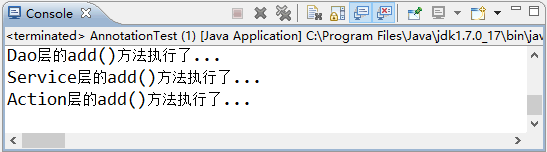
图 1 输出结果
从图 1 的输出结果中可以看出,DAO 层、Service 层和 Action 层的 add() 方法都成功输出了结果。由此可知,使用 Annotation 装配 Bean 的方式已经成功实现了。 -
相关阅读:
eyb:SpringSecurity:Oauth2协议
TrackBar控件
嵌入式系统开发笔记88:认识51微控制器系统架构
windows编程-线程
实验:使用apache + yum实现自制yum仓库
ToBeWritten之记录狩猎过程
6月2(信息差)
C++ 虚函数表和虚函数表指针的创建时机
springboot web 03 多环境配置
Kafka生产者和消费者基本操作
- 原文地址:https://blog.csdn.net/unbelievevc/article/details/126296818
