java多线程

并发与并行
并发:在操作系统中,是指一个时间段中有几个程序都处于已启动运行到运行完毕之间,且这几个程序都是在同一个处理机上运行,但任一个时刻点上只有一个程序在处理机上运行
并行:一组程序按独立异步的速度执行,无论从微观还是宏观,程序都是一起执行的。
对比:并发是指:在同一个时间段内,两个或多个程序执行,有时间上的重叠(宏观上是同时,微观上仍是顺序执行)
进程与线程
进程(Process)是计算机中的程序关于某数据集合上的一次运行活动,是系统进行资源分配和调度的基本单位,是操作系统结构的基础
线程(英语:thread)是操作系统能够进行运算调度的最小单位。它被包含在进程之中,是进程中的实际运作单位。一条线程指的是进程中一个单一顺序的控制流,一个进程中可以并发多个线程,每条线程并行执行不同的任务。

java的线程
java多线程机制
多线程是指一个应用程序同时存在几个执行体,按照几条不同的执行线索共同工作的情况。java多线程机制,它使得编程人员可以很方便的开发出具有多线程功能、能同时处理多个任务的强大应用程序。java内置对多线程的支持,java虚拟机可以快速的从一个线程切换到另一个线程。这些线程的轮流执行使得每个线程都有机会使用cpu资源。
java的主线程
每个java程序都含有一个线程,那就是主线程(main线程)。Java应用程序都是从主类main方法执行的,当jvm加载代码,发现卖弄方法之后,就会启动一个线程,这个线程就是主线程,负责执行main方法。如果在主线程里面创建其他线程,就会在主线程和其他线程来回切换,直到其他所有线程结束才会结束主线程。

线程的生命周期

-
运行
线程创建之后只占有了内存资源,在JVM管理的线程中并没有刚刚创建的这个线程,只有这个线程调用start()方法后,JVM才知道有一个新线程进入队列等待cpu调用。 -
中断原因(4种)
- jVM把cpu资源切换给其他线程。
- 线程使用cpu期间,执行了sleep(int millsecond)方法,使当前线程进入休眠状态,调用该方法之后会立即让出cpu,经过参数millsecond指定的毫秒后,重新加入队列等待cpu。
-使用cpu期间,执行了wait()方法,使得当前进程进入等待状态,这个等待个sleep()不同,这个等待需要其他线程调用notify()方法唤醒该线程,此线程才会重新进入队列,等待cpu。
线程使用cpu期间,执行了某个操作进入阻塞状态,例如(读、写、打印等),只有这些造成阻塞的原因完成,这个线程才会进入队列,等待cpu。
创建线程(3种)
继承Thread类实现线程创建
- 一种是创建一个类继承Thread类,这种继承可以重复使用!
- 一种是直接使用匿名内部类继承,这种类型只能使用一次,每次使用都要重新创建
- 不论哪种都需要重写run()方法,并且在定义之后调用start()方法,把这个线程调入线程队列等待调用。
下面我们使用匿名内部类创建一个打印100以内的奇数线程,使用类继承Thread类打印100内的偶数线程。
复制代码
- 1
- 2
- 3
- 4
- 5
- 6
- 7
- 8
- 9
- 10
- 11
- 12
- 13
- 14
- 15
- 16
- 17
- 18
- 19
- 20
- 21
- 22
- 23
- 24
- 25
- 26
- 27
- 28
- 29
- 30
- 31
- 32
- 33
- 34
- 35
package hello;
public class Hello {
public static void main(String[] args) {
Thread1 thread1 = new Thread1();
Thread thread = new Thread() {
public void run() {
for (int i = 0; i < 100; i++) {
if (i % 2 == 1) {
//打印线程名,线程名是从0开始的
System.out.println(Thread.currentThread().getName() + ":" + i);
}
}
}
};
thread1.start();
thread.start();
}
}
class Thread1 extends Thread{
public void run() {
super.run();
for(int i=0;i<100;i++){
if (i%2==0){
System.out.println(Thread.currentThread().getName()+":"+i);
}
}
}
}
方法说明
start()启动当前线程;调用当前线程的run()方法
run():需要重写Thread类中的此方法,将创建线程需要执行的操作声明在此方法中
currentThread():返回执行当前代码的线程
getName():获取当前线程的名字
setName(String name):设置当前线程的名字
yield():释放当前CPU的执行权
join():在线程a中调用线程b的join(),此时线程a就进入阻塞状态,直到线程b完全执行完之后,线程a在结束阻塞状态
sleep(int millitime):让当前线程“睡眠”指定的millitime毫秒。在指定的millitime毫秒时间内,当前进程是阻塞状态
isAlive():判断当前线程是否存活(线程执行完之前都是存活的)
实现Runnable接口
- 我们还是创建两个线程,一个打印奇数,一个打印偶数,但是有一个线程每次调用会睡眠(阻塞)10ms。
- 使用实现接口Runnable方法,必须重写run()方法。
复制代码
- 1
- 2
- 3
- 4
- 5
- 6
- 7
- 8
- 9
- 10
- 11
- 12
- 13
- 14
- 15
- 16
- 17
- 18
- 19
- 20
- 21
- 22
- 23
- 24
- 25
- 26
- 27
- 28
- 29
- 30
- 31
- 32
- 33
- 34
- 35
- 36
- 37
- 38
- 39
- 40
- 41
- 42
- 43
- 44
- 45
- 46
- 47
- 48
package hello;
public class Hello {
public static void main(String[] args) {
Thread thread = new Thread(new MyThread1());
/*
Thread thread = new Thread(new MyThread1());
就相当于 ,就是创建实现类的对象,再把这个对象用Thread()构造器的方法创建
MyThread1 myThread1 = new MyThread1();
Thread thread = new Thread(myThread1);
*/
Thread thread1 = new Thread(new MyThread2());
thread.start();
thread1.start();
}
}
class MyThread1 implements Runnable{
public void run() {
for(int i=0;i<100;i++) {
if (i % 2 == 1) {
System.out.println(Thread.currentThread().getName() + ":" + i);
try {
Thread.sleep(10);
} catch (InterruptedException e) {
e.printStackTrace();
}
}
}
}
}
class MyThread2 implements Runnable{
public void run() {
for(int i=0;i<100;i++) {
if (i % 2 == 0) {
System.out.println(Thread.currentThread().getName() + ":" + i);
}
}
}
}
开发中,优先选择实现Runnable接口的方式创建线程
原因:
实现Runnable接口的方式没有类的单继承性的局限性(一个类只能继承一个父类,继承了Thread类就不能在继承其他类了)
实现Runnable接口的方式更适合来处理多个线程之间有共享数据的情况
实现Callable接口
Runnable接口是没有返回值的 Callable
Thread类并不接受Callable对象。可以使用FutureTask类实现Runnable接口和Future
Future就是对于具体的Runnable或者Callable任务的执行结果进行取消、查询是否完成、获取结果。必要时可以通过get方法获取执行结果,该方法会阻塞直到任务返回结果。
Java的类是单继承的设计,如果采用继承Thread的方式实现多线程,则不能继承其他的类,采用接口能够更好的实现数据共享
FutureTask有两个构造函数,一个以Callable为参数,另外一个以Runnable为参数。

我理解的就是通过FutureTask把Callable变成通过Runnable接口创建的,因为FutureTask继承了Runnable接口。主要原因是Thread类不接受Callable创建,但是接受Runnable创建的线程。
复制代码
- 1
- 2
- 3
- 4
- 5
- 6
- 7
- 8
- 9
- 10
- 11
- 12
- 13
- 14
- 15
- 16
- 17
- 18
- 19
- 20
- 21
- 22
- 23
- 24
- 25
- 26
- 27
- 28
- 29
- 30
- 31
package hello;
import java.util.concurrent.Callable;
import java.util.concurrent.FutureTask;
public class Hello {
public static void main(String[] args) throws Exception {
MyThread1 myThread1 = new MyThread1();
FutureTask<Integer> futureTask = new FutureTask<>(new MyThread1());
new Thread(futureTask).start();//开启线程
System.out.println(futureTask.get());//获取返回值
}
}
class MyThread1 implements Callable<Integer> {
public Integer call() throws Exception {
int count = 0;
for (int i = 1;i<100;i++){
if (i%3==0){
count++;
}
}
return count;
}
}
线程池

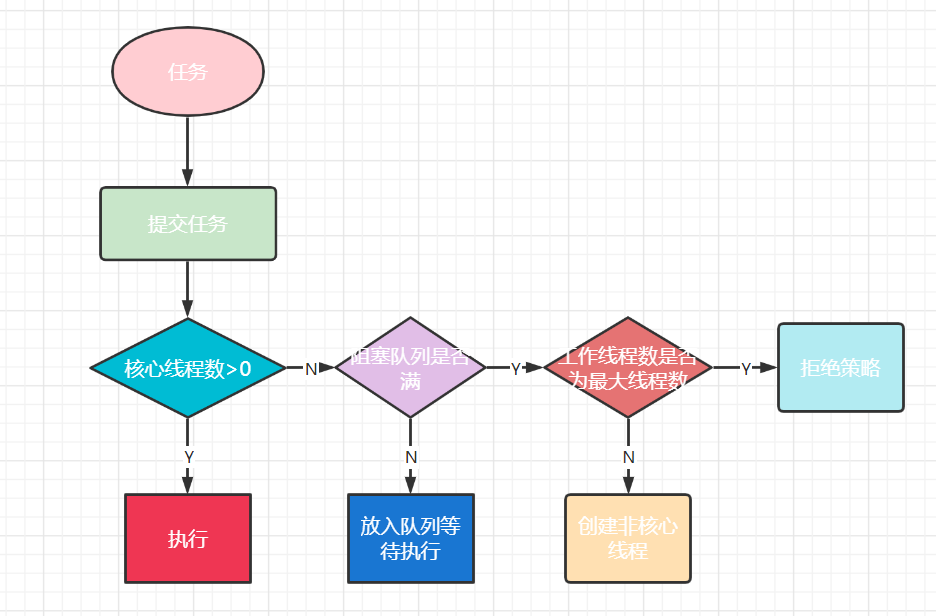
线程池的执行过程
- 实例
复制代码
- 1
- 2
- 3
- 4
- 5
- 6
- 7
- 8
- 9
- 10
- 11
- 12
- 13
- 14
- 15
- 16
- 17
- 18
- 19
- 20
- 21
- 22
- 23
- 24
- 25
- 26
- 27
- 28
- 29
- 30
- 31
- 32
- 33
- 34
- 35
- 36
- 37
- 38
- 39
package hello;
import java.util.concurrent.*;
public class Hello {
public static void main(String[] args) throws Exception {
//创建线程池
ThreadPoolExecutor threadPoolExecutor = new ThreadPoolExecutor(2, 4, 5, TimeUnit.MILLISECONDS,
new ArrayBlockingQueue<>(2),
new ThreadFactory() {
public Thread newThread(Runnable r) {
Thread thread = new Thread(r);
thread.setName("myThread");
return thread;
}
},
new ThreadPoolExecutor.AbortPolicy());
//threadPoolExecutor.submit();
threadPoolExecutor.execute(new MyThread());//提交任务
threadPoolExecutor.shutdown();//关闭线程池
}
}
class MyThread implements Runnable{
public void run() {
for (int i=0;i<10;i++){
System.out.println(i);
}
}
}