-
Java进阶(再论线程)——线程的4种创建方式 & 线程的生命周期 & 线程的3大特性 & 集合中的线程安全问题
前言
多线程作为编程语言中的难点,虽然初级程序员可能很少遇到线程相关的开发任务,但是作为程序员,持续学习和保持对编程的热爱,要求我们对于线程也需要有一定的认识。
本篇博客介绍Java中创建线程的4种方式,并进行了简单的对比;介绍了线程的生命周期,几个关键方法的作用;然后阐述了线程的三大特性,最后结合Java集合框架分析了线程安全的问题。
其他关于Java线程的文章如下:
- Java进阶(5)——创建多线程的方法extends Thread和implements Runnable的对比 & 线程池及常用的线程池
- Java进阶(6)——抢购问题中的数据不安全(非原子性问题)& Java中的synchronize和ReentrantLock锁使用 & 死锁及其产生的条件
引出
1.线程创建的方式,继承Thread类,实现Runable接口,实现Callable接口,采用线程池;
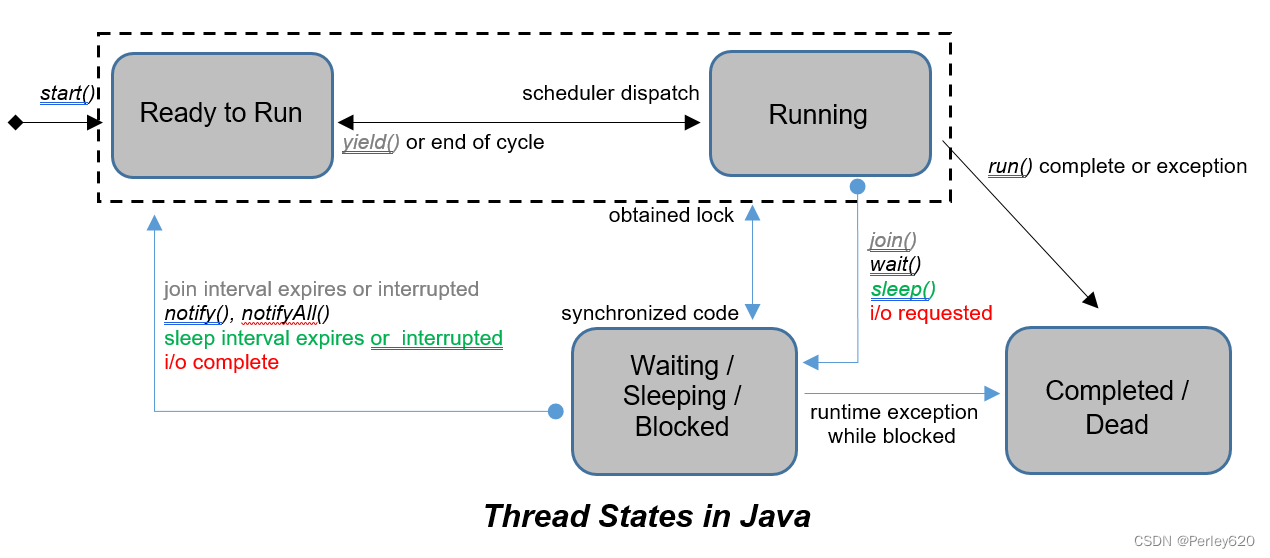
2.线程生命周期: join():运行结束再下一个, yield():暂时让出cpu的使用权,deamon():守护线程,最后结束,sleep():如果有锁,不会让出;
3.线程3大特性,原子性,可见性,有序性;
4.list集合中线程安全问题,hash算法问题;一、创建多线程的方式
1、继承Thread类


调用的流程:
- 调用start()
- 线程处于准备状态,一旦cup有闲的时间片,
- 让线程调用run()方法

package com.tianju.threadLearn; public class ThreadA extends Thread{ @Override public void run(){ System.out.println("我是线程A:"+this.getName()); } public static void main(String[] args) { ThreadA threadA = new ThreadA(); threadA.setName("线程A"); threadA.start(); // 我准备好了 String name = Thread.currentThread().getName(); System.out.println(name); // 获得当前线程的路径 String path = Thread.currentThread().getContextClassLoader().getResource("").getPath(); System.out.println(path); } }- 1
- 2
- 3
- 4
- 5
- 6
- 7
- 8
- 9
- 10
- 11
- 12
- 13
- 14
- 15
- 16
- 17
- 18
- 19
- 20
- 21
- 22
- 23
- 24
- 25
当前线程:Thread.currentThread()

2、实现Runable接口
和继承Thread相比,这个用的更多,因为Java是单继承的,只能继承一个,而可以实现多个接口,所以更加灵活

package com.tianju.threadLearn; /** * 这个常用,因为java是单继承,如果继承了extends Thread; * 就不能继续继承了; */ public class ThreadB implements Runnable{ private String name; public ThreadB(String name){ this.name = name; } @Override public void run() { for(int i =0;i<10;i++){ System.out.println("当前线程:"+this.name); try { Thread.sleep(200); } catch (InterruptedException e) { throw new RuntimeException(e); } } } public static void main(String[] args) { new Thread(new ThreadB("B")).start(); } }- 1
- 2
- 3
- 4
- 5
- 6
- 7
- 8
- 9
- 10
- 11
- 12
- 13
- 14
- 15
- 16
- 17
- 18
- 19
- 20
- 21
- 22
- 23
- 24
- 25
- 26
- 27
- 28
- 29
- 30
3、实现Callable接口

package com.tianju.threadLearn; import java.util.concurrent.Callable; import java.util.concurrent.ExecutionException; import java.util.concurrent.FutureTask; /** * Callable,可以有返回值 */ public class ThreadC implements Callable<Long> { @Override public Long call() throws Exception { long sum = 0; for (int i = 0; i < 500000; i++) { sum+=i; } return sum; } public static void main(String[] args) throws ExecutionException, InterruptedException { FutureTask<Long> threadC = new FutureTask<Long>(new ThreadC()); Thread thread = new Thread(threadC); thread.start(); Long aLong = threadC.get(); System.out.println(aLong); } }- 1
- 2
- 3
- 4
- 5
- 6
- 7
- 8
- 9
- 10
- 11
- 12
- 13
- 14
- 15
- 16
- 17
- 18
- 19
- 20
- 21
- 22
- 23
- 24
- 25
- 26
- 27
- 28
- 29
- 30
- 31


4、线程池
池化技术pool【常量池、数据连接池、线程池】

package com.tianju.threadLearn; import java.util.concurrent.ExecutorService; import java.util.concurrent.Executors; public class PoolDemo1 { public static void main(String[] args) { System.out.println("===============缓存线程池================"); ExecutorService executorService = Executors.newCachedThreadPool(); for (int i=0;i<10;i++) { executorService.execute(new Runnable() { @Override public void run() { System.out.println(Thread.currentThread()); } }); } System.out.println("===============固定线程池================"); ExecutorService executorService2 = Executors.newFixedThreadPool(1); for (int i=0;i<10;i++) { executorService2.execute(new Runnable() { @Override public void run() { System.out.println(Thread.currentThread()); } }); } } }- 1
- 2
- 3
- 4
- 5
- 6
- 7
- 8
- 9
- 10
- 11
- 12
- 13
- 14
- 15
- 16
- 17
- 18
- 19
- 20
- 21
- 22
- 23
- 24
- 25
- 26
- 27
- 28
- 29
二、线程的生命周期

join():运行结束再下一个
package com.tianju.threadLearn; public class ThreadA1 extends Thread{ static int c = 0; @Override public void run(){ for (int i = 0; i < 20; i++) { try { System.out.println(this.getName()+": "+i); sleep(300); c++; } catch (InterruptedException e) { throw new RuntimeException(e); } } } public static void main(String[] args) throws InterruptedException { ThreadA1 a = new ThreadA1(); a.setName("A"); ThreadA1 b = new ThreadA1(); b.setName("B"); a.start(); a.join(); // A运行结束,B才能开始运行 b.start(); b.join(); // 控制执行顺序 System.out.println(Thread.currentThread().getName()); System.out.println("c的结果为: "+c); } }- 1
- 2
- 3
- 4
- 5
- 6
- 7
- 8
- 9
- 10
- 11
- 12
- 13
- 14
- 15
- 16
- 17
- 18
- 19
- 20
- 21
- 22
- 23
- 24
- 25
- 26
- 27
- 28
- 29
- 30
- 31
- 32
- 33
- 34
- 35
- 36
- 37

yield():暂时让出cpu的使用权

package com.tianju.threadLearn; /** * yield,让出cpu的使用权 */ public class ThreadA2 extends Thread{ @Override public void run(){ for (int i = 0; i < 20; i++) { try { if (i%2==0){ // 让出cpu的使用权,避免一个线程一直占有cpu,防止独占cpu // 重新竞争 yield(); } System.out.println(this.getName()+": "+i); sleep(300); } catch (InterruptedException e) { throw new RuntimeException(e); } } } public static void main(String[] args) throws InterruptedException { ThreadA2 a = new ThreadA2(); a.setName("A"); ThreadA2 b = new ThreadA2(); b.setName("B"); a.start(); b.start(); System.out.println(Thread.currentThread().getName()); } }- 1
- 2
- 3
- 4
- 5
- 6
- 7
- 8
- 9
- 10
- 11
- 12
- 13
- 14
- 15
- 16
- 17
- 18
- 19
- 20
- 21
- 22
- 23
- 24
- 25
- 26
- 27
- 28
- 29
- 30
- 31
- 32
- 33
- 34
- 35
- 36
- 37
- 38
- 39
- 40
deamon():守护线程,最后结束


package com.tianju.threadLearn; /** * 守护线程 * 用户线程 * */ public class ThreadA3 extends Thread{ @Override public void run(){ while (true){ System.out.println("我是守护线程......."); try { sleep(100); } catch (InterruptedException e) { throw new RuntimeException(e); } } } public static void main(String[] args) throws InterruptedException { ThreadA3 a = new ThreadA3(); a.setName("A"); a.setDaemon(true); // 守护线程,用户线程main结束后,他就结束了 a.start(); for (int i =0;i<10;i++){ System.out.println(Thread.currentThread()+":"+i); Thread.sleep(200); } } }- 1
- 2
- 3
- 4
- 5
- 6
- 7
- 8
- 9
- 10
- 11
- 12
- 13
- 14
- 15
- 16
- 17
- 18
- 19
- 20
- 21
- 22
- 23
- 24
- 25
- 26
- 27
- 28
- 29
- 30
- 31
- 32
- 33
- 34
- 35
- 36

sleep():如果有锁,不会让出

package com.tianju.threadLearn; public class ThreadSleep extends Thread{ @Override public void run(){ for (int i=0;i<10;i++){ System.out.println("我是线程A:"+this.getName()); try { sleep(200); // 不会让出锁 } catch (InterruptedException e) { throw new RuntimeException(e); } } } public static void main(String[] args) { ThreadSleep threadA = new ThreadSleep(); threadA.setName("线程A"); threadA.start(); // 我准备好了 String name = Thread.currentThread().getName(); System.out.println(name); } }- 1
- 2
- 3
- 4
- 5
- 6
- 7
- 8
- 9
- 10
- 11
- 12
- 13
- 14
- 15
- 16
- 17
- 18
- 19
- 20
- 21
- 22
- 23
- 24
- 25
- 26
- 27
- 28
- 29
- 30
- 31
- 32
三、线程的三大特性

原子性:AtomicInteger


package com.tianju.tx; import java.util.concurrent.atomic.AtomicInteger; /** * 解决原子性:AtomicInteger */ public class AtomicDemo1 { static AtomicInteger x= new AtomicInteger(); static class A extends Thread{ @Override public void run() { for (int i = 0; i < 20; i++) { x.incrementAndGet(); System.out.println(getName()+ "--x:"+x); try { sleep(200); } catch (InterruptedException e) { throw new RuntimeException(e); } } } } public static void main(String[] args) { new A().start(); new A().start(); new A().start(); } }- 1
- 2
- 3
- 4
- 5
- 6
- 7
- 8
- 9
- 10
- 11
- 12
- 13
- 14
- 15
- 16
- 17
- 18
- 19
- 20
- 21
- 22
- 23
- 24
- 25
- 26
- 27
- 28
- 29
- 30
- 31
- 32
- 33

CAS
CAS(Compare And Swap)
- 从主存拷贝到工作内存(线程)
- 修改,和主存比较,如果如果和取时结果一致,刷新到主存中。
ABA问题:
如果红色线程拿到了主存中的3,进行加1,;
蓝色线程也拿到了主存中的3,进行了加1,然后又减1;
红色线程一直问主存里面是不是3,然后发现还是3,就把4写到主存里面;
但是此时的3已经被蓝色线程动过了;
解决方案是,加一个版本号,每次被操作,就让版本号加1

可见性:加volatile关键字

package com.tianju.view; /** * 线程之间不可见 * volatile 用于解决可见性 */ public class VisibleDemo2 { volatile static boolean f = true; // 处理可见性,解决不了原子性 static class A extends Thread{ @Override public void run() { while (f){ } System.out.println("A的f为:"+f); } } static class B extends Thread{ @Override public void run() { f=false; System.out.println("B设置f为:"+f); } } public static void main(String[] args) throws InterruptedException { new A().start(); Thread.sleep(300); new B().start(); } }- 1
- 2
- 3
- 4
- 5
- 6
- 7
- 8
- 9
- 10
- 11
- 12
- 13
- 14
- 15
- 16
- 17
- 18
- 19
- 20
- 21
- 22
- 23
- 24
- 25
- 26
- 27
- 28
- 29
- 30
- 31
- 32
- 33

有序性:引用有了,对象还没

假设: 编译器修改顺序 1 , 3, 2
线程A执行到对象初始化阶段,还没有初始化;
线程B先获得的对象的引用,然后调用对象,
但是对象还没有初始化,因此会报错,对象初始化错误

四、集合中的线程安全问题
1、List集合的问题


package com.tianju.collection; import java.util.ArrayList; import java.util.List; import java.util.concurrent.atomic.AtomicInteger; public class ListDemo { static List<Integer> list = new ArrayList<>(); // 有序性+原子性保证 volatile static AtomicInteger index =new AtomicInteger(0); static class A extends Thread{ @Override public void run() { for (int i = 0; i < 20; i++) { list.add(index.incrementAndGet()); } } } public static void main(String[] args) throws InterruptedException { A a1 = new A(); A a2 = new A(); A a3 = new A(); a1.start(); Thread.sleep(500); a2.start(); a3.start(); System.out.println(list); } }- 1
- 2
- 3
- 4
- 5
- 6
- 7
- 8
- 9
- 10
- 11
- 12
- 13
- 14
- 15
- 16
- 17
- 18
- 19
- 20
- 21
- 22
- 23
- 24
- 25
- 26
- 27
- 28
- 29
- 30
- 31
- 32
用vector解决
package com.tianju.collection; import java.util.ArrayList; import java.util.List; import java.util.Vector; import java.util.concurrent.atomic.AtomicInteger; public class VectorDemo { static Vector<Integer> list = new Vector<>(); // 有序性+原子性保证 volatile static AtomicInteger index =new AtomicInteger(0); static class A extends Thread{ @Override public void run() { for (int i = 0; i < 20; i++) { list.add(index.incrementAndGet()); } } } public static void main(String[] args) throws InterruptedException { A a1 = new A(); A a2 = new A(); A a3 = new A(); a1.start(); a1.join(); // A运行结束,B才能开始运行 a2.start(); a2.join(); a3.start(); a3.join(); System.out.println(list); } }- 1
- 2
- 3
- 4
- 5
- 6
- 7
- 8
- 9
- 10
- 11
- 12
- 13
- 14
- 15
- 16
- 17
- 18
- 19
- 20
- 21
- 22
- 23
- 24
- 25
- 26
- 27
- 28
- 29
- 30
- 31
- 32
- 33
- 34
- 35
用Collections.synchronizedList
package com.tianju.collection; import java.util.ArrayList; import java.util.Collections; import java.util.List; import java.util.Vector; import java.util.concurrent.atomic.AtomicInteger; public class CollectionDemo { static List<Integer> ls = new ArrayList<>(); static List<Integer> list = Collections.synchronizedList(ls); // 有序性+原子性保证 volatile static AtomicInteger index =new AtomicInteger(0); static class A extends Thread{ @Override public void run() { for (int i = 0; i < 20; i++) { list.add(index.incrementAndGet()); } } } public static void main(String[] args) throws InterruptedException { A a1 = new A(); A a2 = new A(); A a3 = new A(); a1.start(); a1.join(); // A运行结束,B才能开始运行 a2.start(); a2.join(); a3.start(); a3.join(); System.out.println(list); } }- 1
- 2
- 3
- 4
- 5
- 6
- 7
- 8
- 9
- 10
- 11
- 12
- 13
- 14
- 15
- 16
- 17
- 18
- 19
- 20
- 21
- 22
- 23
- 24
- 25
- 26
- 27
- 28
- 29
- 30
- 31
- 32
- 33
- 34
- 35
- 36
- 37

2、表格总结
序号 线程不安全 线程安全 1 ArrayList Vector/ Collections.synchronizedList(list) 2 HashMap ConcurentHashMap/HashTable 3 HashSet Collections.synchronizedSet() Hashset的底层是HashMap

3、关于hash算法
比如一开始有蓝色点,经过hash算法之后,得到结果3,然后放到相应的位置;
然后又来了一个红色的点,经过hash算法之后,也是3,此时就顺着蓝色的位置去找;
之前是采用头插法,就是新来的放到蓝色的之前,在1.8之后改成尾插法,放到蓝色的后面;
如果又有新来的,就继续往后面加,此时出现了不利的情况,就是越来越多成了一个很长的链表;
所以就采用了树的结果,这样提高的查找的效率;在1.8中采用的红黑树;

总结
1.线程创建的方式,继承Thread类,实现Runable接口,实现Callable接口,采用线程池;
2.线程生命周期: join():运行结束再下一个, yield():暂时让出cpu的使用权,deamon():守护线程,最后结束,sleep():如果有锁,不会让出;
3.线程3大特性,原子性,可见性,有序性;
4.list集合中线程安全问题,hash算法问题; -
相关阅读:
docker原理和基本概念
正则表达式语法解析
《相似度对比模型训练及在AidLux上部署应用》--实现印章相似度比较
数据库工程师的工作职责(合集)
【Java-----IO流(三)之缓冲流详解】
C# 支付宝小程序 ---小程序支付
为什么选择推荐计划?不能错过的这八大好处
字符串拼接你真的啥都知道了吗
log4j设置日志的时区
【随想】每日两题Day.2
- 原文地址:https://blog.csdn.net/Pireley/article/details/134268456
