• 广义后缀自动机(广义 SAM)学习笔记


    开 CF 开到了一道广义 SAM,决定来学一学。
    发现网上确实充斥着各种各样的伪广义 SAM,也看到了前人反复修改假板子的过程,所以试着来整理一下这堆奇奇怪怪的问题。
    当然本文的代码也不保证百分百正确,有误请指出(?

    前置知识

    后缀自动机 (SAM) 的构造及应用
    其实想写在一起的,但因为太长就把这两篇文章拆开了。本文所述的「上文」若无法在本文中找到,则均指代该博客。

    概述

    广义 SAM 用于解决多模式串上的子串相关问题。
    它对多个字符串建立出一个 SAM,或者说本质是对多个字符串形成的一棵 Trie 树建立 SAM。
    其实大部分能够使用普通 SAM 解决的字符串问题都可以扩展到 Trie 树上,并使用广义 SAM 处理。

    这里要注意,题目给出多个字符串和直接给出一棵 Trie 树是不同的。后者仅保证了 Trie 树的节点数,但没有保证所有模式串的总长度。
    n" role="presentation">n 为 Trie 的节点数,这种情况下的字符串总长上界可以达到 n2" role="presentation">n2,可以通过在一条链的链底挂一个菊花构造得到。
    一些广义 SAM 写法的时间复杂度基于字符串总长而非节点个数,但第二种给出字符串的方式远不如第一种常见。因此这些写法也是正确的广义 SAM,只不过不适用于少量直接给出 Trie 的题目。
    我们定义后文中与时间复杂度相关的部分,Trie 的节点数为 n" role="presentation">n,字符串总长为 m" role="presentation">m

    定义与概念的拓展

    在把 SAM 搬到 Trie 上之前,我们要先把单串 SAM 相关的定义拓展到 Trie 上。

    后缀

    首先定义 Trie 树为 S" role="presentation">SSx,y" role="presentation">Sx,y 表示 Trie 上从点 x" role="presentation">x 到点 y" role="presentation">y 的路径组成的字符串。
    那么它的所有后缀可以表示为 {Sx,yysubtree(x),y is leaf}" role="presentation">{Sx,yysubtree(x),y is leaf}
    广义 SAM 压缩的就是该集合内的后缀。

    endpos 集合

    更改了后缀的定义,一个字符串 endpos" role="presentation">endpos 集合的定义也随之改变:endpos(t)={yysubtree(x),Sx,y=t}" role="presentation">endpos(t)={yysubtree(x),Sx,y=t}

    在新的 endpos" role="presentation">endpos 定义下,可以沿用后缀链接 link" role="presentation">link 的原定义。

    那么我们根据新的定义对 Trie 构建出的 SAM 结构,就可以称作广义 SAM。

    常见的伪广义 SAM

    对于此类问题,通常有这样几种做法:

    1. 在每两个串之间添加一个特殊字符,把所有串连接成一个大串,再对其建单串 SAM。
    2. 每次添加一个新串前将 lst" role="presentation">lst 改为 1" role="presentation">1(初始节点),在原 SAM 的基础上继续构建。
    3. 广义 SAM。

    但前两种都是常见的伪广义 SAM,我们依次对它们的正确性进行分析。

    连成一个串建 SAM

    结论:仅在字符串个数很少时能够保证复杂度。
    这样做可以解决一部分问题,例如前文所述 SAM 的最后一个例题 LCS2 - Longest Common Substring II
    但这种方法的瓶颈在于所有的「特殊字符」两两不能相同,否则不能对不同的子串进行区分。这造成了当题目仅保证字符串总长而不保证个数时,将会需要大量的特殊字符。而 SAM 的线性复杂度是基于字符集大小为常数这一条件的。
    因此这种方法造成了 SAM 的字符集不再为常数,时间复杂度无法保证。对于此题,可以这么做是因为题目保证了字符串数量不超过 10" role="presentation">10

    每次将 lst 置为 1

    结论:时间复杂度正确,但会出现存在空节点的问题。
    在字符串总长有保证时,我们可以类比单串 SAM 的证明方法来证明它的线性复杂度。
    但这种做法会出现所谓的「空节点」问题,这也是各种写假的广义 SAM 的共同错误。
    由于该方法几乎不需要对单串 SAM 进行改动,比较好写,在很多不会出现正确性问题的题目中经常被使用。

    故上述两种方法都有其局限性,学习正确的广义 SAM 是必要的。

    空节点问题

    上文说过,各种写假的广义 SAM 会出现空节点。
    先以已经提到的每次将 lst" role="presentation">lst 置为 0" role="presentation">0 为例,看看为什么会这样。
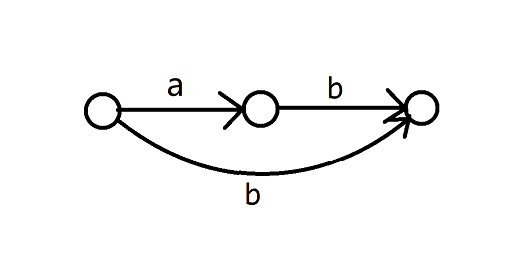
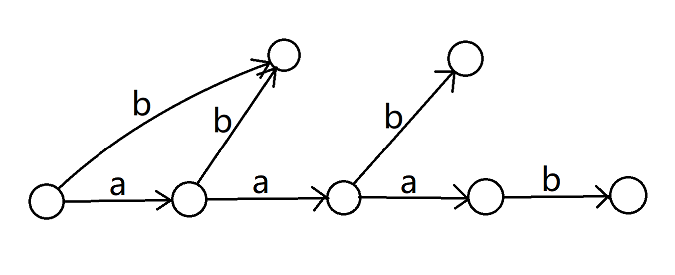
    举一个简单的例子,假设我们已经对 ab" role="presentation">ab 构建了 SAM:

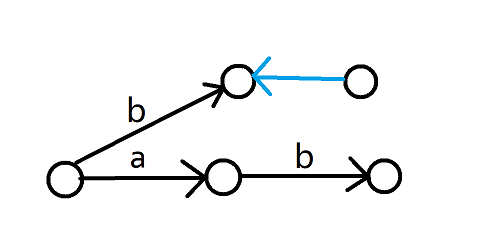
    现在加入字符串 b" role="presentation">b,你会发现你新建了一个节点,把它的 link" role="presentation">link 连向了 0" role="presentation">0(蓝色是 link" role="presentation">link 边),但实际上没有任何一条转移边连向它。

    这样的空节点在匹配子串时不会影响正确性,也不影响时间复杂度,仅作为一个自动机而言并没有问题。
    但它破坏了 SAM 用最小的状态数储存所有子串的性质,会影响到 fail" role="presentation">fail 树的子树 siz" role="presentation">siz 计算,在某些需要用到相关信息的题目中出现错误。
    下文会对各种本身正确但由于实现问题造成的假广义 SAM 也给出分析。

    bfs 离线构建

    离线构建是指我们先读入所有字符串,对它们构建出 Trie 树,再基于 Trie 树构建 SAM 的写法,分为 dfs 与 bfs 两种实现方式。

    bfs 实现

    首先我们要做的事情是对字符串建出 Trie。

    struct trie{int fa,c,s[26];} tr[N];
    int idx=1;
    il void ins(char *s) 
    {
        int len=strlen(s+1),now=1;
        for(int i=1;i<=len;i++) 
        {
            int &to=tr[now].s[s[i]-'a'];
            if(!to) to=++idx,tr[to].fa=now,tr[to].c=s[i]-'a'; now=to;
        }
    }

    然后考虑 SAM 的构造。因为每次是把父亲节点在 SAM 上的位置作为 lst" role="presentation">lst 构建新的节点,我们需要对每个 Trie 上的节点记录它在 SAM 上对应的节点编号。

    我们令点 x" role="presentation">x 在 SAM 上对应的节点编号为 posx" role="presentation">posx。同时,为方便记录这个 pos" role="presentation">pos,我们对 insert 函数稍作改动,给它加上返回值,返回新添加的节点编号:

    il int insert(int c,int lst)
    {
        int p=lst,np=lst=++tot; d[np].len=d[p].len+1;
        for(;p&&!d[p].s[c];p=d[p].fa) d[p].s[c]=np;
        if(!p) {d[np].fa=1;return np;}
        int q=d[p].s[c];
        if(d[q].len==d[p].len+1) {d[np].fa=q;return np;}
        int nq=++tot; d[nq]=d[q],d[nq].len=d[p].len+1;
        d[q].fa=d[np].fa=nq;
        for(;p&&d[p].s[c]==q;p=d[p].fa) d[p].s[c]=nq;
        return np;
    }

    那么我们 bfs 到点 x" role="presentation">x 时,把 posfax" role="presentation">posfax 作为 lst" role="presentation">lst,向 SAM 插入 fax" role="presentation">faxx" role="presentation">x 这条边上的字符 c" role="presentation">c,并令 posx" role="presentation">posx 为 insert 函数的返回值即可。
    由此可以写出 bfs 的离线构建:

    int pos[N];
    il void build()
    {
        queue<int> q;
        for(int i=0;i<26;i++) if(tr[1].s[i]) q.push(tr[1].s[i]);
        pos[1]=1;
        while(!q.empty())
        {
            int u=q.front(); q.pop();
            pos[u]=insert(tr[u].c,pos[tr[u].fa]);
            for(int i=0;i<26;i++) if(tr[u].s[i]) q.push(tr[u].s[i]);
        }
    }

    如果不考虑空节点问题,每次将 lst" role="presentation">lst 置为 0" role="presentation">0 的方法是比较容易理解的。
    而离线 bfs 构造实际上就是通过 Trie 树的性质压缩了原来的多个字符串,这样做相同的前缀不再需要多次插入,其余的和上面的方法本质相同。

    为什么 bfs 不会有空节点

    考虑上面的做法出现了空节点是哪里的问题。
    我们在 lst" role="presentation">lst 已经有一条 c" role="presentation">c 的转移边的情况下,试图再给 lst" role="presentation">lst 连新的 c" role="presentation">c 边,就会出现加了一个节点,但加的转移都跑到了原来 lst" role="presentation">lst 连向的那个点。这个新加的点就变成了只有 link" role="presentation">link 的空壳。
    而 bfs 的过程不同,它是按照字符串的长度从小到大一层层加点的。也就是说,我们试图给 fax" role="presentation">fax 加一个 c" role="presentation">c 的转移的时候,它之前不可能已经有一个 c" role="presentation">c 边。
    这个可以反证,如果 fax" role="presentation">fax 已经有连向 c" role="presentation">c 的转移,说明 fax" role="presentation">fax 已经有一个边为字符 c" role="presentation">c 的儿子。显然合法的 Trie 中,一个节点不会有边上字符相同的两个不同儿子,故该情况不成立。
    综上,不在 insert 函数中加特判的 bfs 写法是正确的,因为它保证了不会出现空点。

    时间复杂度证明

    bfs 写法的时间复杂度为 O(n)" role="presentation">O(n),即 Trie 的节点数。
    这是因为 bfs 的性质保证了 SAM 原有的时间复杂度证明仍然成立,参见前文 SAM 的复杂度证明

    dfs 离线构建

    错误的 dfs 实现

    我们似乎可以用同样的方式来实现 dfs 离线构建,写出如下的代码。

    int pos[N];
    il void dfs(int u)
    {
        for(int i=0;i<26;i++)
        {
            int v=tr[u].s[i];
            if(v) pos[v]=insert(i,pos[u]),dfs(v);
        }
    }

    但这种不加任何特判的 dfs 写法是错的。在模板题增加输出节点个数的要求后,它甚至无法通过样例。

    为什么 dfs 会产生空节点

    之前我们证明了 bfs 的正确性,为什么换成 dfs 就错了呢?
    回想一下,我们的正确性证明是基于 “试图给 fax" role="presentation">fax 加一个 c" role="presentation">c 的转移的时候,它之前不可能已经有一个 c" role="presentation">c 边” 这条 bfs 独有的性质的。
    dfs 时显然没有这条保证,因此会和 lst" role="presentation">lst 置为 0" role="presentation">0 的做法出一样的问题。

    更直观但不那么严谨的理解是,假设我们对 ab" role="presentation">abb" role="presentation">b 建 Trie 然后 dfs,你会发现 Trie 建了个寂寞,它的算法过程跟 lst" role="presentation">lst 置为 1" role="presentation">1 没有任何本质区别。

    正确的 dfs 实现

    我们需要通过特判已有转移边的情况来规避以上问题。

    il int insert(int c,int lst)
    {
        if(d[lst].s[c]&&d[d[lst].s[c]].len==d[lst].len+1) {return d[lst].s[c];} //1
        int p=lst,np=++tot,flag=0; d[np].len=d[p].len+1;
        for(;p&&!d[p].s[c];p=d[p].fa) d[p].s[c]=np;
        if(!p) {d[np].fa=1;return np;}
        int q=d[p].s[c];
        if(d[q].len==d[p].len+1) {d[np].fa=q;return np;}
        if(p==lst) flag=1,np=0,tot--;  //2
        int nq=++tot; d[nq]=d[q],d[nq].len=d[p].len+1;
        d[q].fa=d[np].fa=nq;
        for(;p&&d[p].s[c]==q;p=d[p].fa) d[p].s[c]=nq;
        return flag?nq:np;  //3
    }

    注意到,这份代码的 insert 过程和原来的区别是新增了注释处的三句特判。接下来对它们依次进行解释。

    if(d[lst].s[c]&&d[d[lst].s[c]].len==d[lst].len+1) {return d[lst].s[c];} //1

    这句话特判的是新加的串已经作为原来的子串出现过的情况,即 lst" role="presentation">lst 已经有一条 c" role="presentation">c 的转移,而且这个转移是连续的。
    此时我们什么也不用做,新加入的点所在的 pos" role="presentation">pos 就是当前 lst" role="presentation">lst 连边指向的点。

    if(p==lst) flag=1,np=0,tot--;  //2

    另外一种会出现空节点的情况是 lst" role="presentation">lstc" role="presentation">c 的转移,但这个转移不是连续的。
    这表明在加入字符 c" role="presentation">c 后,应当有一部分后缀被拆出来变成新的状态,但我们只应新建这个新状态的节点,不应新建 lst" role="presentation">lst 连向 c" role="presentation">c 的节点。还是以文章开头那两个字符串为例。

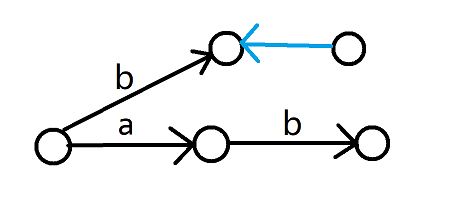
    我们在插入第二个串时就是特判 2 的情况,这时候不应该新建一个节点。但是貌似我们在做这个判断前已经新建过了。不过好在 np" role="presentation">np 里面啥都没有,把加过的 tot" role="presentation">tot 减回去就好啦 qwq。
    同时因为没有新建节点,也不应该有 np" role="presentation">np,更不应该有 link(np)" role="presentation">link(np)。所以为了避免后面意外修改这个位置的值,要把 np" role="presentation">np 置为 0" role="presentation">0。(我的 SAM 板子是从 1" role="presentation">1 开始编号,0" role="presentation">0 号节点没有任何作用。)

    return flag?nq:np;  //3

    这句是容易理解的,没有新建 np" role="presentation">np 但新建了 nq" role="presentation">nq,就返回 nq" role="presentation">nq

    至此我们写出了正确的离线 dfs 板子。

    dfs 的复杂度证明

    与 bfs 做法不同,dfs 做法时间复杂度是 O(m)" role="presentation">O(m),即字符串总长度。它不能用于直接给出 Trie 树的题目。
    这是因为我们原来在证 SAM 复杂度时的条件不适用了,SAM 每次都会在原来的 lst" role="presentation">lst 后面加节点,并从 lst" role="presentation">lst 开始跳 link" role="presentation">link 树。这保证了被重定向的边不会再次被重定向。
    而 dfs 的过程中并没有这样的保证,一条边可以随着多个字符串的加入被重定向多次。

    举一个直观的例子,我们有这样一棵 Trie:
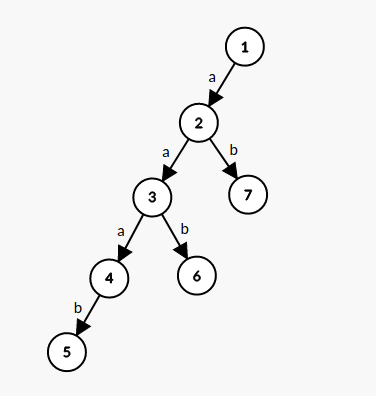
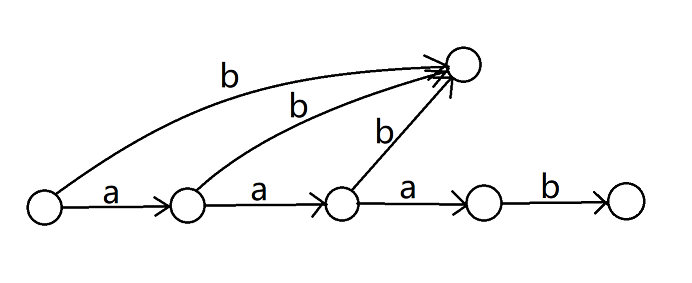
    现在 dfs 完了点 15" role="presentation">15,获得了一个长这样的 SAM:
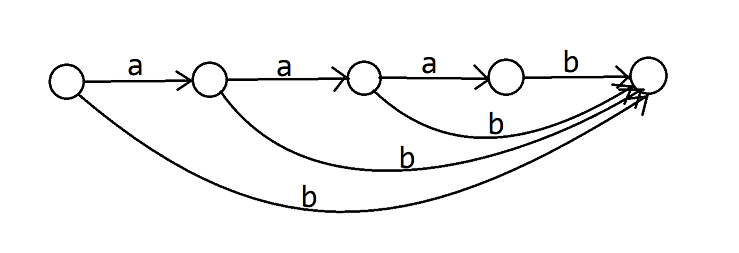
    然后我们 dfs 点 6" role="presentation">6,发现它改变了 b,ab,aab" role="presentation">b,ab,aabendpos" role="presentation">endpos 集合,这些转移都需要拆出来。

    再继续 dfs 点 7" role="presentation">7,又改变了 b,ab" role="presentation">b,abendpos" role="presentation">endpos,需要把之前拆出来过的转移再拆出来:

    可以看出它的时间复杂度并不是 Trie 树的节点数,因此 Trie 的结构对 dfs 的复杂度没有什么优化作用。
    稍加思考的话,可以发现这样的做法和每次把 lst" role="presentation">lst 置为 1" role="presentation">1,再跑加特判版本的 SAM 没有本质区别。它的时间复杂度是字符串总长。

    在线构建

    在线构建广义 SAM,就是不预先建出 Trie 树,直接每次将 lst" role="presentation">lst 置为 1" role="presentation">1,依次在线插入字符串。
    之前所说的错误做法是指不带任何特判的 SAM,而我们在 dfs 中已经为 insert 函数增加了保证它不出现问题的特判。
    那么我们还要 dfs 干什么呢?直接用这个加过特判的 insert 函数在线构造,重复的前缀会被特判处理到,其实就变成对的了。它的时间复杂度是字符串总长 O(m)" role="presentation">O(m)

    至此我们介绍完了广义 SAM 常见的离线和在线写法。

    应用

    在实际应用中,SAM 的大部分结论在广义 SAM 中依然成立。

    P6139 【模板】广义后缀自动机(广义 SAM)

    回到本题。根据 SAM 的已有结论,每个节点包含的不同子串数为 len(x)len(link(x))" role="presentation">len(x)len(link(x))
    所以构建出广义 SAM 后统计答案即可。

    离线 bfs 版

    #include
    #define il inline
    using namespace std;
    il long long read()
    {
        long long xr=0,F=1; char cr;
        while(cr=getchar(),cr<'0'||cr>'9') if(cr=='-') F=-1;
        while(cr>='0'&&cr<='9')
            xr=(xr<<3)+(xr<<1)+(cr^48),cr=getchar();
        return xr*F;
    }
    const int N=2e6+5;
    struct trie{int fa,c,s[26];} tr[N];
    int idx=1;
    il void ins(char *s) 
    {
        int len=strlen(s+1),now=1;
        for(int i=1;i<=len;i++) 
        {
            int &to=tr[now].s[s[i]-'a'];
            if(!to) to=++idx,tr[to].fa=now,tr[to].c=s[i]-'a'; now=to;
        }
    }
    struct SAM{int fa,len,s[26];} d[N];
    int tot=1;
    il int insert(int c,int lst)
    {
        int p=lst,np=lst=++tot; d[np].len=d[p].len+1;
        for(;p&&!d[p].s[c];p=d[p].fa) d[p].s[c]=np;
        if(!p) {d[np].fa=1;return np;}
        int q=d[p].s[c];
        if(d[q].len==d[p].len+1) {d[np].fa=q;return np;}
        int nq=++tot; d[nq]=d[q],d[nq].len=d[p].len+1;
        d[q].fa=d[np].fa=nq;
        for(;p&&d[p].s[c]==q;p=d[p].fa) d[p].s[c]=nq;
        return np;
    }
    int pos[N];
    il void build()
    {
        queue<int> q;
        for(int i=0;i<26;i++) if(tr[1].s[i]) q.push(tr[1].s[i]);
        pos[1]=1;
        while(!q.empty())
        {
            int u=q.front(); q.pop();
            pos[u]=insert(tr[u].c,pos[tr[u].fa]);
            for(int i=0;i<26;i++) if(tr[u].s[i]) q.push(tr[u].s[i]);
        }
    }
    char s[N];
    int main()
    {
        int n=read();
        for(int i=1;i<=n;i++) scanf("%s",s+1),ins(s);
        build();
        long long ans=0;
        for(int i=2;i<=tot;i++) ans+=d[i].len-d[d[i].fa].len;
        printf("%lld\n%d\n",ans,tot);
        return 0;
    }

    离线 dfs 版

    #include
    #define il inline
    using namespace std;
    il long long read()
    {
        long long xr=0,F=1; char cr;
        while(cr=getchar(),cr<'0'||cr>'9') if(cr=='-') F=-1;
        while(cr>='0'&&cr<='9')
            xr=(xr<<3)+(xr<<1)+(cr^48),cr=getchar();
        return xr*F;
    }
    const int N=2e6+5;
    struct trie{int fa,c,s[26];} tr[N];
    int idx=1;
    il void ins(char *s) 
    {
        int len=strlen(s+1),now=1;
        for(int i=1;i<=len;i++) 
        {
            int &to=tr[now].s[s[i]-'a'];
            if(!to) to=++idx,tr[to].fa=now,tr[to].c=s[i]-'a'; now=to;
        }
    }
    struct SAM{int fa,len,s[26];} d[N];
    int tot=1;
    il int insert(int c,int lst)
    {
        if(d[lst].s[c]&&d[d[lst].s[c]].len==d[lst].len+1) {return d[lst].s[c];}
        int p=lst,np=++tot,flag=0; d[np].len=d[p].len+1;
        for(;p&&!d[p].s[c];p=d[p].fa) d[p].s[c]=np;
        if(!p) {d[np].fa=1;return np;}
        int q=d[p].s[c];
        if(d[q].len==d[p].len+1) {d[np].fa=q;return np;}
        if(p==lst) flag=1,np=0,tot--;
        int nq=++tot; d[nq]=d[q],d[nq].len=d[p].len+1;
        d[q].fa=d[np].fa=nq;
        for(;p&&d[p].s[c]==q;p=d[p].fa) d[p].s[c]=nq;
        return flag?nq:np;
    }
    int pos[N];
    il void dfs(int u)
    {
        for(int i=0;i<26;i++)
        {
            int v=tr[u].s[i];
            if(v) pos[v]=insert(i,pos[u]),dfs(v);
        }
    }
    char s[N];
    int main()
    {
        int n=read();
        for(int i=1;i<=n;i++) scanf("%s",s+1),ins(s);
        pos[1]=1,dfs(1);
        long long ans=0;
        for(int i=2;i<=tot;i++) ans+=d[i].len-d[d[i].fa].len;
        printf("%lld\n%d\n",ans,tot);
        return 0;
    }

    在线版

    #include
    #define il inline
    using namespace std;
    il long long read()
    {
        long long xr=0,F=1; char cr;
        while(cr=getchar(),cr<'0'||cr>'9') if(cr=='-') F=-1;
        while(cr>='0'&&cr<='9')
            xr=(xr<<3)+(xr<<1)+(cr^48),cr=getchar();
        return xr*F;
    }
    const int N=2e6+5;
    struct SAM{int fa,len,s[26];} d[N];
    int tot=1,pos[N];
    il int insert(int c,int lst)
    {
        if(d[lst].s[c]&&d[d[lst].s[c]].len==d[lst].len+1) {return d[lst].s[c];} 
        int p=lst,np=++tot,flag=0; d[np].len=d[p].len+1;
        for(;p&&!d[p].s[c];p=d[p].fa) d[p].s[c]=np;
        if(!p) {d[np].fa=1;return np;}
        int q=d[p].s[c];
        if(d[q].len==d[p].len+1) {d[np].fa=q;return np;}
        if(p==lst) flag=1,np=0,tot--;  
        int nq=++tot; d[nq]=d[q],d[nq].len=d[p].len+1;
        d[q].fa=d[np].fa=nq;
        for(;p&&d[p].s[c]==q;p=d[p].fa) d[p].s[c]=nq;
        return flag?nq:np;  
    }
    char s[N];
    int main()
    {
        int n=read();
        for(int i=1;i<=n;i++) 
        {
            scanf("%s",s+1);
            int len=strlen(s+1); pos[0]=1;
            for(int j=1;j<=len;j++) pos[j]=insert(s[j]-'a',pos[j-1]);
        }
        long long ans=0;
        for(int i=2;i<=tot;i++) ans+=d[i].len-d[d[i].fa].len;
        printf("%lld\n%d\n",ans,tot);
        return 0;
    }

    其他例题

    待更新。

    参考资料

    坑还没填,但是先撒花 >w<


    __EOF__

  • 本文作者: 樱雪晴空
  • 本文链接: https://www.cnblogs.com/ying-xue/p/general-sam.html
  • 关于博主: 评论和私信会在第一时间回复。或者直接私信我。
  • 版权声明: 本博客所有文章除特别声明外,均采用 BY-NC-SA 许可协议。转载请注明出处!
  • 声援博主: 如果您觉得文章对您有帮助,可以点击文章右下角推荐一下。
  • 相关阅读:
    gstreamer插件开发-Constructing the Boilerplate
    云原生之深入解析如何合并多个kubeconfig文件
    Python 教程之控制流(3)Python 中的循环和控制语句(继续、中断和通过)
    【gitlab】git push -u origin master 报403
    Docker /var/lib/docker数据目录迁移
    docker 部署 ES集群
    指定端口被system程序占用解决方法
    项目混淆时候moudle库里的model类不需要混淆
    HTML5 实现扑克翻牌游戏
    闲聊Swift的枚举关联值
  • 原文地址:https://www.cnblogs.com/ying-xue/p/general-sam.html