-
AQS之排斥锁分析
1.AQS 内部体系架构
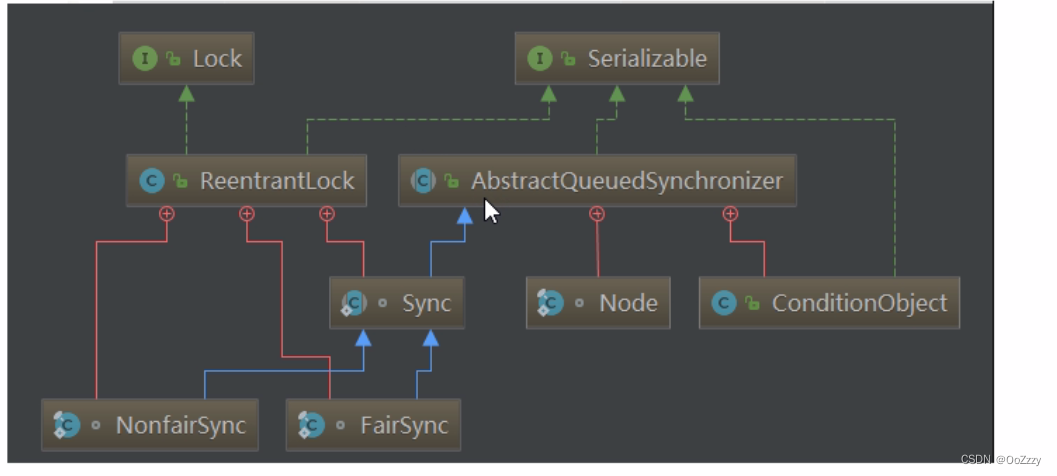
- FairSync: 公平锁
- NoFairSync: 非公平锁

- Shared: 共享模式
- Exclusive: 排他模式
2.获取资源
AbstractQueueSynchronized.acquire()
public final void acquire(int arg) { if (!tryAcquire(arg) && acquireQueued(addWaiter(Node.EXCLUSIVE), arg)) selfInterrupt(); }- 1
- 2
- 3
- 4
- 5
- 尝试获取资源,成功则结束
- 获取资源失败,新建节点插入队列
- 在队列里排队并获取资源
- 如果等待过程中出现线程中断,则中断自身
(1) 首先就是一次资源获取的尝试,具体尝试逻辑由各实现类实现,失败再加入队列
(2) 该方法不响应中断,如果在等待过程线程被中断,线程不会响应,只会在等待结束后中断重新自身
2.1 获取资源 tryAcquire()e
FairSync:公平

NoFairSync: 非公平

区别为 hasQueuedPredecessors()方法
public final boolean hasQueuedPredecessors() { Node t = tail; // Read fields in reverse initialization order Node h = head; Node s; return h != t && ((s = h.next) == null || s.thread != Thread.currentThread()); }- 1
- 2
- 3
- 4
- 5
- 6
- 7
这个方法可以使得公平和不公平, 去判断有没有别的线程排在了当前线程的前面。
先是tail, 后是head, 如果这二者只有一个为null(另一个不为null), 只可能为tail = null, head 不为null

2.2 加入队列 addWaiter()
private Node addWaiter(Node mode) { Node node = new Node(Thread.currentThread(), mode); Node pred = tail; if (pred != null) { node.prev = pred; if (compareAndSetTail(pred, node)) { pred.next = node; return node; } } enq(node); return node; }- 1
- 2
- 3
- 4
- 5
- 6
- 7
- 8
- 9
- 10
- 11
- 12
- 13
enq()
private Node enq(final Node node) { for (;;) { Node t = tail; if (t == null) { // Must initialize if (compareAndSetHead(new Node())) tail = head; } else { node.prev = t; if (compareAndSetTail(t, node)) { t.next = node; return t; } } } }- 1
- 2
- 3
- 4
- 5
- 6
- 7
- 8
- 9
- 10
- 11
- 12
- 13
- 14
- 15
初始化一个排斥模式的节点加入到队列尾部,tail指向该节点。本方法先进行一次快速尝试,失败后在一个循环中自旋尝试。
2.3 排队获取资源 acquireQueued()
final boolean acquireQueued(final Node node, int arg) { boolean failed = true; try { boolean interrupted = false; for (;;) { final Node p = node.predecessor(); if (p == head && tryAcquire(arg)) { setHead(node); p.next = null; // help GC failed = false; return interrupted; } if (shouldParkAfterFailedAcquire(p, node) && parkAndCheckInterrupt()) interrupted = true; } } finally { if (failed) cancelAcquire(node); } }- 1
- 2
- 3
- 4
- 5
- 6
- 7
- 8
- 9
- 10
- 11
- 12
- 13
- 14
- 15
- 16
- 17
- 18
- 19
- 20
- 21
本方法是核心逻辑,实现了一个节点在队列中排队、阻塞到获取资源成功的一个逻辑,具有返回值,返回排队过程是否线程被中断过。
最后考虑到排队过程中抛出异常的场景,加了一个finally的处理,对这类厂家取消排队获取资源。2.4 阻塞检查 shouldParkAfterFailedAcquire()
private static boolean shouldParkAfterFailedAcquire(Node pred, Node node) { int ws = pred.waitStatus; //唯一符合的情况 if (ws == Node.SIGNAL) return true; //不符合怎么办 if (ws > 0) { //ws>0说明节点无效,调整排队位置,向前找到有效的前驱节点 do { node.prev = pred = pred.prev; } while (pred.waitStatus > 0); pred.next = node; } else { //修改前驱节点状态 compareAndSetWaitStatus(pred, ws, Node.SIGNAL); } return false; }- 1
- 2
- 3
- 4
- 5
- 6
- 7
- 8
- 9
- 10
- 11
- 12
- 13
- 14
- 15
- 16
- 17
- 18
- 符合阻塞的条件:前驱节点状态为singal
- 不符合怎么办:调整队列,找到有效的前驱节点后,修改前驱节点状态
parkAndCheckInterrupt(): 阻塞方法
private final boolean parkAndCheckInterrupt() { LockSupport.park(this); return Thread.interrupted(); }- 1
- 2
- 3
- 4
只有被唤醒或者线程中断才能退出阻塞, 最后一句检查并清理中断标志,所以acquire方法中如果被中断过,需要进行一次自我中断。
3.释放资源

尝试释放资源tryRelease也是交给实现类去实现。
Sync.tryRelease()
protected final boolean tryRelease(int releases) { int c = getState() - releases; if (Thread.currentThread() != getExclusiveOwnerThread()) throw new IllegalMonitorStateException(); boolean free = false; if (c == 0) { free = true; setExclusiveOwnerThread(null); } setState(c); return free; }- 1
- 2
- 3
- 4
- 5
- 6
- 7
- 8
- 9
- 10
- 11
- 12
3.1 唤醒后继节点 unparkSuccessor()
private void unparkSuccessor(Node node) { /* * If status is negative (i.e., possibly needing signal) try * to clear in anticipation of signalling. It is OK if this * fails or if status is changed by waiting thread. */ int ws = node.waitStatus; if (ws < 0) compareAndSetWaitStatus(node, ws, 0); /* * Thread to unpark is held in successor, which is normally * just the next node. But if cancelled or apparently null, * traverse backwards from tail to find the actual * non-cancelled successor. */ Node s = node.next; if (s == null || s.waitStatus > 0) { s = null; for (Node t = tail; t != null && t != node; t = t.prev) if (t.waitStatus <= 0) s = t; } if (s != null) LockSupport.unpark(s.thread); }- 1
- 2
- 3
- 4
- 5
- 6
- 7
- 8
- 9
- 10
- 11
- 12
- 13
- 14
- 15
- 16
- 17
- 18
- 19
- 20
- 21
- 22
- 23
- 24
- 25
- 26
- 修改当前节点的状态标志
- 找到下一个节点,如果存在则唤醒线程
4.获取&释放资源总流程

5.其他获取资源的方法
5.1 响应中断 acquireInterruptibly()
public final void acquireInterruptibly(int arg) throws InterruptedException { if (Thread.interrupted()) throw new InterruptedException(); if (!tryAcquire(arg)) doAcquireInterruptibly(arg); } private void doAcquireInterruptibly(int arg) throws InterruptedException { final Node node = addWaiter(Node.EXCLUSIVE); boolean failed = true; try { for (;;) { final Node p = node.predecessor(); if (p == head && tryAcquire(arg)) { setHead(node); p.next = null; // help GC failed = false; return; } if (shouldParkAfterFailedAcquire(p, node) && parkAndCheckInterrupt()) throw new InterruptedException(); } } finally { if (failed) cancelAcquire(node); } }- 1
- 2
- 3
- 4
- 5
- 6
- 7
- 8
- 9
- 10
- 11
- 12
- 13
- 14
- 15
- 16
- 17
- 18
- 19
- 20
- 21
- 22
- 23
- 24
- 25
- 26
- 27
- 28
- 29
- 30
- 尝试获取资源时进行一次中断检查
- 阻塞时被中断抛出异常
5.2 超时参数 tryAcquireNanos()
public final boolean tryAcquireNanos(int arg, long nanosTimeout) throws InterruptedException { if (Thread.interrupted()) throw new InterruptedException(); return tryAcquire(arg) || doAcquireNanos(arg, nanosTimeout); } private boolean doAcquireNanos(int arg, long nanosTimeout) throws InterruptedException { if (nanosTimeout <= 0L) return false; final long deadline = System.nanoTime() + nanosTimeout; final Node node = addWaiter(Node.EXCLUSIVE); boolean failed = true; try { for (;;) { final Node p = node.predecessor(); if (p == head && tryAcquire(arg)) { setHead(node); p.next = null; // help GC failed = false; return true; } nanosTimeout = deadline - System.nanoTime(); if (nanosTimeout <= 0L) return false; if (shouldParkAfterFailedAcquire(p, node) && nanosTimeout > spinForTimeoutThreshold) LockSupport.parkNanos(this, nanosTimeout); if (Thread.interrupted()) throw new InterruptedException(); } } finally { if (failed) cancelAcquire(node); } }- 1
- 2
- 3
- 4
- 5
- 6
- 7
- 8
- 9
- 10
- 11
- 12
- 13
- 14
- 15
- 16
- 17
- 18
- 19
- 20
- 21
- 22
- 23
- 24
- 25
- 26
- 27
- 28
- 29
- 30
- 31
- 32
- 33
- 34
- 35
- 36
- 37
- 38
该方法是响应中断的, 超时中断
- 排队获取资源时先判断是否已经超时
- 每次判断是否需要阻塞时都先判断是否超时
- 阻塞时增加检查,时间不足只进行自旋,减少阻塞的性能消耗
- 阻塞时阻塞指定时间
-
相关阅读:
【MySQL】select语句——group by子句和having子句的使用
客户端版socket,完成消息广播,详解Websocket即时通信,点名系统
2024最新-ubuntu22.04安装最新版QT6.6~6.8教程
JavaScript系列之解构赋值
centos7 离线部署Chrome 117,并配置chromedriver
2023年信息安全管理与评估(赛项)评分标准第三阶段夺旗挑战CTF(网络安全渗透)
含文档+PPT+源码等]精品微信小程序ssm超市购物系统小程序+后台管理系统|前后分离VUE[包运行成功]微信小程序项目源码Java毕业设计
【无标题】
spring创建bean方式
ARM汇编
- 原文地址:https://blog.csdn.net/qq_43141726/article/details/127688635
