Morris 遍历实现二叉树的遍历
作者:Grey
原文地址:
说明#
Morris 遍历可以实现二叉树的先,中,后序遍历,且时间复杂度O(N), 空间复杂度可以做到O(1)。
Morris 遍历流程#
假设有一棵如下的二叉树
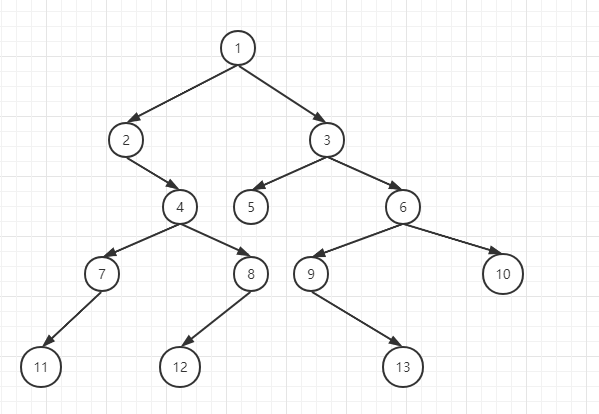
Morris遍历的流程主要分如下几个步骤:
第一步,从头节点开始遍历。
第二步,假设当前遍历的节点是cur。
第三步,如果cur无左树, cur来到其右树上,即:cur = cur.right
第四步,如果cur有左树,找到cur左树最右节点,假设叫mostRight,则有如下两种小情况:
情况1,如果mostRight的右指针指向空, 则将mostRight的右指针指向cur,即:mostRight.right = cur, 然后将cur向左移动,即:cur = cur.left,
情况2,如果mostRight的右指针指向当前节点cur,则将mostRight的右指针指向空,即:mostRight.right = null,然后将cur向右移动,即:cur = cur.right。
第五步:当cur = null,遍历结束。
根据如上流程,示例二叉树的Morris遍历序列为:
1-->2-->4-->7-->11-->7-->4-->8-->12-->8-->1-->3-->5-->3-->6-->9-->13-->6-->10
Morris遍历可以实现在O(N)时间复杂度内,用O(1)的空间复杂度实现对树的遍历,而且,只要某个节点有右树,则这个节点一定会被遍历两次,我们可以通过Morris遍历来实现二叉树的先,中,后序遍历,做到时间复杂度O(N),空间复杂度O(1)。
代码实现如下:
public class Code_Morris {

    //当前是cur
    //1. cur无左树,cur = cur.right
    //2. cur有左树,找到左树最右节点mostRight
    //	a. mostRight的右指针指向null, mostRight.right = cur, cur = cur.right
    //	b. mostRight的右指针指向当前节点cur,mostRight.right = null, cur = cur.right
    //3. cur = null 停
    public static void morrisPrint(TreeNode head) {
        if (head == null) {
            return;
        }
        System.out.println("....morris order....");
        TreeNode cur = head;
        System.out.print(cur.val + "-->");
        TreeNode mostRight;
        while (cur != null) {
            mostRight = cur.left;
            if (mostRight != null) {
                while (mostRight.right != null && mostRight.right != cur) {
                    mostRight = mostRight.right;
                }
                if (mostRight.right == null) {
                    mostRight.right = cur;
                    cur = cur.left;
                    System.out.print(cur.val + "-->");
                    continue;
                } else {
                    mostRight.right = null;
                }
            }
            cur = cur.right;
            if (cur != null) {
                System.out.print(cur.val + "-->");
            }
        }
    }
}
Morris遍历实现先序遍历#
根据Morris的遍历结果,没有右树的点只会遍历一次,有右树的点会遍历两次,针对遍历一次的点,遍历到就收集,针对遍历两次的点,第一次遍历到就收集,第二次遍历到不收集,整个流程跑完,则得到了先序遍历的结果。
代码如下:
    public static List preorderTraversal(TreeNode root) {
        if (null == root) {
            return new ArrayList<>();
        }
        List ans = new ArrayList<>();
        TreeNode mostRight;
        TreeNode cur = root;
        while (cur != null) {
            mostRight = cur.left;
            if (mostRight != null) {
                while (mostRight.right != null && mostRight.right != cur) {
                    mostRight = mostRight.right;
                }
                if (mostRight.right == null) {
                    // 有右树,第一次来到自己就收集
                    ans.add(cur.val);
                    mostRight.right = cur;
                    cur = cur.left;
                    continue;
                } else {
                    // mostRight.right = cur;
                    mostRight.right = null;
                }
            } else {
                // 没有右树的,来到就收集
                ans.add(cur.val);
            }
            cur = cur.right;
        }
        return ans;
    }
测评链接:LeetCode 144. Binary Tree Preorder Traversal
Morris遍历实现中序遍历#
针对遍历一次的点,遍历到就收集,针对遍历两次的点,第一次遍历到不收集,第二次遍历才收集,整个流程跑完,则得到了中序遍历的结果。
代码如下:
class Solution {
    public List inorderTraversal(TreeNode root) {
        if (root == null) {
            return new ArrayList<>();
        }
        List ans = new ArrayList<>();
        TreeNode mostRight;
        TreeNode cur = root;
        while (cur != null) {
            mostRight = cur.left;
            if (mostRight != null) {
                while (mostRight.right != null && mostRight.right != cur) {
                    mostRight = mostRight.right;
                }
                if (mostRight.right == null) {
                    mostRight.right = cur;
                    cur = cur.left;
                    continue;
                } else {
                    // 来到自己两次的点,第二次来到才收集
                    ans.add(cur.val);
                    mostRight.right = null;
                }
            } else {
                // 只来到自己一次的点,来到就收集
                ans.add(cur.val);
            }
            cur = cur.right;
        }
        return ans;
    }
}
测评链接:LeetCode 94. Binary Tree Inorder Traversal
Morris遍历实现后序遍历#
Morris遍历实现后序遍历相对比较麻烦,处理时机只放在能回到自己两次的点,能回到自己两次的点在第二次回到自己的时刻,不打印它自己,而是逆序打印他左树的右边界, 整个遍历结束后,单独逆序打印整棵树的右边界,即得到了后序遍历的结果。
代码如下:
    public List postorderTraversal(TreeNode root) {
        if (root == null) {
            return new ArrayList<>();
        }
        List ans = new ArrayList<>();
        TreeNode cur = root;
        TreeNode mostRight;
        while (cur != null) {
            mostRight = cur.left;
            if (mostRight != null) {
                while (mostRight.right != null && mostRight.right != cur) {
                    mostRight = mostRight.right;
                }
                if (mostRight.right == null) {
                    mostRight.right = cur;
                    cur = cur.left;
                    continue;
                } else {
                    mostRight.right = null;
                    // 第二次来到自己的时候,收集自己的左树的右边界
                    collect(cur.left, ans);
                }
            }
            cur = cur.right;
        }
        collect(root, ans);
        return ans;
    }

    private void collect(TreeNode root, List ans) {
        TreeNode node = reverse(root);
        TreeNode c = node;
        while (c != null) {
            ans.add(c.val);
            c = c.right;
        }
        reverse(node);
    }

    private TreeNode reverse(TreeNode node) {
        TreeNode pre = null;
        TreeNode cur = node;
        while (cur != null) {
            TreeNode t = cur.right;
            cur.right = pre;
            pre = cur;
            cur = t;
        }
        return pre;
    }
需要注意两点:
第一点,collect方法即逆序收集左树的有边界,由于每个节点没有指向父的指针,所以,要实现逆序,需要针对右边界采用反转链表的方式。即reverse函数的逻辑。
第二点,在collect方法调用完反转链表操作后,还要还原整个右边界。否则整棵树的指针就指乱了。
测评链接:LeetCode 145. Binary Tree Postorder Traversal