-
Netty源码剖析之Netty启动流程
准备
1、NettyServer
public class NettyServer { public static void main(String[] args) throws InterruptedException { // 1、创建bossGroup线程组:处理网络连接事件。默认线程数:2*处理器线程数 NioEventLoopGroup bossGroup = new NioEventLoopGroup(1); // 2、创建workGroup线程组:处理网络read/write事件。 默认线程数:2*处理器线程数 NioEventLoopGroup workerGroup = new NioEventLoopGroup(); // 3、创建服务端启动助手 ServerBootstrap serverBootstrap = new ServerBootstrap(); // 4、服务端启动助手,设置线程组 serverBootstrap.group(bossGroup,workerGroup) // 5、设置服务端Channel实现类 .channel(NioServerSocketChannel.class) // 6、设置bossGroup线程队列中等待连接个数 .option(ChannelOption.SO_BACKLOG,128) // 7、设置workerGroup中线程活跃状态 .childOption(ChannelOption.SO_KEEPALIVE,true) // 使用channelInitializer 可以配置多个handler .childHandler(new ChannelInitializer<SocketChannel>() {// 8、设置一个通道初始化对象 @Override protected void initChannel(SocketChannel ch) throws Exception { // 9、向pipeline中添加自定义的channelHandler, 处理socketChannel传送的数据 ch.pipeline().addLast(new NettyServerHandler()); } }); // 10、服务端启动并绑定端口 ChannelFuture future = serverBootstrap.bind(9999).sync(); // 给服务器启动绑定结果,对结果进行监听,触发回调 future.addListener((ChannelFuture channelFuture)-> { if(channelFuture.isSuccess()){ System.out.println("服务器启动成功"); }else { System.out.println("服务器启动失败"); } }); // 11、关闭监听通道和连接池,将异步改同步 future.channel().closeFuture().sync(); bossGroup.shutdownGracefully(); workerGroup.shutdownGracefully(); } }- 1
- 2
- 3
- 4
- 5
- 6
- 7
- 8
- 9
- 10
- 11
- 12
- 13
- 14
- 15
- 16
- 17
- 18
- 19
- 20
- 21
- 22
- 23
- 24
- 25
- 26
- 27
- 28
- 29
- 30
- 31
- 32
- 33
- 34
- 35
- 36
- 37
- 38
- 39
- 40
- 41
- 42
- 43
- 44
- 45
2、NettyServerHandler
/** * 自定义的channelHandler处理器 * * 事件触发,触发相应函数 */ public class NettyServerHandler implements ChannelInboundHandler { /** * 通道读取事件 * @param ctx * @param msg * @throws Exception */ @Override public void channelRead(ChannelHandlerContext ctx, Object msg) throws Exception { ByteBuf byteBuffer = (ByteBuf)msg; System.out.println("客户端:"+byteBuffer.toString(CharsetUtil.UTF_8)); } /** * 通道数据读取完毕事件 * @param ctx * @throws Exception */ @Override public void channelReadComplete(ChannelHandlerContext ctx) throws Exception { TimeUnit.SECONDS.sleep(2); ctx.writeAndFlush(Unpooled.copiedBuffer("叫我靓仔!!!".getBytes())); } /** * 发生异常捕获事件 * @param ctx * @param cause * @throws Exception */ @Override public void exceptionCaught(ChannelHandlerContext ctx, Throwable cause) throws Exception { cause.printStackTrace(); ctx.close(); } /** * 通道就绪事件 * @param ctx * @throws Exception */ @Override public void channelActive(ChannelHandlerContext ctx) throws Exception { } @Override public void channelRegistered(ChannelHandlerContext ctx) throws Exception { } @Override public void channelUnregistered(ChannelHandlerContext ctx) throws Exception { } @Override public void channelInactive(ChannelHandlerContext ctx) throws Exception { } @Override public void userEventTriggered(ChannelHandlerContext ctx, Object evt) throws Exception { } @Override public void channelWritabilityChanged(ChannelHandlerContext ctx) throws Exception { } @Override public void handlerAdded(ChannelHandlerContext ctx) throws Exception { } @Override public void handlerRemoved(ChannelHandlerContext ctx) throws Exception { } }- 1
- 2
- 3
- 4
- 5
- 6
- 7
- 8
- 9
- 10
- 11
- 12
- 13
- 14
- 15
- 16
- 17
- 18
- 19
- 20
- 21
- 22
- 23
- 24
- 25
- 26
- 27
- 28
- 29
- 30
- 31
- 32
- 33
- 34
- 35
- 36
- 37
- 38
- 39
- 40
- 41
- 42
- 43
- 44
- 45
- 46
- 47
- 48
- 49
- 50
- 51
- 52
- 53
- 54
- 55
- 56
- 57
- 58
- 59
- 60
- 61
- 62
- 63
- 64
- 65
- 66
- 67
- 68
- 69
- 70
- 71
- 72
- 73
- 74
- 75
- 76
- 77
- 78
- 79
- 80
- 81
- 82
- 83
- 84
- 85
- 86
- 87
- 88
3、NettyClient
/** * nettyClient */ public class NettyClient { public static void main(String[] args) throws InterruptedException { // 1、创建线程组 NioEventLoopGroup group = new NioEventLoopGroup(); // 2、创建客户端启动助手bootstrap Bootstrap bootstrap = new Bootstrap(); // 3、配置线程组 bootstrap.group(group) // 4、定义socketChannel的实现类 .channel(NioSocketChannel.class) // 5、定义channelHandler, 处理socketChannel的数据 .handler(new ChannelInitializer<SocketChannel>() { @Override protected void initChannel(SocketChannel ch) throws Exception { //6、向pipeline中添加自定义业务处理handler ch.pipeline().addLast(new NettyClientHandler()); } }); // 7、启动客户端, 等待连接服务端, 同时将异步改为同步 ChannelFuture future = bootstrap.connect(new InetSocketAddress(9999)).sync(); // 8、关闭通道和关闭连接池 future.channel().closeFuture().sync(); group.shutdownGracefully(); } }- 1
- 2
- 3
- 4
- 5
- 6
- 7
- 8
- 9
- 10
- 11
- 12
- 13
- 14
- 15
- 16
- 17
- 18
- 19
- 20
- 21
- 22
- 23
- 24
- 25
- 26
- 27
- 28
- 29
- 30
- 31
- 32
4、NettyClientHandler
/** * 自定义的channelHandler处理器 ** 事件触发,触发相应函数 */
public class NettyClientHandler implements ChannelInboundHandler { /** * 通道读取事件 * * @param ctx * @param msg * @throws Exception */ @Override public void channelRead(ChannelHandlerContext ctx, Object msg) throws Exception { ByteBuf byteBuf = (ByteBuf) msg; System.out.println("服务端:" + byteBuf.toString(CharsetUtil.UTF_8)); } /** * 通道数据读取完毕事件 * * @param ctx * @throws Exception */ @Override public void channelReadComplete(ChannelHandlerContext ctx) throws Exception { ctx.writeAndFlush(Unpooled.copiedBuffer("不行,不行啊!!!".getBytes())); } /** * 发生异常捕获事件 * * @param ctx * @param cause * @throws Exception */ @Override public void exceptionCaught(ChannelHandlerContext ctx, Throwable cause) throws Exception { cause.printStackTrace(); ctx.close(); } /** * 通道就绪事件 * * @param ctx * @throws Exception */ @Override public void channelActive(ChannelHandlerContext ctx) throws Exception { ctx.writeAndFlush(Unpooled.copiedBuffer("你好哇 小客客!!!".getBytes())); } @Override public void channelRegistered(ChannelHandlerContext ctx) throws Exception { } @Override public void channelUnregistered(ChannelHandlerContext ctx) throws Exception { } @Override public void channelInactive(ChannelHandlerContext ctx) throws Exception { } @Override public void userEventTriggered(ChannelHandlerContext ctx, Object evt) throws Exception { } @Override public void channelWritabilityChanged(ChannelHandlerContext ctx) throws Exception { } @Override public void handlerAdded(ChannelHandlerContext ctx) throws Exception { } @Override public void handlerRemoved(ChannelHandlerContext ctx) throws Exception { } }- 1
- 2
- 3
- 4
- 5
- 6
- 7
- 8
- 9
- 10
- 11
- 12
- 13
- 14
- 15
- 16
- 17
- 18
- 19
- 20
- 21
- 22
- 23
- 24
- 25
- 26
- 27
- 28
- 29
- 30
- 31
- 32
- 33
- 34
- 35
- 36
- 37
- 38
- 39
- 40
- 41
- 42
- 43
- 44
- 45
- 46
- 47
- 48
- 49
- 50
- 51
- 52
- 53
- 54
- 55
- 56
- 57
- 58
- 59
- 60
- 61
- 62
- 63
- 64
- 65
- 66
- 67
- 68
- 69
- 70
- 71
- 72
- 73
- 74
- 75
- 76
- 77
- 78
- 79
- 80
- 81
- 82
- 83
- 84
- 85
- 86
- 87
- 88
- 89
- 90
- 91
- 92
Netty启动流程
1、绑定端口,封装程SocketAddress


2、创建初始化Channel,将NioServerSocketChannel绑定到Boss
NioEventLoopGroup中的EventLoop中的Selector上,指定Selector监听事件为accept
2.1 反射创建NioServerSocketChannel




给ServerSocketChannel绑定id(唯一标识),NioMessageUnsafe(channel数据读写类),ChannelPipeline(channel业务处理管道,可以设置许多ChannelHandler进行编解码,业务处理)
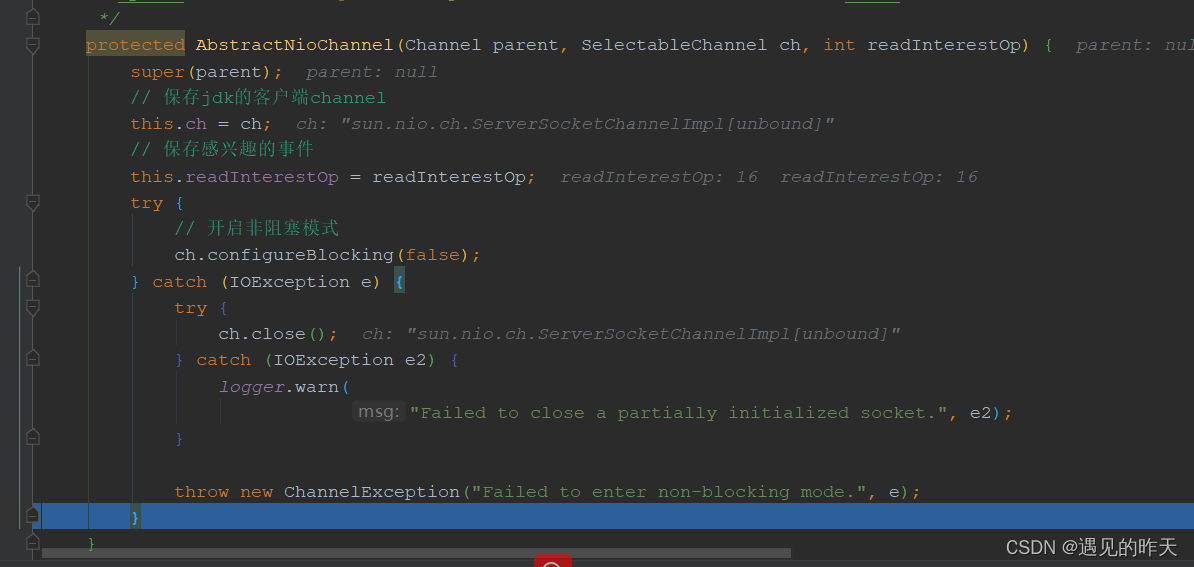
1、感兴趣的事件是 0 指客户端建立连接
2、ServerSocketChannel开启非堵塞模式,阻塞模式会怎么样?试想下,如果服务器通道阻塞,一个客户端SocketChannel与ServerSocketChannel建立连接,进行相关操作,其它的客户端怎么办?通道被占用了啊,当然这是我的理解2.2 初始化NioServerSocketChannel

@Override void init(Channel channel) { setChannelOptions(channel, newOptionsArray(), logger); setAttributes(channel, newAttributesArray()); ChannelPipeline p = channel.pipeline(); // 获取workerGroup final EventLoopGroup currentChildGroup = childGroup; /** * ServerBootStrap通过childHandler添加的childHandler,最终会在下面的ServerBootstrapAcceptor中添加进pipeline */ final ChannelHandler currentChildHandler = childHandler; final Entry<ChannelOption<?>, Object>[] currentChildOptions = newOptionsArray(childOptions); final Entry<AttributeKey<?>, Object>[] currentChildAttrs = newAttributesArray(childAttrs); /** * 向pipeline中添加一个channelHandler * ChannelInitializer对象也是一个ChannelHandler * TODO 这里向pipeline里添加了一个ChannelHandler,会在哪里被触发呢? * 答:这里的channelHandler对象会在DefaultChannelPipeline#callHandlerAddedForAllHandlers方法里执行 * 需要注意的是,这里是在ChannelInitializer抽象类的handlerAdded里调用了initChannel的抽象方法,从而调进 * 此处的匿名对象类方法里。 * */ p.addLast(new ChannelInitializer<Channel>() { @Override public void initChannel(final Channel ch) { final ChannelPipeline pipeline = ch.pipeline(); // TODO 这里是ServerBootStrap中设置的handler ChannelHandler handler = config.handler(); /** * 将ServerBootStrap在初始化的时候添加的ChannelHandler在此处真正的添加进pipeline中(在ServerTest中ServerBootStrap#childHandler添加的) */ if (handler != null) { pipeline.addLast(handler); } /** * 拿出NioServerSocketChannel绑定的NioEventLoop来执行以下线程 * * TODO 这里addLast进来的ServerBootstrapAccetor是用于workerGroup注册客户端用的! * TODO 这里的pipeline扮演这很重要的作用。 */ ch.eventLoop().execute(new Runnable() { @Override public void run() { pipeline.addLast(new ServerBootstrapAcceptor( ch, currentChildGroup, currentChildHandler, currentChildOptions, currentChildAttrs)); } }); } }); }- 1
- 2
- 3
- 4
- 5
- 6
- 7
- 8
- 9
- 10
- 11
- 12
- 13
- 14
- 15
- 16
- 17
- 18
- 19
- 20
- 21
- 22
- 23
- 24
- 25
- 26
- 27
- 28
- 29
- 30
- 31
- 32
- 33
- 34
- 35
- 36
- 37
- 38
- 39
- 40
- 41
- 42
- 43
- 44
- 45
- 46
- 47
- 48
- 49
- 50
- 51
- 52
- 53
- 54
- 55
- 56
- 57
ServerSocketChannel初始化本质上就是为绑定的ChannelPipeline(链表)设置ChannelInitializer(ChannelHandler)。这个ChannelInitializer 主要作用:
1、为ServerSocketChannel, 设置 Channelhandler(自己配置的)
2、通过NioServerSocketChannel绑定的NioEventLoop来执行以下线程任务
ServerBootstrapAccetor是用于workerGroup注册客户端用的! 这个功能后面debug展示2.3、ServerSocketChannel注册到NioEventLoop中的Selector中


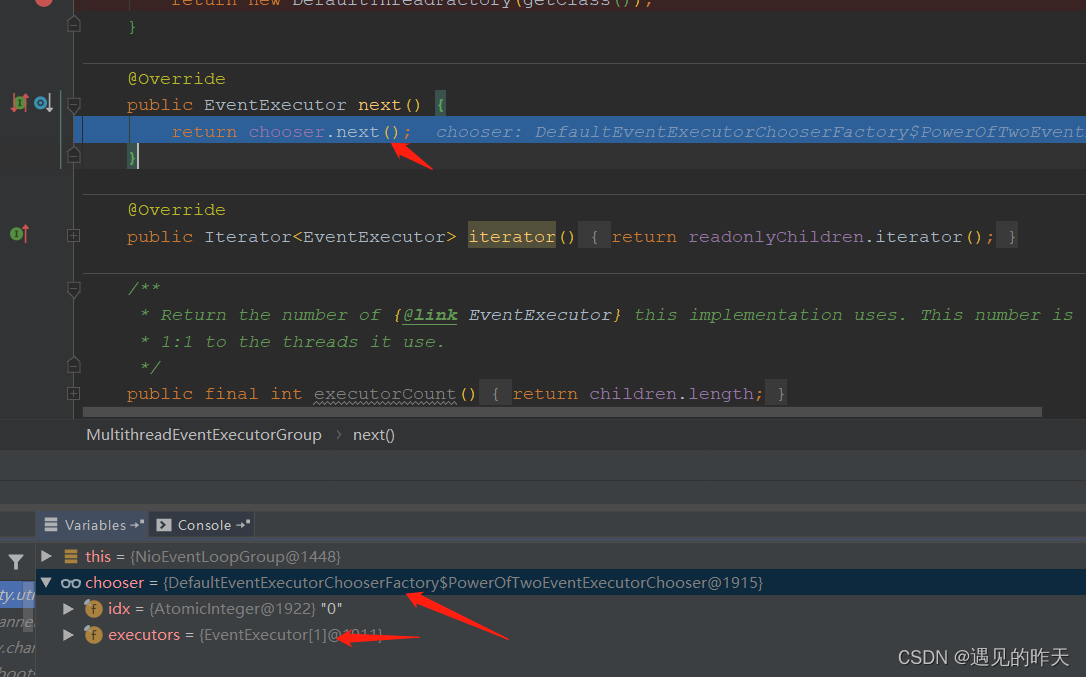
就是从BossEventLoopGroup中拿一个NioEventLoop出来,将ServerSocketChannel注册到NioEventLoop上

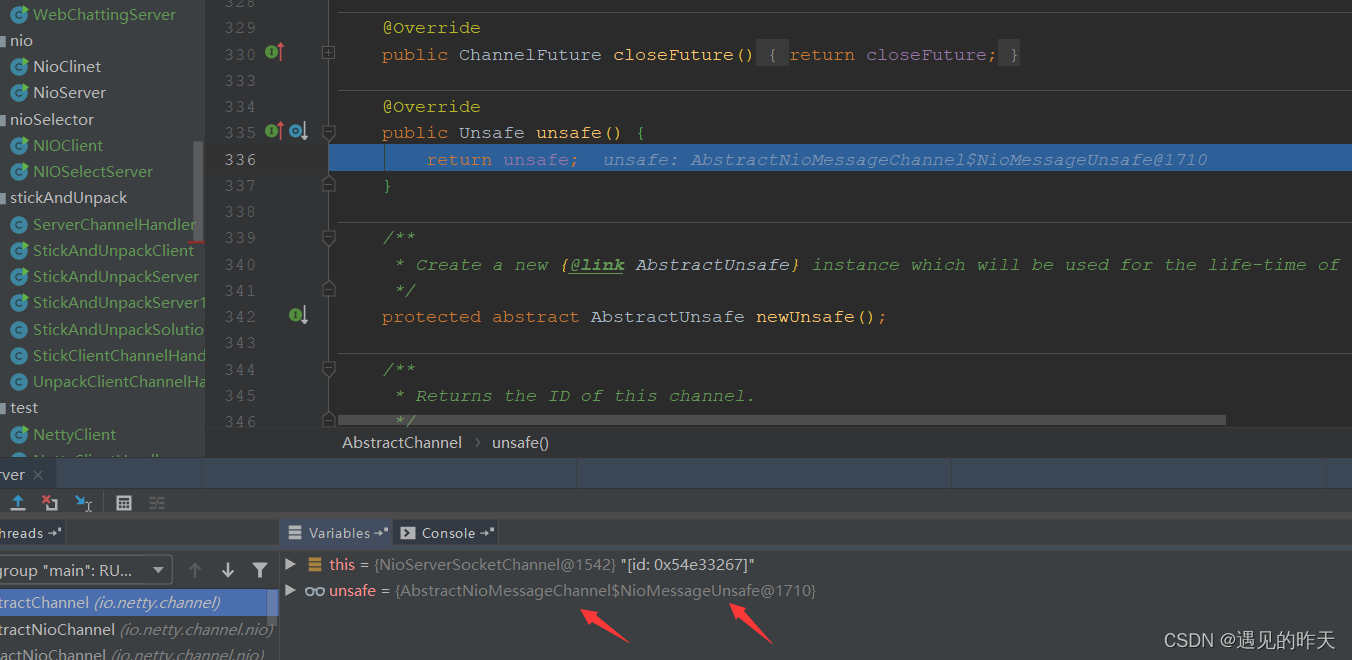
获取到SocketChannel在创建的时候创建的NioMessageUnsafe类,进行注册
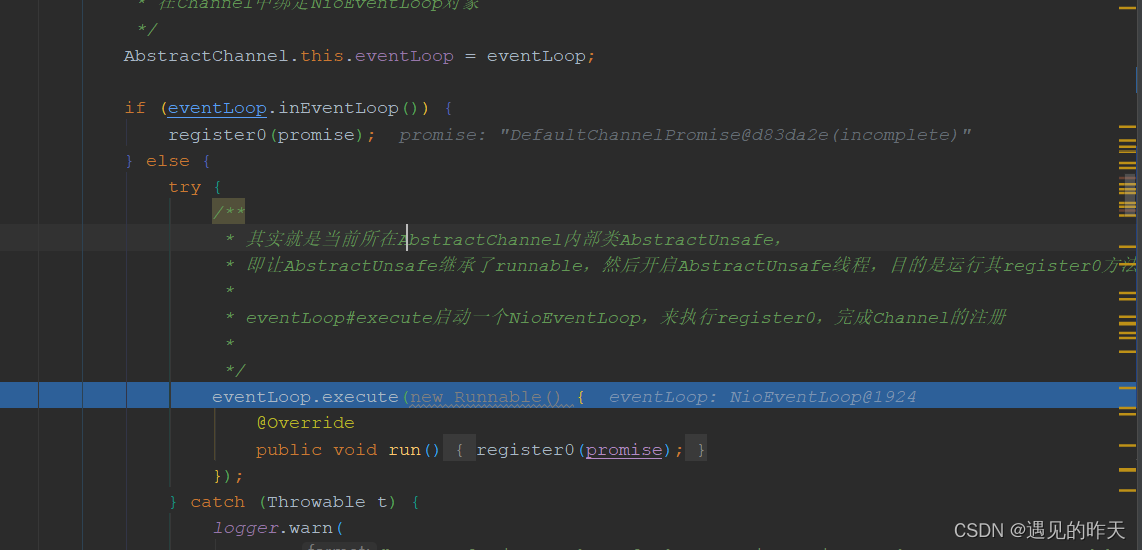
通过NioEvetLoop 进行 一个通道注册任务,执行任务private void execute(Runnable task, boolean immediate) { // 判断当前线程是在NioEventLoop线程内,还是在外部线程 boolean inEventLoop = inEventLoop(); /** * 这里添加的Task是一个注册NioServerSocketChannel的任务! * 是AbstractChannel$AbstractUnsafe的一个匿名Runnable类 */ addTask(task); // 如果是外部线程调用的 if (!inEventLoop) { /** * 这里启动一个线程,就是NioEventLoop!!启动的是NioEventLoop */ startThread(); if (isShutdown()) { boolean reject = false; try { if (removeTask(task)) { reject = true; } } catch (UnsupportedOperationException e) { // The task queue does not support removal so the best thing we can do is to just move on and // hope we will be able to pick-up the task before its completely terminated. // In worst case we will log on termination. } if (reject) { reject(); } } } if (!addTaskWakesUp && immediate) { */ wakeup(inEventLoop); } }- 1
- 2
- 3
- 4
- 5
- 6
- 7
- 8
- 9
- 10
- 11
- 12
- 13
- 14
- 15
- 16
- 17
- 18
- 19
- 20
- 21
- 22
- 23
- 24
- 25
- 26
- 27
- 28
- 29
- 30
- 31
- 32
- 33
- 34
- 35
- 36
- 37
- 38
- 39
/** * 核心工作就是启动NioEventLoop线程 */ private void doStartThread() { assert thread == null; /** * 1. 这里executor是ThreadExecutorMap类中的一个匿名Executor内部类,是Executor apply()这个方法返回的实例对象 * 2. 这里传入的execute()里面的匿名内部类是SingleThreadEventExecutor中的,所以 * 是SingleThreadEventExecutor$对象 * 3. 执行的runnable是FastThreadLocalRunnable对象 */ executor.execute(new Runnable() { @Override public void run() { thread = Thread.currentThread(); if (interrupted) { thread.interrupt(); } boolean success = false; updateLastExecutionTime(); try { // 核心,就是启动NioEventLoop!!! SingleThreadEventExecutor.this.run(); success = true; } catch (Throwable t) { logger.warn("Unexpected exception from an event executor: ", t); } finally { for (;;) { int oldState = state; if (oldState >= ST_SHUTTING_DOWN || STATE_UPDATER.compareAndSet( SingleThreadEventExecutor.this, oldState, ST_SHUTTING_DOWN)) { break; } } // Check if confirmShutdown() was called at the end of the loop. if (success && gracefulShutdownStartTime == 0) { if (logger.isErrorEnabled()) { logger.error("Buggy " + EventExecutor.class.getSimpleName() + " implementation; " + SingleThreadEventExecutor.class.getSimpleName() + ".confirmShutdown() must " + "be called before run() implementation terminates."); } } try { // Run all remaining tasks and shutdown hooks. At this point the event loop // is in ST_SHUTTING_DOWN state still accepting tasks which is needed for // graceful shutdown with quietPeriod. for (;;) { if (confirmShutdown()) { break; } } // Now we want to make sure no more tasks can be added from this point. This is // achieved by switching the state. Any new tasks beyond this point will be rejected. for (;;) { int oldState = state; if (oldState >= ST_SHUTDOWN || STATE_UPDATER.compareAndSet( SingleThreadEventExecutor.this, oldState, ST_SHUTDOWN)) { break; } } // We have the final set of tasks in the queue now, no more can be added, run all remaining. // No need to loop here, this is the final pass. confirmShutdown(); } finally { try { cleanup(); } finally { // Lets remove all FastThreadLocals for the Thread as we are about to terminate and notify // the future. The user may block on the future and once it unblocks the JVM may terminate // and start unloading classes. // See https://github.com/netty/netty/issues/6596. FastThreadLocal.removeAll(); STATE_UPDATER.set(SingleThreadEventExecutor.this, ST_TERMINATED); threadLock.countDown(); int numUserTasks = drainTasks(); if (numUserTasks > 0 && logger.isWarnEnabled()) { logger.warn("An event executor terminated with " + "non-empty task queue (" + numUserTasks + ')'); } terminationFuture.setSuccess(null); } } } } }); }- 1
- 2
- 3
- 4
- 5
- 6
- 7
- 8
- 9
- 10
- 11
- 12
- 13
- 14
- 15
- 16
- 17
- 18
- 19
- 20
- 21
- 22
- 23
- 24
- 25
- 26
- 27
- 28
- 29
- 30
- 31
- 32
- 33
- 34
- 35
- 36
- 37
- 38
- 39
- 40
- 41
- 42
- 43
- 44
- 45
- 46
- 47
- 48
- 49
- 50
- 51
- 52
- 53
- 54
- 55
- 56
- 57
- 58
- 59
- 60
- 61
- 62
- 63
- 64
- 65
- 66
- 67
- 68
- 69
- 70
- 71
- 72
- 73
- 74
- 75
- 76
- 77
- 78
- 79
- 80
- 81
- 82
- 83
- 84
- 85
- 86
- 87
- 88
- 89
- 90
- 91
- 92
- 93


1、判断当前线程是NioEventLoop内部线程还是外部线程(由于是主线程启动,所以是外部线程)
2、将通道注册任务放入NioEventLoop中任务队列中
3、包装任务,通过NioEventLoop,主要是为了从NioEventLoop的run方法开始执行
3、NioEventLoop通过ThreadFacoty创建线程,线程开始执行NioEventLoop run方法/** * NIOEventLoop执行核心 */ @Override protected void run() { int selectCnt = 0; // 阻塞选择次数 // 从NioEventLoop中的 taskQueue中 判断是否存在事件 for (;;) { // 轮训注册到selector的IO事件 为什么for(;;)比while(1)好?因为for(;;)底层的指令更少,效率更高 try { int strategy; // strategy = 0 default try { strategy = selectStrategy.calculateStrategy(selectNowSupplier, hasTasks()); // 获取策略。如果有任务则使用非阻塞方式 switch (strategy) { case SelectStrategy.CONTINUE: continue; case SelectStrategy.BUSY_WAIT: // fall-through to SELECT since the busy-wait is not supported with NIO case SelectStrategy.SELECT: // select事件执行 long curDeadlineNanos = nextScheduledTaskDeadlineNanos(); // 当前截止时间 if (curDeadlineNanos == -1L) { // 表明没有定时任务 curDeadlineNanos = NONE; // nothing on the calendar } nextWakeupNanos.set(curDeadlineNanos); try { if (!hasTasks()) { // 如果没有任务,则select阻塞等待任务 任务存放在SingleThreadEventLoop // TODO 测试 System.err.println("[CurrentThread = " + Thread.currentThread().getName() + "]I'm selecting... waiting for selectKey or tasks!"); strategy = select(curDeadlineNanos); } } finally { // This update is just to help block unnecessary selector wakeups // so use of lazySet is ok (no race condition) // 标记未唤醒状态 nextWakeupNanos.lazySet(AWAKE); } // fall through default: } } catch (IOException e) { // If we receive an IOException here its because the Selector is messed up. Let's rebuild // the selector and retry. https://github.com/netty/netty/issues/8566 rebuildSelector0(); selectCnt = 0; handleLoopException(e); continue; } System.err.println("[CurrentThread = " + Thread.currentThread().getName() + "] select() 调用完了,此时已经有事件进来了?"); selectCnt++; // 选择次数+1 cancelledKeys = 0; needsToSelectAgain = false; final int ioRatio = this.ioRatio; // 这里的ioRatio默认是50 boolean ranTasks; if (ioRatio == 100) { try { if (strategy > 0) { processSelectedKeys(); // 处理选择key,处理io相关的逻辑 } } finally { ranTasks = runAllTasks(); // 处理外部线程扔到taskQueue里的任务,这里的taskQueue是一个mpscQueue } } else if (strategy > 0) { final long ioStartTime = System.nanoTime(); // 计算处理选择key的时间 try { processSelectedKeys(); } finally { // Ensure we always run tasks. final long ioTime = System.nanoTime() - ioStartTime; ranTasks = runAllTasks(ioTime * (100 - ioRatio) / ioRatio); } } else { /** * 在Netty中,有两种任务,普通任务和定时任务。在执行任务的时候,会把定时任务队列里的task扔进普通任务队列里, * 这里的普通任务队列就是mpscQueue,接着就挨个执行mpscQueue里的任务。 * * 任务:普通任务 、定时任务 * 队列:普通任务队列mpscQueue 、 定时任务队列 * */ ranTasks = runAllTasks(0); // This will run the minimum number of tasks } if (ranTasks || strategy > 0) { if (selectCnt > MIN_PREMATURE_SELECTOR_RETURNS && logger.isDebugEnabled()) { logger.debug("Selector.select() returned prematurely {} times in a row for Selector {}.", selectCnt - 1, selector); } selectCnt = 0; } else if (unexpectedSelectorWakeup(selectCnt)) { // Unexpected wakeup (unusual case) 解决空轮训Bug,重置selectCnt,重新生成selector selectCnt = 0; } } catch (CancelledKeyException e) { // Harmless exception - log anyway if (logger.isDebugEnabled()) { logger.debug(CancelledKeyException.class.getSimpleName() + " raised by a Selector {} - JDK bug?", selector, e); } } catch (Error e) { throw (Error) e; } catch (Throwable t) { handleLoopException(t); } finally { // Always handle shutdown even if the loop processing threw an exception. try { if (isShuttingDown()) { closeAll(); if (confirmShutdown()) { return; } } } catch (Error e) { throw (Error) e; } catch (Throwable t) { handleLoopException(t); } } } }- 1
- 2
- 3
- 4
- 5
- 6
- 7
- 8
- 9
- 10
- 11
- 12
- 13
- 14
- 15
- 16
- 17
- 18
- 19
- 20
- 21
- 22
- 23
- 24
- 25
- 26
- 27
- 28
- 29
- 30
- 31
- 32
- 33
- 34
- 35
- 36
- 37
- 38
- 39
- 40
- 41
- 42
- 43
- 44
- 45
- 46
- 47
- 48
- 49
- 50
- 51
- 52
- 53
- 54
- 55
- 56
- 57
- 58
- 59
- 60
- 61
- 62
- 63
- 64
- 65
- 66
- 67
- 68
- 69
- 70
- 71
- 72
- 73
- 74
- 75
- 76
- 77
- 78
- 79
- 80
- 81
- 82
- 83
- 84
- 85
- 86
- 87
- 88
- 89
- 90
- 91
- 92
- 93
- 94
- 95
- 96
- 97
- 98
- 99
- 100
- 101
- 102
- 103
- 104
- 105
- 106
- 107
- 108
- 109
- 110
- 111
- 112
- 113
- 114
- 115
- 116
- 117
- 118
- 119
- 120
- 121
- 122
就是NioEventLoop中的线程进行死循环处理事件,通过事件进行驱动处理
1、判断NioEventLoop中的任务队列中是否存在任务 (存在通道注册任务哦!!),从而定义处理策略
strategy = selectStrategy.calculateStrategy(selectNowSupplier, hasTasks()); // 获取策略。如果有任务则使用非阻塞方式- 1
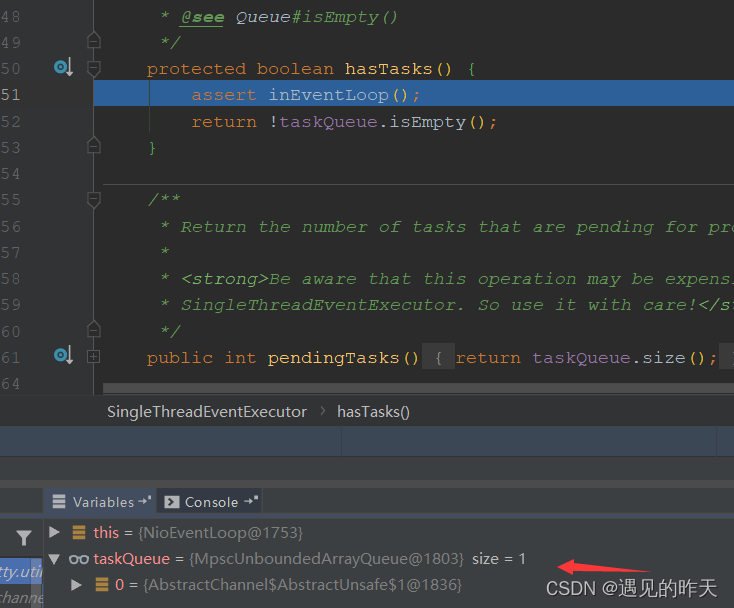
有任务,那么 通过 selector 获取select 值,selector如果获取这个值呢?没看懂

2、拿到的select值为0,好像是没有SelectedKey,那么执行runTask,从任务队列中获取 之前的通道注册事件
protected boolean runAllTasks(long timeoutNanos) { // 从定时任务队列中把任务聚合到普通队列里 fetchFromScheduledTaskQueue(); // 从普通任务队列里拿任务 Runnable task = pollTask(); if (task == null) { afterRunningAllTasks(); return false; } final long deadline = timeoutNanos > 0 ? ScheduledFutureTask.nanoTime() + timeoutNanos : 0; long runTasks = 0; long lastExecutionTime; for (;;) { // 真正执行了任务 safeExecute(task); taskTimes++; runTasks ++; // Check timeout every 64 tasks because nanoTime() is relatively expensive. // XXX: Hard-coded value - will make it configurable if it is really a problem. // 当累积到64个任务的时候,这里判断是因为任务的执行是比较耗时的 if ((runTasks & 0x3F) == 0) { lastExecutionTime = ScheduledFutureTask.nanoTime(); // 如果当前时间 >= 截止时间,即已经超过了截止时间了 if (lastExecutionTime >= deadline) { break; } } // 将任务从任务队列中弹出 task = pollTask(); if (task == null) { lastExecutionTime = ScheduledFutureTask.nanoTime(); break; } } afterRunningAllTasks(); this.lastExecutionTime = lastExecutionTime; return true; }- 1
- 2
- 3
- 4
- 5
- 6
- 7
- 8
- 9
- 10
- 11
- 12
- 13
- 14
- 15
- 16
- 17
- 18
- 19
- 20
- 21
- 22
- 23
- 24
- 25
- 26
- 27
- 28
- 29
- 30
- 31
- 32
- 33
- 34
- 35
- 36
- 37
- 38
- 39
- 40
- 41
- 42
- 43
- 44
- 45
- 46
- 47
- 48

任务真正被执行了哦!

@Override protected void doRegister() throws Exception { boolean selected = false; for (;;) { try { /** * 调用selectableChannel的register方法,用于在给定的NioEventLoop上的selector上注册这个通道channel,并返回一个选择键 * * OP_READ = 1 << 0 读操作位 * OP_WRITE = 1 << 2 写操作位 * OP_CONNECT = 1 << 3 客户端连接到服务端操作位 * OP_ACCEPT = 1 << 4 服务端接受客户端链接操作位 * * 此处调用了jdk nio的selectableChannel的register方法,传入的操作位是0,表明对任何事件都不感兴趣,仅仅是完成注册操作。 * * 向selector注册channel成功后,会返回一个selectionKey,后续可以拿着这个selectionKey获取到channel。 * * javaChannel()拿到的是:AbstractSelectableChannel,在其register方法里,会调用addKey,给selectionKey添加默认数组大小3 * 并最终调用jdk底层register * */ selectionKey = javaChannel().register(eventLoop().unwrappedSelector(), 0, this); return; } catch (CancelledKeyException e) { if (!selected) { // Force the Selector to select now as the "canceled" SelectionKey may still be // cached and not removed because no Select.select(..) operation was called yet. /** * 由于未调用select#select(),因此可能仍然在缓存,而未删除但是已经取消了的selectionKey,强制调用selectNow() * 将selectionKey从Selector上删除 */ eventLoop().selectNow(); selected = true; } else { // We forced a select operation on the selector before but the SelectionKey is still cached // for whatever reason. JDK bug ? throw e; } } } }- 1
- 2
- 3
- 4
- 5
- 6
- 7
- 8
- 9
- 10
- 11
- 12
- 13
- 14
- 15
- 16
- 17
- 18
- 19
- 20
- 21
- 22
- 23
- 24
- 25
- 26
- 27
- 28
- 29
- 30
- 31
- 32
- 33
- 34
- 35
- 36
- 37
- 38
- 39
- 40
- 41
拿到ServerSocketChannel,注册到NioEventLoop中的Selector中 ,注册成功返回一个SelectionKey 。 对应代码
selectionKey = javaChannel().register(eventLoop().unwrappedSelector(), 0, this);这个0表示通道注册@Override protected final SelectionKey register(AbstractSelectableChannel ch, int ops, Object attachment) { if (!(ch instanceof SelChImpl)) throw new IllegalSelectorException(); SelectionKeyImpl k = new SelectionKeyImpl((SelChImpl)ch, this); k.attach(attachment); // register (if needed) before adding to key set implRegister(k); // add to the selector's key set, removing it immediately if the selector // is closed. The key is not in the channel's key set at this point but // it may be observed by a thread iterating over the selector's key set. keys.add(k); try { k.interestOps(ops); } catch (ClosedSelectorException e) { assert ch.keyFor(this) == null; keys.remove(k); k.cancel(); throw e; } return k; }- 1
- 2
- 3
- 4
- 5
- 6
- 7
- 8
- 9
- 10
- 11
- 12
- 13
- 14
- 15
- 16
- 17
- 18
- 19
- 20
- 21
- 22
- 23
- 24
- 25
- 26
- 27
1、将ServerSocketChannel,Selector 封装成 SelectionKeyImpl(所谓的通道注册凭证)
2、将ski (SelectionKeyImpl)放入 selector newKeys 队列
3、将ski 放入 selector的 SelectionKey集合中
4、设置NioEvenLoop中当前这个Selector 感兴趣的事件/操作至此成功将ServerSocketChannel 放入 Selector中,并设置Selector所感兴趣的事件 0
2.4、调用ServerSocketChannel中的pipeLine,进行AddHandler

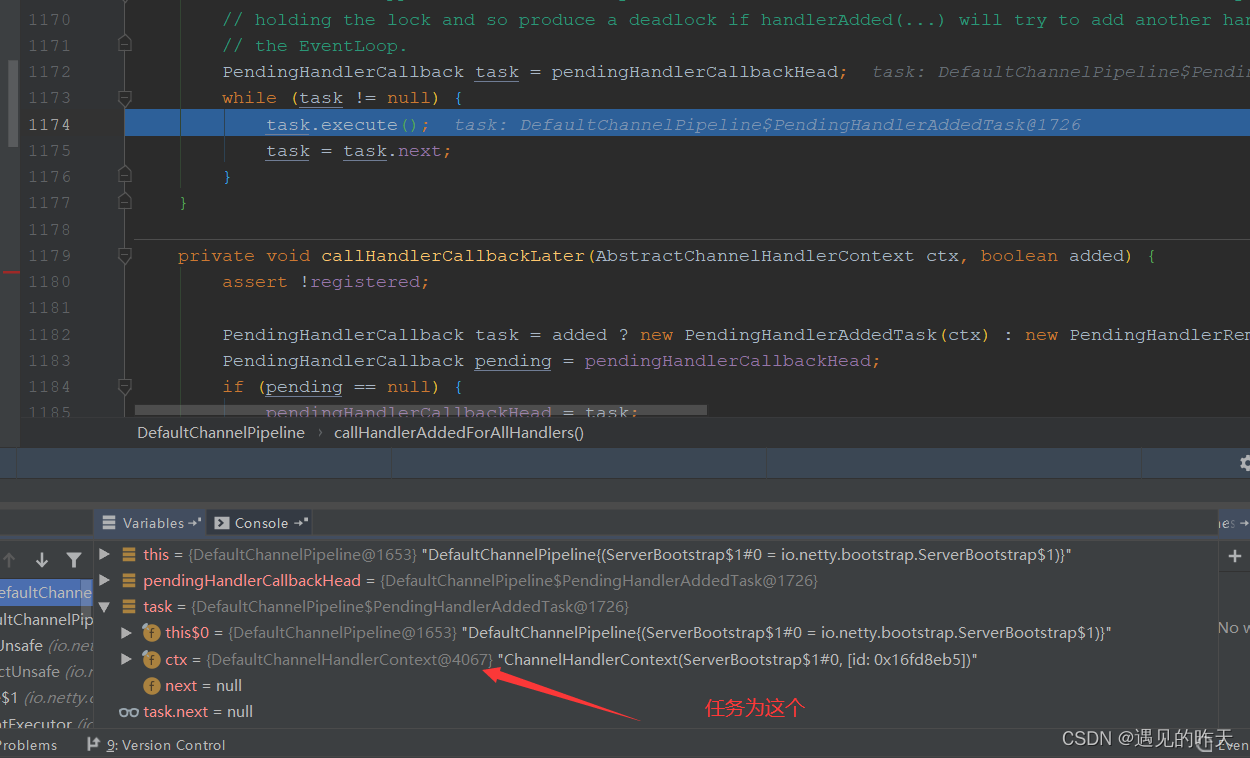
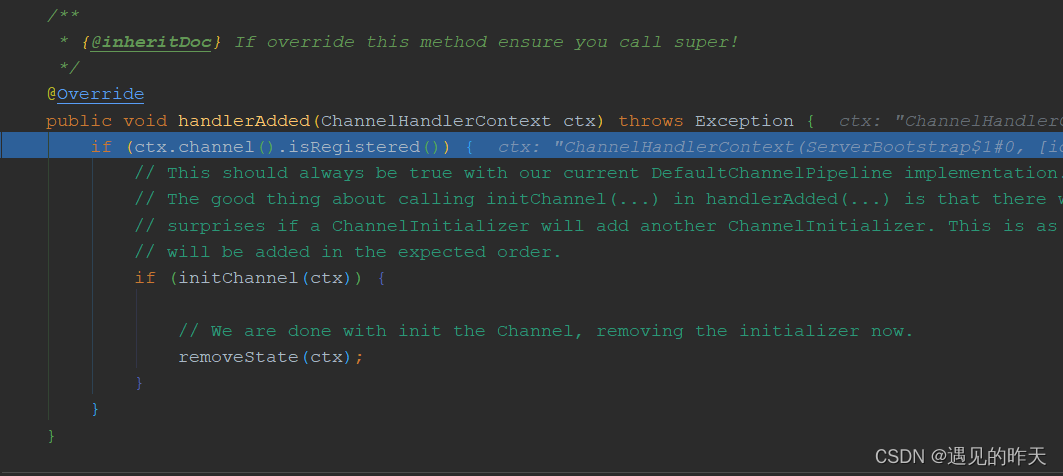

这里又会走到NioEventLoop中的run方法中,然后执行上图任务,整个流程走完
问题:
1、Selector如何进行Select
在NioEventLoop,ServerSocketChannel创建完后,会将channel注册到Selector中并设置通道感兴趣的事件,这里是注册通道事件。NioEventLoop会开启一个线程死循环,run方法内部 Selector会通过 select()/selectNow() 以阻塞非阻塞方式等待感兴趣的事件。具体需要看Selector 选择的源码如果没有任务,select会阻塞

如果有任务,以非阻塞的方式执行
如果通道有IO事件,那么进行处理,内部会对感兴趣的客户端建立连接事件/通道注册 进行处理

总结

-
相关阅读:
中端酒店迈入“30+”,维也纳酒店如何化解行业的三大难关
Django框架之模板层template的一些介绍和使用
【每日一题】补档 ABC309F - Box in Box | 三维偏序 | 树状数组 | 中等
中秋快乐! Happy Mid-autumn Festival!
什么是网络流量监控
Nginx-HTTPS 配置
【数字图像处理】RGB 转灰度图
拓端tecdat|R语言使用K-Means聚类可视化WiFi访问
RocketMQ特性--事务消息是个啥,咋发出去的呢?
【办公类-16-07-04】合并版“2023下学期 中班户外游戏(有场地和无场地版,一周一次)”(python 排班表系列)
- 原文地址:https://blog.csdn.net/qq_44787816/article/details/126838705