-
C++类型转换与函数
前置:C语言
1.1 IO
1.1.1 cout 输出流
操作符 描述 ws 提取空白符 endl 插入换行符并刷新流 ends 插入空字符 setw(int) 设置域宽 setprecision(int) 设置浮点数小数位数(包含小数点) cout << setw(5) << setprecision(3) << 3.1415 << endl; //设置域宽为5,小数点后保留两位有效小数- 1
- 2
setw() 函数会用当前的填充字符控制对齐位置,默认的填充字符是空格
可以通过
setfill来设置填充字符#include#include using namespace std; int main(void) { cout << setfill('0') << setw(10) << 45698 << endl;//0000045698 return 0; } - 1
- 2
- 3
- 4
- 5
- 6
- 7
- 8
- 9
- 10
CPU所执行的指令并不对操作数的类型加以区分,对各个操作数都执行相同的操作,编译器根据变量的数据类型选择合适的指令
-
符号扩展:有符号数据类型,用符号位扩展
-
0扩展:无符号数据类型,用0填充
1.1.2 I/O格式化输出
cout是 STL 库提供的一个iostream实例,拥有ios_base基类的全部函数和成员数据进行格式化定义可以使用
setf或unsetf函数和flag函数cout维护一个当前的格式状态setf和unsetf是在当前的格式状态上追加或删除指定的格式flag则是将当前格式状态全部替换成指定的格式操作符名 含义 ios::dec数值类型采用十进制表示 ios::hex数值类型采用十六进制表示 ios::oct数值类型采用八进制表示 ios::showbase为整数添加一个表示其进制的前缀 ios::internal在符号位和数值中间按需插入字符,使两端对齐 ios::left在串的末尾插入填充字符使串左对齐 ios::right在串的末尾插入填充字符使串右对齐 ios::boolalpha将 bool类型的值以true或false表示ios::fixed将浮点数按照普通定点格式处理(非科学计数法) ios::scientific将浮点数按科学计数法处理(带指数域) ios::showpoint在浮点数表示的小数中强制插入小数点(默认情况下浮点数表示的整数不显示小数点) ios::showpos强制在正数前添加 +ios::skipws忽略前导空格,主要用于 cinios::unitbuf在每次输出后清空缓存 ios::uppercase强制大写字母 以上每种格式都独立占用一bit,可以用
|运算符组合使用,调用setf/unsetf设置输出格式一般用法setf可接受一个或两个参数cout.setf(指定格式);cout.setf(指定格式,删除的格式);
cout.setf(ios::right | ios::hex);//设置十六进制右对齐 cout.setf(ios::right ,ios::adjustfield);//取消其他对对齐,设置为右对齐- 1
- 2
以预定义的bit组合位
ios::adjustifield对齐格式的bit组合位ios::basefield进制的bit组合位ios::floatfield浮点表示方式的bit组合位
设置格式后,之后所有的
cout都会按照指定的格式状态执行如果在一次输出过程中需要混在多种格式,使用
cout的成员函数来处理就很不方便了,STL提供了一套fixed,就可以将一个ostream的对象作为参数,在内部调用setf(ios::fixed)后再返回原对象。此外#include#include - 1
- 2
缩进
将输出内容按指定的宽度对齐
#include#include using namespace std; int main(void) { cout.flags(ios::left); //左对齐 cout << setw(10) << -456.98 << "The End" << endl; cout.flags(ios::internal); //两端对齐 cout << setw(10) << -456.98 << "The End" << endl; cout.flags(ios::right); //右对齐 cout << setw(10) << -456.98 << "The End" << endl; return 0; } - 1
- 2
- 3
- 4
- 5
- 6
- 7
- 8
- 9
- 10
- 11
- 12
- 13
- 14
- 15
#include#include using namespace std; int main(void) { cout << left << setw(10) << -456.98 << "The End" << endl; //左对齐 cout << internal << setw(10) << -456.98 << "The End" << endl; //两端对齐 cout << right << setw(10) << -456.98 << "The End" << endl; //右对齐 return 0; } - 1
- 2
- 3
- 4
- 5
- 6
- 7
- 8
- 9
- 10
- 11
- 12

整数
#include#include using namespace std; int main(void) { cout.setf(ios::showpos | ios::uppercase); cout << showbase << hex << setw(4) << 12 << setw(12) << -12 << endl; cout << showbase << dec << setw(4) << 12 << setw(12) << -12 << endl; cout << showbase << oct << setw(4) << 12 << setw(12) << -12 << endl; cout.unsetf(ios::showpos | ios::uppercase); cout << noshowbase << hex << setw(4) << 12 << setw(12) << -12 << endl; cout << noshowbase << dec << setw(4) << 12 << setw(12) << -12 << endl; cout << noshowbase << oct << setw(4) << 12 << setw(12) << -12 << endl; return 0; } - 1
- 2
- 3
- 4
- 5
- 6
- 7
- 8
- 9
- 10
- 11
- 12
- 13
- 14
- 15
- 16
- 17
- 18

由于
setbase()函数设置整数进制反而比上述方法还复杂,所以除非特殊的代码规范要求,一般不建议使用小数
分为两种:
- 定点表示
ios::fixed,不带指数域 - 科学计数法表示
ios::scientific带指数域
与
setprecision配合使用,可以指定小数点后保留位数#include#include using namespace std; int main(void) { cout.setf(ios::fixed); cout << setprecision(0) << 12.05 << endl; cout << setprecision(1) << 12.05 << endl; cout << setprecision(2) << 12.05 << endl; cout << setprecision(3) << 12.05 << endl; cout.setf(ios::scientific, ios::floatfield); cout << setprecision(0) << 12.05 << endl; cout << setprecision(1) << 12.05 << endl; cout << setprecision(2) << 12.05 << endl; cout << setprecision(3) << 12.05 << endl; return 0; } - 1
- 2
- 3
- 4
- 5
- 6
- 7
- 8
- 9
- 10
- 11
- 12
- 13
- 14
- 15
- 16
- 17
- 18
- 19
- 20
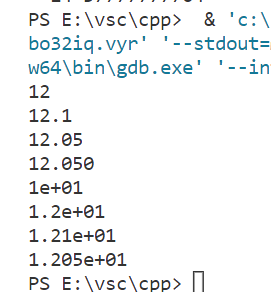
有时因为机器表示浮点数的舍入误差,需要手动修正
#include#include using namespace std; int main(void) { cout << fixed << setprecision(1) << 2.05 << endl;//2.0 cout << fixed << setprecision(1) << 2.05 + 1e-8 << endl;//2.1 return 0; } - 1
- 2
- 3
- 4
- 5
- 6
- 7
- 8
- 9
- 10
- 11
字符串
字符串的输出处理主要是对齐,
字符串的输入方法
getline()会读取屏幕上输入的字符,直至遇到换行符\n位置getline(指定输入流,指定一个string对象)getline(指定输入流,指定一个string对象,指定的结束字符)
getline不会读入结束符号,读取指针会跳转至下一个非结束字符处#include#include #include using namespace std; int main(void) { string str1, str2; getline(cin, str1); cin >> str2; cout << str1 << endl << str2 << endl; return 0; } - 1
- 2
- 3
- 4
- 5
- 6
- 7
- 8
- 9
- 10
- 11
- 12
- 13
- 14
- 15
输入:
abc
abc结果:
abc
abc缓冲区
由于调用系统函数在屏幕上逐个显示字符是很慢的,因此cin/cout为了加快速度使用缓冲区技术,粗略的讲就是暂时不输出指定的字符,而是存放在缓冲区中,在合适的时机一次性输出到屏幕上
如果要和C标准库的stdio库函数混合使用就必须要小心的处理缓冲区了
如果要与scanf和printf联合使用,务必在调用cout前加上
cout.sync_with_stdio(),设置与stdio同步,否则输出的数据顺序会发生混乱。flush和endl都会将当前缓冲区中的内容立即写入到屏幕上,而unitbuf/nounitbuf可以禁止或启用缓冲区。
#include#include using namespace std; int main(void) { cout << 123 << flush << 456 << endl; cout << unitbuf << 123 << nounitbuf << 456 << endl; return 0; } - 1
- 2
- 3
- 4
- 5
- 6
- 7
- 8
- 9
- 10
1.2 函数
C++完全兼容了 C语言结构化程序设计
- 自顶向下:针对可能存在二义性的问题描述,转化为流程化、有限确定的算法描述,进而用无二义性的程序进行实现
- 按功能划分模块
- 每一模块都由顺序,选择,循环三种基本结构组成
- 模块化实现的具体方法为子程序
1.2.1 基本结构
/*求x的n次方*/ # includeusing namespace std; double mypower(int x,int n){ double val = 1.0; while(n--) val *= x; return val; } int main(){ int x,n; cin >> x >> n; cout << x << "的" << n << "次幂是:" << mypower(x,n) << endl; return 0; } - 1
- 2
- 3
- 4
- 5
- 6
- 7
- 8
- 9
- 10
- 11
- 12
- 13
- 14
- 15
- 16
- 17
- 18
- 19
- 20
- 21
/*二进制转十进制*/ # includeusing namespace std; /*x的n次幂*/ double power(int x,int n){ double val = 1.0; while(n--) val *= x; return val; } int main(){ int val = 0; char ch; /*每8位为一组*/ for(int i = 8;i >= 0;--i){ cin >> ch; if('1' == ch) val += static_cast<int>(power(2,i)); } return 0; } - 1
- 2
- 3
- 4
- 5
- 6
- 7
- 8
- 9
- 10
- 11
- 12
- 13
- 14
- 15
- 16
- 17
- 18
- 19
- 20
- 21
- 22
- 23
- 24
- 25
- 26
- 27
- 28
随机数
/*随机数的获取*/ # include# include using namespace std; enum GameStatus{WIN,LOSE,PLAYING}; /*产生结果*/ int rollDice(){ int die1 = 1 + rand()%6; int die2 = 1 + rand()%6; cout << "payer rolled" << die1 << "+" << die2 << "=" << die1 + die2 << endl; return die1 + die2; } int main(){ int sum,myPoint; GameStatus status; unsigned seed; cin >> seed;//输入随机数种子,即为随机数序列设置初值,不同初值,产生的随机数序列不同 srand(seed);//产生随机数序列 sum = rollDice(); switch(sum){ case 7: case 11: status = WIN; break; case 2: case 3: case 12: status = LOSE; break; default: status = PLAYING; myPoint = sum; cout << "point is" << sum << endl; } while(PLAYING == status){ sum = rollDice(); if(sum == myPoint) status == WIN; else if(7 == sum) status == LOSE; } if(WIN == status) cout << "You win" << endl; else cout << "You lose" << endl; return 0; } - 1
- 2
- 3
- 4
- 5
- 6
- 7
- 8
- 9
- 10
- 11
- 12
- 13
- 14
- 15
- 16
- 17
- 18
- 19
- 20
- 21
- 22
- 23
- 24
- 25
- 26
- 27
- 28
- 29
- 30
- 31
- 32
- 33
- 34
- 35
- 36
- 37
- 38
- 39
- 40
- 41
- 42
- 43
- 44
- 45
- 46
- 47
- 48
- 49
- 50
- 51
- 52
- 53
- 54
- 55
- 56
- 57
- 58
- 59
数学函数
s i n ( x ) = x + x 3 3 ! + x 5 5 ! + . . . + x 2 n − 1 ( 2 n − 1 ) !
sin(x)=x+3!x3+5!x5+...+(2n−1)!x2n−1s i n ( x ) = x + x 3 3 ! + x 5 5 ! + . . . + x 2 n − 1 ( 2 n − 1 ) ! # include# include using namespace std; const double TINY_VALUE = 1e-10; double tsin(double x){ double g = 0; double t = x; int n = 1; do{ g += t; n++; t = -t*x*x/(2*n-1)/(2*n-1); }while(fabs(t) >= TINY_VALUE);//涉及精确度,添加精度变量 return g; } - 1
- 2
- 3
- 4
- 5
- 6
- 7
- 8
- 9
- 10
- 11
- 12
- 13
- 14
- 15
- 16
- 17
- 18
- 19
- 20
1.2.2 递归
# includeusing namespacce std; int c(int n,int k){ if(k > n) return 0; else if(n == k || k == 0) return 1; else return c(n-1,k)+c(n-1,k-1); } int main(){ int n,k; cin >> n >> k; cout << "C(n,k)" << c(n,k) << endl; return 0; } - 1
- 2
- 3
- 4
- 5
- 6
- 7
- 8
- 9
- 10
- 11
- 12
- 13
- 14
- 15
- 16
- 17
- 18
- 19
- 20
- 21
1.2.3 引用形参
一个变量的别名,指向同一块内存空间
声明引用时,必须对他初始化,使他指向已存在的对象
- 只能初始化,不能修改
在作为函数参数时:执行主调函数中的 调用 时才会为变量分配内存,同时用实参来初始化形参
1.2.4 内联函数
内联函数不在调用时发生控制转移,只是将代码嵌入到调用处
适用于功能简单,规模小,经常使用的函数
inline 数据类型 函数名(形参列表){ /*函数体*/ }- 1
- 2
- 3
1.2.5 带默认形参的函数
在函数声明时,声明默认值
带默认形参值的形参必须在参数列表的最后
不允许对同于函数的形参多次定义,默认形参只能声明一次,声明时初始化,定义是不需要再次初始化的
1.2.6 函数重载
两个以上的函数,具有相同的函数名,但是形参个数或数据类型不同,编译器根据不同的参数列表调用最佳匹配函数
- 构造函数可以重载,析构函数不能重载
在C标准中
-
求整数的绝对值
abs()和labs()应该包含stdlib.h -
求浮点数的绝对值
fabs()应该包含math.h
在C++标准中
-
stdlib.h:
int abs(int n);long int abs(long int n); -
math.h:
double abs(int n);float abs(float x);long double abs(long double x);
-
相关阅读:
elasticsearch-analysis-dynamic-synonym同义词插件实现热更
过滤器Filter
并发-生产者消费者、线上问题定位、性能测试、异步任务池
常说的I2C协议是干啥的(电子硬件)
如何高性能、高效率地实现3D Web轻量化?
Chrome插件 — ReRes
python的opencv操作记录(八)——小波变换
微信小程序插件--wxml-to-canvas(生成图片)
Survey on Cooperative Perception in an Automotive Context 论文阅读
adb Error: failed to write; /data/local/tmp/??.apk (No such file or directory)
- 原文地址:https://blog.csdn.net/qq_40479037/article/details/126807125
