-
【数据结构与算法】---OJ手撕链表题
作者:旧梦拾遗186
专栏:数据结构成长日记

每日励志:
你没资格半途而废,你没资格破罐子破摔,你只能让自己活得比任何人都好,比任何人都强大,你已经没有退路。
前言:
小编带大家学习链表OJ题。
目录
移除链表元素
移除链表元素
 https://leetcode.cn/problems/remove-linked-list-elements/
给你一个链表的头节点
head和一个整数val,请你删除链表中所有满足Node.val == val的节点,并返回 新的头节点 。示例 1:
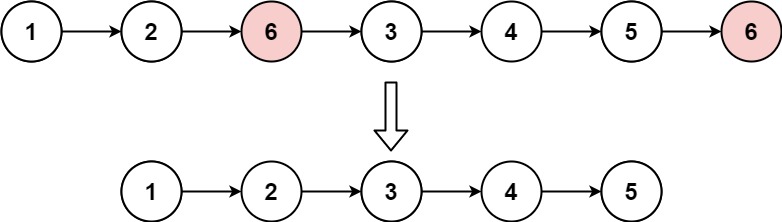
输入:head = [1,2,6,3,4,5,6], val = 6
输出:[1,2,3,4,5]
示例 2:
输入:head = [], val = 1
输出:[]
示例 3:
输入:head = [7,7,7,7], val = 7
输出:[]
提示:
- 列表中的节点数目在范围
[0, 104]内 1 <= Node.val <= 500 <= val <= 50
题解
思路一:一种比较普遍的方式,边遍历边找不同。我们可以通过定义两个指针,一个指向头节点,一个置为NULL。当遇到值为相同的时候,直接跳过去。指向下一位。同时,我们要去注意头删的问题,因为题目中给出的函数具有头结点head。
- struct ListNode* removeElements(struct ListNode* head, int val){
- struct ListNode* cur=head;
- struct ListNode* pre=NULL;
- while(cur)
- {
- if(cur->val==val)
- {
- if(cur==head)
- {
- head=head->next;
- free(cur);
- cur=head;
- }
- else
- {
- pre->next=cur->next;
- free(cur);
- cur=pre->next;
- }
- }
- else
- {
- pre=cur;
- cur=cur->next;
- }
- }
- return head;
- }

思路二:给一个新的链表,不是val的结点尾插到新链表即可。最后结点置为NULL。同时,还是要注意头结点的问题
- struct ListNode* removeElements(struct ListNode* head, int val){
- struct ListNode* cur=head;
- struct ListNode* tail=NULL;
- struct ListNode* newnode=NULL;
- while(cur)
- {
- if(cur->val!=val)
- {
- if(tail==NULL)
- {
- newnode=tail=cur;
- }
- else
- {
- tail->next=cur;
- tail=tail->next;
- }
- cur=cur->next;
- }
- else
- {
- struct ListNode* del=cur;
- cur=cur->next;
- free(del);
- }
- }
- if(tail)
- {
- tail->next=NULL;
- }
- return newnode;
- }

我们不难发现,如果没有头结点,我们都要去关注,所以我们可以给出带头结点(哨兵链表)的单链表来进行实现:
- struct ListNode* removeElements(struct ListNode* head, int val){
- struct ListNode*cur = head;
- struct ListNode*guard = (struct ListNode*)malloc(sizeof(struct ListNode));
- struct ListNode*tail = guard;
- while(cur)
- {
- if(cur->val != val)
- {
- // tail=cur;
- tail->next = cur;
- tail = tail->next;
- cur = cur->next;
- }
- else
- {
- struct ListNode*del = cur;
- cur = cur->next;
- free(del);
- }
- }
- if(tail)
- tail->next = NULL;
- head = guard->next;
- free(guard);
- return head;
- }
有头结点之后我们就不需要去考虑删除第一个元素的事了。
反转链表
反转链表
https://leetcode.cn/problems/reverse-linked-list/给你单链表的头节点 head ,请你反转链表,并返回反转后的链表。
示例 1:
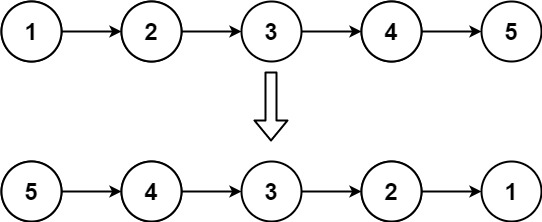
输入:head = [1,2,3,4,5]
输出:[5,4,3,2,1]
示例 2:
输入:head = [1,2]
输出:[2,1]
示例 3:输入:head = []
输出:[]
提示:
链表中节点的数目范围是 [0, 5000]
-5000 <= Node.val <= 5000
进阶:链表可以选用迭代或递归方式完成反转。你能否用两种方法解决这道题?
题解
思路一:取结点头插到新的结点
- struct ListNode* reverseList(struct ListNode* head){
- struct ListNode* cur=head;
- struct ListNode* newhead=NULL;
- while(cur)
- {
- struct ListNode* next=cur->next;
- cur->next=newhead;
- newhead=cur;
- cur=next;
- }
- return newhead;
- }


思路二:直接把指针的方向进行翻转即可,使得链表翻转
- struct ListNode* reverseList(struct ListNode* head){
- struct ListNode* cur=head;
- struct ListNode* pre=NULL;
- while(cur)
- {
- struct ListNode* next=cur->next;
- cur->next=pre;
- pre=cur;
- cur=next;
- }
- return pre;
- }

合并两个有序链表
力扣
https://leetcode.cn/problems/merge-two-sorted-lists/description/将两个升序链表合并为一个新的 升序 链表并返回。新链表是通过拼接给定的两个链表的所有节点组成的。
示例 1:

输入:l1 = [1,2,4], l2 = [1,3,4]
输出:[1,1,2,3,4,4]
示例 2:输入:l1 = [], l2 = []
输出:[]
示例 3:输入:l1 = [], l2 = [0]
输出:[0]
提示:
两个链表的节点数目范围是 [0, 50]
-100 <= Node.val <= 100
l1 和 l2 均按 非递减顺序 排列来源:力扣(LeetCode)
链接:https://leetcode.cn/problems/merge-two-sorted-lists
著作权归领扣网络所有。商业转载请联系官方授权,非商业转载请注明出处。题解:
思路:比较简单,创建一个带头结点的链表,去比较数据的大小尾插到新链表的后面即可。
- struct ListNode* mergeTwoLists(struct ListNode* list1, struct ListNode* list2){
- struct ListNode* cur1=list1;
- struct ListNode* cur2=list2;
- struct ListNode* guard=(struct ListNode*)malloc(sizeof(struct ListNode));
- guard->next=NULL;
- struct ListNode* tail=guard;
- while(cur1&&cur2)
- {
- if(cur1->val
- {
- tail->next = cur1;
- cur1 = cur1->next;
- }
- else
- {
- tail->next = cur2;
- cur2 = cur2->next;
- }
- tail = tail->next;
- }
- if(cur1)
- {
- tail->next=cur1;
- }
- if(cur2)
- {
- tail->next=cur2;
- }
- struct ListNode* head=guard->next;
- free(guard);
- return head;
- }

- 列表中的节点数目在范围
-
相关阅读:
web前端面试题附答案044 - vue获取param参数,有什么缺点吗?
新版绿豆视频APP视频免授权源码 V6.6插件版
某省医保局:强化医保信息化高质量建设,提升数字医疗保障服务能力
如何突破测试/开发程序员思维?一种不一样的感觉......
时间格式记录
javascript的数组对象常用方法
Android入门第11天-Android中RadioButton的使用
花书——PyTorch版本
SpringBoot整合任务系统(quartz和SpringTask)
STM32(TIM定时器中断)
- 原文地址:https://blog.csdn.net/weixin_67900732/article/details/126200483
