-
SpringBoot 22 Swagger配置扫描接口和开关、过滤url、根据环境决定使用
22.1 Swagger配置扫描接口
我们 扫描的 接口(Controller)肯定 不能 是 让它 默认扫描呀。我们肯定要 自定义扫描呀,就是要指定 扫描的位置呀。要不然 它 的 自由度 岂不是太小了。
Docket.select().apis():选择 接口,得提供一个 请求处理的选择器。
Docket.select().apis(RequestHandlerSelectors.basePackage("直接提供包名的路径")):通过 提供一个 包的 路径 然后 选择 扫描的包。@Bean public Docket docket(){ return new Docket(DocumentationType.SWAGGER_2) .apiInfo(apiInfo()) .select() .apis(RequestHandlerSelectors.basePackage("top.muquanyu.controller")) .build(); }- 1
- 2
- 3
- 4
- 5
- 6
- 7
- 8

RequestHandlerSelectors 其实是有很多的方法的。any():扫描所有的 Controllernone():不扫描任何东西withMethodAnnotation():如果 方法上有 注解,就扫描。withClassAnnotation():如果 Controller 类上 有注解,就扫描。
那么问题来了,这个所谓的 注解 是啥呢?
答:可以是 你提供的 任何 一个注解。它的意思是 只要 这个方法上有 你提供的这个注解 我们就扫描!
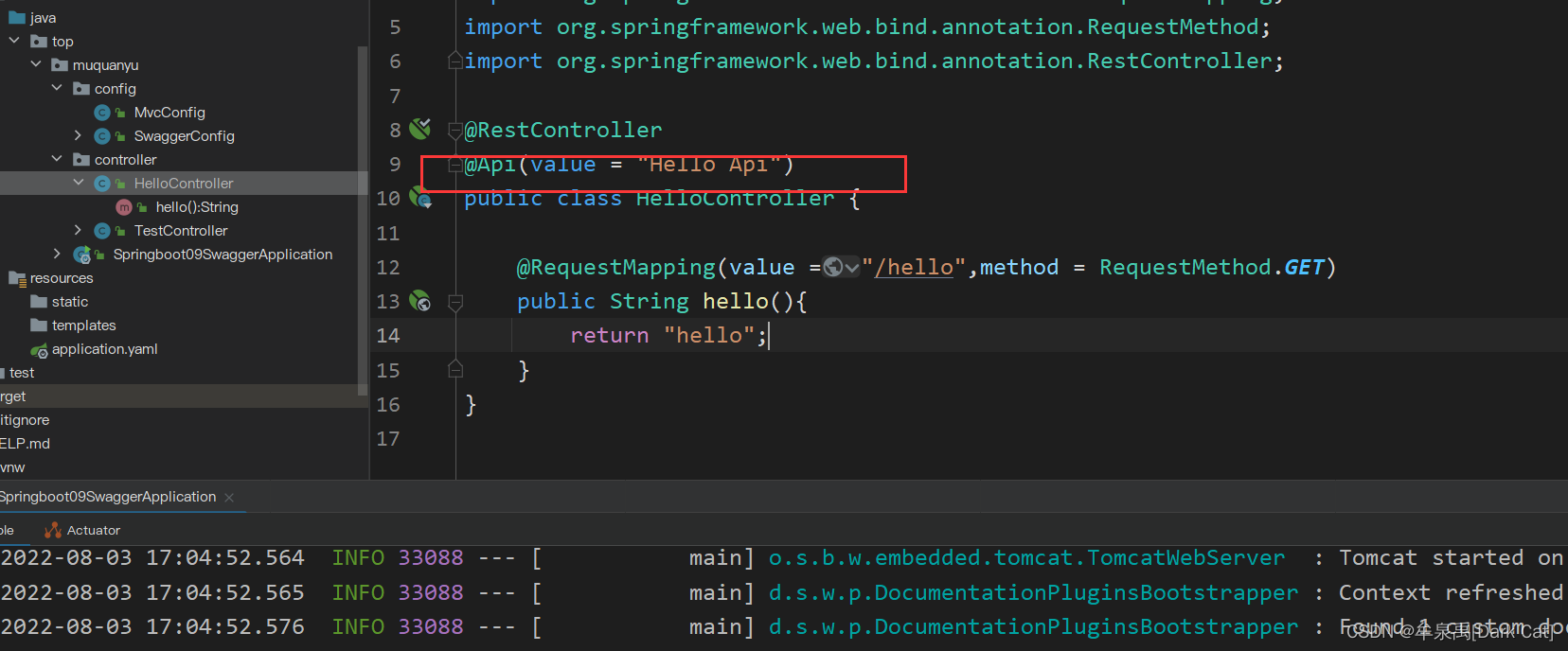
- 扫描类上的注解,一般都是 扫描
@Api 注解 - 扫描方法上的注解,一般 都是 扫描
@请求方式 注解


Docket.enable(false):关闭 Swagger
Docket.enable(true):开启 Swagger
22.2 Swagger 扫描过滤 url
就是 我们可能 要求 只扫描 一种特性 url 请求。也就是 这个接口 的 url 必须 是 符合我们 要求的。我们 才会 扫描。
Docket.paths(PathSelectors.ant("/mqy/**")):url 请求 必须是/mqy/**这种的,才可以。


22.3 根据环境决定使用
比如说 我只希望 我的 Swagger 在 生产环境中 使用,在 发布的时候 不使用。
这个其实 不要太简单,因为 我么 直接 走
application 配置文件就可以实现了。spring: profiles: active: dev mvc: pathmatch: matching-strategy: ant_path_matcher- 1
- 2
- 3
- 4
- 5
- 6

@Bean public Docket docket(Environment environment){ // 设置 需要 使用 Swagger 的环境,就是指定的 Profile Profiles profiles = Profiles.of("dev","test"); // 这两个是 通过的环境 boolean flag = environment.acceptsProfiles(profiles); // 是否是 通过的 那个 环境 return new Docket(DocumentationType.SWAGGER_2) .apiInfo(apiInfo()) .enable(flag) .select() .apis(RequestHandlerSelectors.basePackage("top.muquanyu.controller")) .paths(PathSelectors.ant("/test/**")) .build(); }- 1
- 2
- 3
- 4
- 5
- 6
- 7
- 8
- 9
- 10
- 11
- 12
- 13
- 14
- 15
Environment environment:这个东西 SpringBoot 提供 使用的,可以 通过它 对 环境 做一些 操作。environment.acceptsProfiles(profiles ):意思是 我们 通过 提供的 profiles 对象,然后 判断 当前的环境 是否 是 可以 通过的 环境。Profiles profiles = Profiles.of("dev","test");设置两个通过 的 环境,其实 可以设置 n 个。
-
相关阅读:
求最小生成树
当前社会下,软件测试工程师如何提高竞争力应对变局?
可执行文件中的段
Error response from daemon
Android Framework通信:Handler
Vue load 页面报错:Error: Request failed with status code 404 ###createError.js
PDAF简介
交易不确定性下的最优交易商定价
【PCB学习笔记】绘制智能车四层板 ---原理图绘制及编译检查
jQuery_DOM操作标签中的属性值和标签文本内容
- 原文地址:https://blog.csdn.net/qq_52606908/article/details/126143969