-
SE-ResNet34对结构性数据进行多分类
1、摘要
本文主要讲解:SE-ResNet34对结构性数据进行多分类
主要思路:- 构建SEBasicBlock
- 构建resnet34
- 去除数据中的nan值,并对数据使用SMOTE算法进行平衡
- 选取BCELoss对损失进行评估
2、数据介绍
需要数据请私聊
以下是简单数据截图,最右边那列为标签

3、相关技术
SE:Squeeze-and-Excitation的缩写,特征压缩与激发的意思。
可以把SENet看成是channel-wise的attention,可以嵌入到含有skip-connections的模块中,ResNet,VGG,Inception等等。

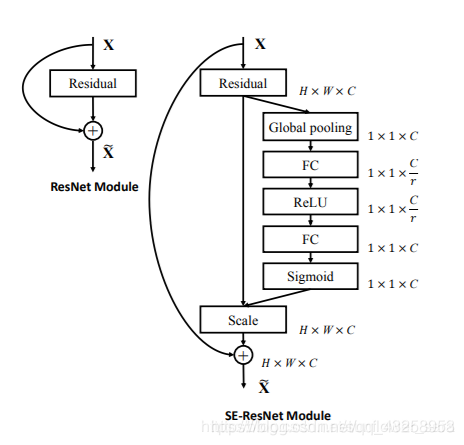
在resnet中加入SE:
下图是SE-ResNet, 可以看到SE module被apply到了residual branch上。我们首先将特征维度降低到输入的1/r,然后经过ReLu激活后再通过一个Fully Connected 层升回到原来的维度。
这样做比直接用一个Fully Connected层的好处在于:
1)具有更多的非线性,可以更好地拟合通道间复杂的相关性;
2)极大地减少了参数量和计算量。然后通过一个Sigmoid的门获得01之间归一化的权重,最后通过一个Scale的操作来将归一化后的权重加权到每个通道的特征上。在Addition前对分支上Residual的特征进行了特征重标定。如果对Addition后主支上的特征进行重标定,由于在主干上存在01的scale操作,在网络较深BP优化时就会在靠近输入层容易出现梯度消散的情况,导致模型难以优化。
————————————————
版权声明:本文为CSDN博主「AI剑客」的原创文章,遵循CC 4.0 BY-SA版权协议,转载请附上原文出处链接及本声明。
原文链接:原文链接
4、完整代码和步骤
代码输出如下:

主运行程序入口
import matplotlib.pyplot as plt from PIL import ImageFile from imblearn.over_sampling import SMOTE from sklearn import preprocessing from sklearn.metrics import confusion_matrix, accuracy_score from sklearn.model_selection import train_test_split from sklearn.preprocessing import LabelEncoder from tensorflow.python.keras.utils.np_utils import to_categorical from torchvision.models import ResNet ImageFile.LOAD_TRUNCATED_IMAGES = True from torch import nn import os import time import csv os.environ['CUDA_LAUNCH_BLOCKING'] = "0" import torch.optim import torch.utils.data import warnings warnings.filterwarnings("ignore") import pandas as pd from tqdm import tqdm import numpy as np torch.backends.cudnn.enabled = True torch.backends.cudnn.benchmark = True def checkpoint(model, best_loss, best_epoch, LR): """ Saves checkpoint of torchvision model during training. Args: model: torchvision model to be saved best_loss: best val loss achieved so far in training epoch: current epoch of training LR: current learning rate in training Returns: None """ state = { 'model': model, 'state_dict': model.state_dict(), 'best_loss': best_loss, 'best_epoch': best_epoch, 'LR': LR } torch.save(state, 'results/checkpoint') def make_pred_multilabel(model, test_df, device): """ Gives predictions for test fold and calculates mse using previously trained model Args: model: seresnet from torchvision previously fine tuned to training data test_df : dataframe csv file Returns: pred_df: dataframe containing individual predictions and ground truth for each test data """ size = len(test_df) print("Test _df size :", size) model = model.to(device) inputs = test_df[:, :6] labels = test_df[:, 6] y_test = [int(i) for i in labels.tolist()] scaler_x = preprocessing.MinMaxScaler(feature_range=(0, 1)) inputs = scaler_x.fit_transform(inputs) inputs = inputs.astype(float) labels = to_categorical(labels) # X_train = torch.FloatTensor(X_train.reshape((X_train.shape[0], 3, 2, 1))) inputs = torch.FloatTensor(inputs.reshape((inputs.shape[0], 3, 1, 2))) labels = torch.FloatTensor(labels) # inputs = Variable(torch.unsqueeze(inputs, dim=3).float(), requires_grad=False) inputs = inputs.to(device) labels = labels.to(device) criterion = nn.MSELoss() batch_size = 64 length = len(inputs) model.eval() with torch.no_grad(): for j in range(0, length, batch_size): X_train_batch = inputs[j:j + batch_size] y_train_batch = labels[j:j + batch_size] X_train_batch = X_train_batch.to(device) y_train_batch = y_train_batch.to(device) outputs = model(X_train_batch) outputs = torch.sigmoid(outputs) loss = criterion(outputs, y_train_batch) print("loss:{:.3f}".format(loss)) y_pred = outputs.cpu().data.numpy() y_pred = np.argmax(y_pred, axis=1) acc = accuracy_score(y_test, y_pred) print('acc', acc) C = confusion_matrix(y_test, y_pred) plt.matshow(C, cmap=plt.cm.Reds) # 根据最下面的图按自己需求更改颜色 , labels=labels plt.colorbar() for i in range(len(C)): for j in range(len(C)): plt.annotate(C[j, i], xy=(i, j), horizontalalignment='center', verticalalignment='center') plt.tick_params(labelsize=15) plt.ylabel('True label') plt.xlabel('Predicted label') plt.show() class SELayer(nn.Module): def __init__(self, channel, reduction=16): super(SELayer, self).__init__() self.avg_pool = nn.AdaptiveAvgPool2d(1) self.fc = nn.Sequential( nn.Linear(channel, channel // reduction, bias=False), nn.ReLU(inplace=True), nn.Linear(channel // reduction, channel, bias=False), nn.Sigmoid() ) def forward(self, x): b, c, _, _ = x.size() y = self.avg_pool(x).view(b, c) y = self.fc(y).view(b, c, 1, 1) return x * y.expand_as(x) def conv3x3(in_planes, out_planes, stride=1): return nn.Conv2d(in_planes, out_planes, kernel_size=2, stride=stride, padding=1, bias=False) class SEBasicBlock(nn.Module): expansion = 1 def __init__(self, inplanes, planes, stride=1, downsample=None, groups=1, base_width=64, dilation=1, norm_layer=None, *, reduction=16): super(SEBasicBlock, self).__init__() self.conv1 = conv3x3(inplanes, planes, stride) self.bn1 = nn.BatchNorm2d(planes) self.relu = nn.ReLU(inplace=True) self.conv2 = conv3x3(planes, planes, 1) self.bn2 = nn.BatchNorm2d(planes) self.se = SELayer(planes, reduction) self.downsample = downsample self.stride = stride def forward(self, x): # residual = x out = self.conv1(x) out = self.bn1(out) out = self.relu(out) out = self.conv2(out) out = self.bn2(out) out = self.se(out) # if self.downsample is not None: # residual = self.downsample(x) # out += residual out = self.relu(out) return out def se_resnet34(num_classes): """Constructs a ResNet-34 model. Args: pretrained (bool): If True, returns a model pre-trained on ImageNet """ model = ResNet(SEBasicBlock, [3, 4, 6, 3], num_classes=num_classes) model.avgpool = nn.AdaptiveAvgPool2d(1) return model class Se_ResNet34(nn.Module): def __init__(self, N_LABELS): super(Se_ResNet34, self).__init__() self.se_resnet34 = se_resnet34(N_LABELS) num_ftrs = self.se_resnet34.fc.in_features self.se_resnet34.fc = nn.Sequential(nn.Linear(num_ftrs, N_LABELS), nn.Sigmoid()) # print(self.se_resnet34) def forward(self, x): x = self.se_resnet34(x) return x # 剪辑反向传播期间计算的梯度,以避免梯度爆炸。 def clip_gradient(optimizer, grad_clip): for group in optimizer.param_groups: for param in group['params']: if param.grad is not None: param.grad.data.clamp_(-grad_clip, grad_clip) def BatchIterator(model, phase, Data_loader, criterion, optimizer, device): # -------------------- Initial paprameterd global loss, outputs, y_train_batch grad_clip = 0.5 # clip gradients at an absolute value of running_loss = 0.0 X_train = Data_loader[:, :6] scaler_x = preprocessing.MinMaxScaler(feature_range=(0, 1)) X_train = scaler_x.fit_transform(X_train) y_train = Data_loader[:, 6] y_train = to_categorical(y_train) X_train = X_train.astype(float) X_train = torch.FloatTensor(X_train.reshape((X_train.shape[0], 3, 1, 2))) y_train = torch.FloatTensor(y_train) # X_train = Variable(torch.unsqueeze(X_train, dim=3).float(), requires_grad=False) batch_size = 64 length = len(X_train) X_train = X_train.to(device) y_train = y_train.to(device) if phase == "train": optimizer.zero_grad() model.train() for j in range(0, length, batch_size): X_train_batch = X_train[j:j + batch_size] y_train_batch = y_train[j:j + batch_size] X_train_batch = X_train_batch.to(device) y_train_batch = y_train_batch.to(device) outputs = model(X_train_batch) outputs = torch.sigmoid(outputs) # backward loss = criterion(outputs, y_train_batch) loss.backward() clip_gradient(optimizer, grad_clip) # update weights optimizer.step() running_loss += loss * batch_size # print("loss:{:.3f}".format(loss)) return running_loss def ModelTrain(train_df, val_df, device, LR): # Training parameters start_epoch = 0 num_epochs = 88 # number of epochs to train for (if early stopping is not triggered) random_seed = 33 # random.randint(0,100) np.random.seed(random_seed) torch.manual_seed(random_seed) model = Se_ResNet34(7).cuda() # print(model) model = model.to(device) criterion = nn.BCELoss().to(device) epoch_losses_train = [] epoch_losses_val = [] since = time.time() best_loss = 999999 best_epoch = -1 # --------------------------Start of epoch loop for epoch in tqdm(range(start_epoch, num_epochs)): # print('Epoch {}/{}'.format(epoch, num_epochs)) print('-' * 10) phase = 'train' optimizer = torch.optim.Adam(params=filter(lambda p: p.requires_grad, model.parameters()), lr=LR) # 固定部分参数 running_loss = BatchIterator(model=model, phase=phase, Data_loader=train_df, criterion=criterion, optimizer=optimizer, device=device) epoch_loss_train = running_loss / len(train_df) epoch_losses_train.append(epoch_loss_train.item()) # print("Train_losses:", epoch_losses_train) phase = 'val' optimizer = torch.optim.Adam(params=filter(lambda p: p.requires_grad, model.parameters()), lr=LR) running_loss = BatchIterator(model=model, phase=phase, Data_loader=val_df, criterion=criterion, optimizer=optimizer, device=device) epoch_loss_val = running_loss / len(val_df) epoch_losses_val.append(epoch_loss_val.item()) # print("Validation_losses:", epoch_losses_val) timestampTime = time.strftime("%H%M%S") timestampDate = time.strftime("%d%m%Y") timestampEND = timestampDate + '-' + timestampTime # checkpoint model if has best val loss yet if epoch_loss_val < best_loss: best_loss = epoch_loss_val best_epoch = epoch checkpoint(model, best_loss, best_epoch, LR) print('Epoch [' + str(epoch + 1) + '] [save] [' + timestampEND + '] loss= ' + str(epoch_loss_val)) else: print('Epoch [' + str(epoch + 1) + '] [----] [' + timestampEND + '] loss= ' + str(epoch_loss_val)) # log training and validation loss over each epoch with open("results/log_train", 'a') as logfile: logwriter = csv.writer(logfile, delimiter=',') if (epoch == 1): logwriter.writerow(["epoch", "train_loss", "val_loss", "Seed", "LR"]) logwriter.writerow([epoch, epoch_loss_train, epoch_loss_val, random_seed, LR]) # -------------------------- End of phase # break if no val loss improvement in 3 epochs if ((epoch - best_epoch) >= 3): if epoch_loss_val > best_loss: print("decay loss from " + str(LR) + " to " + str(LR / 2) + " as not seeing improvement in val loss") LR = LR / 2 print("created new optimizer with LR " + str(LR)) if ((epoch - best_epoch) >= 10): print("no improvement in 10 epochs, break") break # old_epoch = epoch # ------------------------- End of epoch loop time_elapsed = time.time() - since print('Training complete in {:.0f}m {:.0f}s'.format(time_elapsed // 60, time_elapsed % 60)) # 画损失下降图 plt.plot(epoch_loss_train.cpu().data.numpy()) plt.plot(epoch_losses_val) plt.ylim([0.0, 0.9]) plt.xlabel("epochs") plt.ylabel("loss") plt.legend(['epoch_loss_train', 'epoch_losses_val'], loc='best') plt.show() checkpoint_best = torch.load('results/checkpoint') model = checkpoint_best['model'] best_epoch = checkpoint_best['best_epoch'] print(best_epoch) return model, best_epoch def change_c2h6(x): try: x = float(x) return x except: if x == '-': return 0 else: print(x) def main(): # train_df_path = "data/DGA数据.xlsx" train_df_path = "data/数据1(1).xlsx" device = torch.device("cuda" if torch.cuda.is_available() else "cpu") data = pd.read_excel(train_df_path) # data = pd.read_excel(train_df_path) data.fillna(0, inplace=True) data = data[~data.isin([np.nan, np.inf, -np.inf]).any(1)] data.replace(np.inf, 0, inplace=True) data.replace(-np.inf, 0, inplace=True) le = LabelEncoder() data['故障类型'] = le.fit_transform(data['故障类型']) X_train = data.iloc[:, :6] y_train = data.iloc[:, 6] oversample = SMOTE() X_train, y_train = oversample.fit_resample(X_train, y_train) data = pd.concat([X_train, y_train], axis=1) data = data.values test_size = 64 / len(data) train_df, test_df = train_test_split(data, test_size=test_size, random_state=0, shuffle=True) val_df = test_df train_df_size = len(train_df) print("Train_df size", train_df_size) test_df_size = len(test_df) print("test_df size", test_df_size) val_df_size = len(val_df) print("val_df size", val_df_size) LR = 0.5e-4 # acc 0.484375 acc 0.5625 LR = 0.1e-4 epochs =100 model, best_epoch = ModelTrain(train_df, val_df, device, LR) make_pred_multilabel(model, test_df, device) if __name__ == "__main__": main()- 1
- 2
- 3
- 4
- 5
- 6
- 7
- 8
- 9
- 10
- 11
- 12
- 13
- 14
- 15
- 16
- 17
- 18
- 19
- 20
- 21
- 22
- 23
- 24
- 25
- 26
- 27
- 28
- 29
- 30
- 31
- 32
- 33
- 34
- 35
- 36
- 37
- 38
- 39
- 40
- 41
- 42
- 43
- 44
- 45
- 46
- 47
- 48
- 49
- 50
- 51
- 52
- 53
- 54
- 55
- 56
- 57
- 58
- 59
- 60
- 61
- 62
- 63
- 64
- 65
- 66
- 67
- 68
- 69
- 70
- 71
- 72
- 73
- 74
- 75
- 76
- 77
- 78
- 79
- 80
- 81
- 82
- 83
- 84
- 85
- 86
- 87
- 88
- 89
- 90
- 91
- 92
- 93
- 94
- 95
- 96
- 97
- 98
- 99
- 100
- 101
- 102
- 103
- 104
- 105
- 106
- 107
- 108
- 109
- 110
- 111
- 112
- 113
- 114
- 115
- 116
- 117
- 118
- 119
- 120
- 121
- 122
- 123
- 124
- 125
- 126
- 127
- 128
- 129
- 130
- 131
- 132
- 133
- 134
- 135
- 136
- 137
- 138
- 139
- 140
- 141
- 142
- 143
- 144
- 145
- 146
- 147
- 148
- 149
- 150
- 151
- 152
- 153
- 154
- 155
- 156
- 157
- 158
- 159
- 160
- 161
- 162
- 163
- 164
- 165
- 166
- 167
- 168
- 169
- 170
- 171
- 172
- 173
- 174
- 175
- 176
- 177
- 178
- 179
- 180
- 181
- 182
- 183
- 184
- 185
- 186
- 187
- 188
- 189
- 190
- 191
- 192
- 193
- 194
- 195
- 196
- 197
- 198
- 199
- 200
- 201
- 202
- 203
- 204
- 205
- 206
- 207
- 208
- 209
- 210
- 211
- 212
- 213
- 214
- 215
- 216
- 217
- 218
- 219
- 220
- 221
- 222
- 223
- 224
- 225
- 226
- 227
- 228
- 229
- 230
- 231
- 232
- 233
- 234
- 235
- 236
- 237
- 238
- 239
- 240
- 241
- 242
- 243
- 244
- 245
- 246
- 247
- 248
- 249
- 250
- 251
- 252
- 253
- 254
- 255
- 256
- 257
- 258
- 259
- 260
- 261
- 262
- 263
- 264
- 265
- 266
- 267
- 268
- 269
- 270
- 271
- 272
- 273
- 274
- 275
- 276
- 277
- 278
- 279
- 280
- 281
- 282
- 283
- 284
- 285
- 286
- 287
- 288
- 289
- 290
- 291
- 292
- 293
- 294
- 295
- 296
- 297
- 298
- 299
- 300
- 301
- 302
- 303
- 304
- 305
- 306
- 307
- 308
- 309
- 310
- 311
- 312
- 313
- 314
- 315
- 316
- 317
- 318
- 319
- 320
- 321
- 322
- 323
- 324
- 325
- 326
- 327
- 328
- 329
- 330
- 331
- 332
- 333
- 334
- 335
- 336
- 337
- 338
- 339
- 340
- 341
- 342
- 343
- 344
- 345
- 346
- 347
- 348
- 349
- 350
- 351
- 352
- 353
- 354
- 355
- 356
- 357
- 358
- 359
- 360
- 361
- 362
- 363
- 364
- 365
- 366
- 367
- 368
- 369
- 370
- 371
- 372
- 373
- 374
- 375
- 376
- 377
- 378
- 379
- 380
- 381
- 382
- 383
- 384
- 385
5、学习链接
-
相关阅读:
深度学习与CV教程(4) | 神经网络与反向传播
CCAA 认证通用基础卷之(一)合格评定基础 第一章合格评定基础知识
Weblogic IIOP协议反序列化(CVE-2020-2551)漏洞复现
微信小程序uniapp校园租房指南房屋租赁系统java+python+nodejs+php
springbooy求职招聘网站毕业设计-附源码301914
2022广西师范大学暑期训练赛 E ,K
【Netty专题】用Netty手写一个远程长连接通信框架
MybatisPlus主键生成策略与自动填充
《ARM》cortex-A7核UART实验小作业
【开发方案】KaiOS APN 设置界面菜单选项定制
- 原文地址:https://blog.csdn.net/qq_30803353/article/details/126091694