-
【C语言】队列的实现
目录
队列的概念和结构
队列的概念:队列只允许在一端进行插入数据操作,在另一端进行删除数据操作的特殊线性表,队列中的数据结构遵循先进先出FIFO(First In First Out)或后进后出的原则。
入队列:进行插入操作的一端称为队尾
出队列:进行删除操作的一端称为队头
队列的结构:

队列的模拟实现:
要实现队列无非也是现在我们学的两种结构:数组和链式结构。
但是用链式结构来实现队列是更好的,这里刚好和栈相反。因为队列是在一端插入,另一端进行删除刚好对应的是尾插和头删,使用顺序表的头删效率就不是很高,而链式结构无论插入还是删除效率都很高。
用代码定义队列的结构
- typedef int QDataType;
- typedef struct QueueNode
- {
- struct QueueNode* next;
- QDataType data;
- }QNode;
- typedef struct Queue
- {
- int size;
- QNode* head;
- QNode* tail;
- }Queue;
这里用到了两个结构体,因为我们不仅要有链式的结构,还要标识队列的头和尾,这样方便我们进行头删和尾插,至于size则是用来记录队列中的元素个数的。
队列基本功能的实现
- //初始化队列
- void QueueInit(Queue* pq);
- //销毁队列
- void QueueDestroy(Queue* pq);
- //对尾入队列
- void QueuePush(Queue* pq, QDataType x);
- //对头出队列
- void QueuePop(Queue* pq);
- //获取对列头部元素
- QDataType QueueFront(Queue* pq);
- //获取队列队尾元素
- QDataType QueueBack(Queue* pq);
- //判空
- bool QueueEmpty(Queue* pq);
- //获取队列中有效元素的个数
- int QueueSize(Queue* pq);
初始化队列
- void QueueInit(Queue* pq)
- {
- assert(pq);
- pq->size = 0;
- pq->head = pq->tail = NULL;
- }
首先判断是否为空,然后把size置为0,头和尾都置成空
队尾入数据
- void QueuePush(Queue* pq, QDataType x)
- {
- assert(pq);
- QNode* newnode = (QNode*)malloc(sizeof(QNode));
- if (newnode == NULL)
- {
- printf("malloc fail\n");
- exit(-1);
- }
- newnode->data = x;
- newnode->next = NULL;
- if (pq->tail == NULL)
- {
- pq->head = pq->tail = newnode;
- }
- else
- {
- pq->tail->next = newnode;
- pq->tail = newnode;
- }
- pq->size++;
- }
首先肯定是要申请节点,然后进行插入 ,但是插入也分两种情况。
第一种情况:一个数据都没有,head和tail同时指向空

第二种情况:已经有数据了直接在tail后面链接就行了

最后别忘了将size++。
对头出数据
- void QueuePop(Queue* pq)
- {
- assert(pq);
- assert(!QueueEmpty(pq));
- //1.一个结点
- if (pq->head->next == NULL)
- {
- free(pq->head);
- pq->head = pq->tail = NULL;//避免野指针问题
- }
- //2.多个结点
- else
- {
- QNode* next = pq->head->next;
- free(pq->head);
- pq->head = next;
- }
- pq->size--;
- }
这里的删除也是要判断是只有一个结点还是有多个结点的情况
只有一个结点或者删到只有一个结点
就要把头free掉并且头指针和尾都要置成空
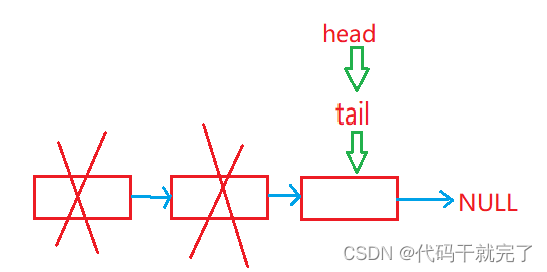
有多个节点
创建一个指针,存放head的下一个结点,接着free掉头指针,然后更新一下头指针

还有别忘了size要减减
下面这些就没啥好讲的了,比较简单,相信大家应该可以轻松拿捏。

获取对列对头元素
- QDataType QueueFront(Queue* pq)
- {
- assert(pq);
- assert(!QueueEmpty(pq));
- return pq->head->data;
- }
获取队列对尾元素
- QDataType QueueBack(Queue* pq)
- {
- assert(pq);
- assert(!QueueEmpty(pq));
- return pq->tail->data;
- }
判空
- bool QueueEmpty(Queue* pq)
- {
- assert(pq);
- return pq->head == NULL;
- }
获取队列中有效元素的个数
- int QueueSize(Queue* pq)
- {
- assert(pq);
- return pq->size;
- }
这里你也可以遍历一遍这个队列进行计数,不过效率比较低。
销毁队列
- void QueueDestroy(Queue* pq)
- {
- assert(pq);
- QNode* cur = pq->head;
- while (cur)
- {
- QNode* next = cur->next;
- free(cur);
- cur = next;
- }
- pq->head = pq->tail = NULL;
- }
完整代码
头文件:
- #pragma once
- #include <stdio.h>
- #include <assert.h>
- #include <stdlib.h>
- #include <stdbool.h>
- typedef int QDataType;
- typedef struct QueueNode
- {
- struct QueueNode* next;
- QDataType data;
- }QNode;
- typedef struct Queue
- {
- int size;
- QNode* head;
- QNode* tail;
- }Queue;
- //初始化队列
- void QueueInit(Queue* pq);
- //销毁队列
- void QueueDestroy(Queue* pq);
- //对尾入队列
- void QueuePush(Queue* pq, QDataType x);
- //对头出队列
- void QueuePop(Queue* pq);
- //获取对列头部元素
- QDataType QueueFront(Queue* pq);
- //获取队列队尾元素
- QDataType QueueBack(Queue* pq);
- //判空
- bool QueueEmpty(Queue* pq);
- //获取队列中有效元素的个数
- int QueueSize(Queue* pq);
源文件:
- #define _CRT_SECURE_NO_WARNINGS 1
- #include "Queue.h"
- void QueueInit(Queue* pq)
- {
- assert(pq);
- pq->size = 0;
- pq->head = pq->tail = NULL;
- }
- void QueueDestroy(Queue* pq)
- {
- assert(pq);
- QNode* cur = pq->head;
- while (cur)
- {
- QNode* next = cur->next;
- free(cur);
- cur = next;
- }
- pq->head = pq->tail = NULL;
- }
- void QueuePush(Queue* pq, QDataType x)
- {
- assert(pq);
- QNode* newnode = (QNode*)malloc(sizeof(QNode));
- if (newnode == NULL)
- {
- printf("malloc fail\n");
- exit(-1);
- }
- newnode->data = x;
- newnode->next = NULL;
- if (pq->tail == NULL)
- {
- pq->head = pq->tail = newnode;
- }
- else
- {
- pq->tail->next = newnode;
- pq->tail = newnode;
- }
- pq->size++;
- }
- void QueuePop(Queue* pq)
- {
- assert(pq);
- assert(!QueueEmpty(pq));
- //1.一个节点
- if (pq->head->next == NULL)
- {
- free(pq->head);
- pq->head = pq->tail = NULL;//避免野指针问题
- }
- //2.多个节点
- else
- {
- QNode* next = pq->head->next;
- free(pq->head);
- pq->head = next;
- }
- pq->size--;
- }
- QDataType QueueFront(Queue* pq)
- {
- assert(pq);
- assert(!QueueEmpty(pq));
- return pq->head->data;
- }
- QDataType QueueBack(Queue* pq)
- {
- assert(pq);
- assert(!QueueEmpty(pq));
- return pq->tail->data;
- }
- bool QueueEmpty(Queue* pq)
- {
- assert(pq);
- return pq->head == NULL;
- }
- int QueueSize(Queue* pq)
- {
- assert(pq);
- return pq->size;
- }
觉得内容有用的话,就给博主三连吧!!!

-
相关阅读:
探秘高逼格艺术二维码的制作过程-AI绘画文生图
【golang】代理模式 proxy using in go
分析高数值孔径物镜的聚焦
tensorflow的模型持久化
路径总和II-力扣113-C++
【数据结构】——单链表(增删查改)
HTML仿腾讯微博首页(Dreamweaver网页作业)
从几次事故引起的对项目质量保障的思考
实景剧本杀小程序开发搭建
基于javaweb的电影院售票管理系统(java+servlet+jsp+jdbc+mysql)
- 原文地址:https://blog.csdn.net/m0_62537611/article/details/125500411