-
Java笔记八(instanceof,类型转换,static详解,抽象类,接口,内部类以及异常)
instanceof
引用类型,判断一个对象是什么类型
使用方法:
System.out.println(X instanceof Y);代码理解:
- public class Application {
- public static void main(String[] args) {
- //Obiect>String
- //Obiect>Person>Teacher
- //Obiect>Person>Student
- Object object=new Student();
- System.out.println(object instanceof Student);
- System.out.println(object instanceof Person);
- System.out.println(object instanceof Object);
- System.out.println(object instanceof Teacher);
- System.out.println(object instanceof String);
- System.out.println("==========================");
- Person person=new Student();
- System.out.println(person instanceof Student);
- System.out.println(person instanceof Person);
- System.out.println(person instanceof Object);
- System.out.println(person instanceof Teacher);
- //System.out.println(person instanceof String);编译报错
- System.out.println("=========================");
- Student student=new Student();
- System.out.println(student instanceof Student);
- System.out.println(student instanceof Person);
- System.out.println(student instanceof Object);
- /*System.out.println(student instanceof Teacher);
- System.out.println(student instanceof String);编译报错*/
- }
- }
其Person是Student与Teacher的父类
类型转换
父类的引用指向子类的对象
把子类转换为父类,向上转型
把父类转换为子类,向下转换:强制转换
方便方法调用,减少重复的代码
强制转换:
- package com.oop.demo06;
- public class Application {
- public static void main(String[] args) {
- //类型之间的转换
- //子类转换为父类可能丢失自己本来的一些方法
- Person obj=new Student();
- //student将这个对象转换为Student类型,我们就可以使用Student类型的方法了
- Student student=(Student)obj;
- student.go();
- }
- }
- package com.oop.demo06;
- public class Student extends Person {
- public void go(){
- System.out.println("go");
- }
- }
也可以这样写
- package com.oop.demo06;
- public class Application {
- public static void main(String[] args) {
- //类型之间的转换
- //子类转换为父类可能丢失自己本来的一些方法
- Person obj=new Student();
- //student将这个对象转换为Student类型,我们就可以使用Student类型的方法了
- Student student=(Student)obj;
- ((Student) obj).go();
- }
- }
低转高自动转换
- package com.oop.demo06;
- public class Application {
- public static void main(String[] args) {
- Student student=new Student();
- student.go();
- Person person=student;
- }
- }
static关键字详解
非静态的方法可以调用静态里面的方法
静态方法只能调用静态方法的
- package com.oop.demo07;
- //static
- public class Student {
- private static int age;//静态变量
- private double score;//非静态变量
- public void run(){
- go();//非静态的方法可以调用静态里面的方法
- }
- public static void go(){
- }
- public static void main(String[] args) {
- go();//静态方法只能调用静态方法的
- new Student().run();
- }
- }
关于static的静态代码块
- package com.oop.demo07;
- public class Person {
- {
- System.out.println("匿名代码块");//代码块(匿名代码块)
- }
- static{
- System.out.println("静态代码块");
- //静态代码块
- }
- public Person() {
- System.out.println("构造方法");
- }
- public static void main(String[] args) {
- Person person=new Person();
- System.out.println("================");
- Person person1=new Person();
- }
- }
运行结果

由此可见静态代码块先执行且只执行依次,匿名代码块可以用来赋初始值
静态导入包
- package com.oop.demo07;
- public class Text {
- public static void main(String[] args) {
- System.out.println(Math.random());//随机生成一个数
- }
- }
使用静态导入包
- package com.oop.demo07;
- import static java.lang.Math.random;
- import static java.lang.Math.PI;
- public class Text {
- public static void main(String[] args) {
- System.out.println(random());
- System.out.println(PI);
- }
- }
运行结果
注意:通过final修饰的类不能被继承,也就是没有子类
抽象类
- package com.oop.demo09;
- //abstract 抽象类 extend:单继承 接口可以多继承
- public abstract class Action {
- //约束,有人帮实现
- //abstract 抽象方法,只有方法名字没有方法的实现
- public abstract void doSomething();
- }
- package com.oop.demo09;
- //抽象类的所有方法,继承了它的子类,都必须要实现它的方法
- public class A extends Action{
- @Override
- public void doSomething() {
- }
- }
1.不能new这个抽象类,只能靠子类区实现他
2.抽象类中可以写普通方法
3.抽象方法必须在抽象类中
接口
普通类:只有具体实现
抽象类:具体实现和规范(抽象方法)都有
接口:只有规范,自己无法写方法。专业的约束,约束和实现分离
接口的本质是契约,就像是人间的法律一样,制定好之后大家都遵守
声明类的关键字是class,声明接口的关键字是interface
实现了接口的类就需要重写接口中的方法,并且可以利用接口实现多继承
如下代码拥有两个接口,每个接口拥有多个方法
- package com.oop.demo10;
- //interface
- public interface UserService {
- //接口中的所有定义其实都是抽象的 public abstract
- int AGE=99;
- void add(String name);
- void delete(String name);
- void update(String name);
- void query(String name);
- }
- package com.oop.demo10;
- public interface TimeService {
- void timer();
- }
- package com.oop.demo10;
- //抽象类:extends
- //类 可以实现接口 implements 接口
- //实现了接口的类就需要重写接口中的方法
- //利用接口实现多继承
- public class UserServiceImpl implements UserService,TimeService{
- @Override
- public void query(String name) {
- }
- @Override
- public void update(String name) {
- }
- @Override
- public void delete(String name) {
- }
- @Override
- public void add(String name) {
- }
- @Override
- public void timer() {
- }
- }
作用:
1.约束
2.定义一些方法,让不同的人实现
3.接口不能被实例化,接口中没有构造方法
4.implements可以实现多个接口
5.必须重写接口中的方法
内部类
内部类就是在一个类的内部再定义一个类,比如,A类中定义一个B类,那么B类相对A类来说就称为内部类,而A类相对B类来说就是外部类了
1.成员内部类
- package com.oop.demo11;
- public class Outer {
- private int id=10;
- public void out(){
- System.out.println("这是外部类的方法");
- }
- public class Inner{
- public void in(){
- System.out.println("这是内部类的方法");
- }
- //获得外部类的私有属性
- public void getID(){
- System.out.println(id);
- }
- }
- }
- package com.oop.demo11;
- public class Application {
- public static void main(String[] args) {
- Outer outer=new Outer();
- //通过这个外部类来实例化内部类
- Outer.Inner inner=outer.new Inner();
- inner.getID();
- }
- }
2.静态内部类:使用static修饰,则无法获得外部类的私有属性
- package com.oop.demo11;
- public class Outer {
- private int id=10;
- public void out(){
- System.out.println("这是外部类的方法");
- }
- public static class Inner{
- public void in(){
- System.out.println("这是内部类的方法");
- }
- //获得外部类的私有属性
- }
- }
局部内部类
- package com.oop.demo11;
- public class Outer {
- public void method(){
- class Inner{
- public void in(){
- }
- }
- }
- }
与局部变量相似
异常处理机制
这是一个错误代码,因为0不能作为除数
- package com.oop.exception;
- public class Test {
- public static void main(String[] args) {
- int a=1;
- int b=0;
- System.out.println(a/b);
- }
- }

使用catch捕获异常:
- package com.oop.exception;
- public class Test {
- public static void main(String[] args) {
- int a=1;
- int b=0;
- try {
- System.out.println(a/b);
- }catch (ArithmeticException e){//catch 捕获异常
- System.out.println("程序出现异常,变量b不能为0");
- }finally {//处理善后工作
- System.out.println("finally");
- }
- }
- }

假设要捕获多个异常:从小到大
- package com.oop.exception;
- public class Test {
- public static void main(String[] args) {
- int a=1;
- int b=0;
- try {
- System.out.println(a/b);
- }catch (Error e){//catch 捕获异常
- System.out.println("Error");
- }catch (Exception e){
- System.out.println("Exception");
- }catch (Throwable t){
- System.out.println("Throwable");
- }finally {
- System.out.println("finally");
- }
- }
- }

快捷键ctrl+alt+t,快速将代码块使用功能包裹

主动抛出异常:
- package com.oop.exception;
- public class Test {
- public static void main(String[] args) {
- int a=1;
- int b=0;
- try {
- if (b==0){
- throw new ArithmeticException();
- }
- System.out.println(a/b);
- }catch (Exception e){
- System.out.println("Exception");
- }finally {
- System.out.println("finally");
- }
- }
- }
运行结果:

在方法中抛出异常:
- package com.oop.exception;
- public class Test {
- public static void main(String[] args) {
- new Test().test(1,0);
- }
- public void test(int a,int b){
- if (b==0){
- throw new ArithmeticException();//主动抛出异常,一般在方法中使用
- }
- //System.out.println(a/b);
- }
- }
可见即使不用输出也可以抛出异常
自定义异常
这里自定义一个传递数字的异常,如果传递的数字大于10则抛出异常
- package com.oop.demo12;
- //自定义的异常类
- public class MyException extends Exception{
- //传递数字,大于10抛异常
- private int detail;
- public MyException(int a) {
- this.detail=a;
- }
- //toString异常的打印信息
- @Override
- public String toString() {
- return "MyException{"+detail+'}';
- }
- }
- package com.oop.demo12;
- public class Test {
- //可能会存在异常的方法
- static void test(int a) throws MyException {
- System.out.println("传递的参数为:"+a);
- if (a > 10) {
- throw new MyException(a);
- }
- System.out.println("OK");
- }
- public static void main(String[] args) {
- try {
- test(11);
- }catch (MyException e){
- System.out.println("MyException=>"+e);
- }
- }
- }
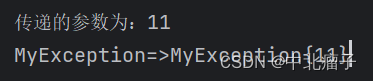
可见我们此时传递的数字为11,此时抛出我们自定义的异常
经验总结
◆处理运行时异常时,采用逻辑去合理规避同时辅助try-catch处理
◆在多重catch块后面,可以加一个catch (Exception) 来处理可能会被遗漏的异常
◆对于不确定的代码,也可以加上try-catch,处理潜在的异常
◆尽量去处理异常,切忌只是简单地调用printStackTrace() 去打印输出
◆具体如何处理异常,要根据不同的业务需求和异常类型去决定
◆尽量添加finally语句块去释放占用的资源
在此狂神java基础笔记全部结束,用时一个月左右学完,也不能说是学完,算是看完吧,真的很喜欢狂神的java基础课,仍然记得狂神的那句话:学编程是为了更好得建模这个世界。愿我们与月作伴的日子不要忘记自己的初心。路漫漫其修远兮,吾将上下而求索!
狂神哔哩哔哩主页:遇见狂神说的个人空间-遇见狂神说个人主页-哔哩哔哩视频
-
相关阅读:
使用OpenResty+Lua实现灰度测试(金丝雀)
RabbitMQ的高可用和高可靠
MyBatis与MySql关系阐述
office办公软件太贵了 Microsoft的Word为什么要买 Microsoft365家庭版多少钱 Microsoft365密钥
java高级用法之:在JNA中使用类型映射
跨境电商如何搭建独立站?
Redis02-高级使用
Python灰帽编程——初识Python下(函数与文件)
TypeScript学习文档-基础篇(完结)
数据库sql查询优化
- 原文地址:https://blog.csdn.net/m0_73770225/article/details/133689288
