-
5、Nacos服务注册服务端源码分析(四)之NotifyCenter
上篇我们讲server端处理服务注册源码时,遇到了一个关键类
NotifyCenter,本篇就主要来分析下这个类。NotifyCenter
这个类所在包:nacos-common
/** * Unified Event Notify Center. */- 1
- 2
- 3
通过类注释可以看出来这个类是一个统一的事件通知中心,那也就足可见这个类的重要性了。
public class NotifyCenter- 1
通过类定义发现这个类就是一个普通类,不会被注册为
spring bean且类中的方法都是静态方法,也就是说这个类是整个进程共享的了,所以其中的内部变量必然要是线程安全的,结合源码看看是如何处理的。private static final Logger LOGGER = LoggerFactory.getLogger(NotifyCenter.class); //这两个变量是在静态块中初始化的,所以不需要特殊处理 public static int ringBufferSize; public static int shareBufferSize; private static final AtomicBoolean CLOSED = new AtomicBoolean(false); //初始化EventPublisher的工厂 private static final EventPublisherFactory DEFAULT_PUBLISHER_FACTORY; private static final NotifyCenter INSTANCE = new NotifyCenter(); private DefaultSharePublisher sharePublisher; //SPI机制获取到EventPublisher实现之后,获取class,赋值到此 private static Class<? extends EventPublisher> clazz; /** * Publisher management container. */ private final Map<String, EventPublisher> publisherMap = new ConcurrentHashMap<>(16); static { // Internal ArrayBlockingQueue buffer size. For applications with high write throughput, // this value needs to be increased appropriately. default value is 16384 String ringBufferSizeProperty = "nacos.core.notify.ring-buffer-size"; ringBufferSize = Integer.getInteger(ringBufferSizeProperty, 16384); // The size of the public publisher's message staging queue buffer String shareBufferSizeProperty = "nacos.core.notify.share-buffer-size"; shareBufferSize = Integer.getInteger(shareBufferSizeProperty, 1024); //采用SPI拓展机制,NacosServiceLoader内部封装了JDK的ServiceLoader,在此基础上加了一层缓存 final Collection<EventPublisher> publishers = NacosServiceLoader.load(EventPublisher.class); Iterator<EventPublisher> iterator = publishers.iterator(); if (iterator.hasNext()) { clazz = iterator.next().getClass(); } else { //默认使用DefaultPublisher clazz = DefaultPublisher.class; } DEFAULT_PUBLISHER_FACTORY = (cls, buffer) -> { try { //实例化EventPublisher EventPublisher publisher = clazz.newInstance(); //调用EventPublisher初始化方法 publisher.init(cls, buffer); return publisher; } catch (Throwable ex) { LOGGER.error("Service class newInstance has error : ", ex); throw new NacosRuntimeException(SERVER_ERROR, ex); } }; try { // Create and init DefaultSharePublisher instance. INSTANCE.sharePublisher = new DefaultSharePublisher(); INSTANCE.sharePublisher.init(SlowEvent.class, shareBufferSize); } catch (Throwable ex) { LOGGER.error("Service class newInstance has error : ", ex); } //JVM销毁前执行的钩子函数 NotifyCenter::shutdown ThreadUtils.addShutdownHook(NotifyCenter::shutdown); }- 1
- 2
- 3
- 4
- 5
- 6
- 7
- 8
- 9
- 10
- 11
- 12
- 13
- 14
- 15
- 16
- 17
- 18
- 19
- 20
- 21
- 22
- 23
- 24
- 25
- 26
- 27
- 28
- 29
- 30
- 31
- 32
- 33
- 34
- 35
- 36
- 37
- 38
- 39
- 40
- 41
- 42
- 43
- 44
- 45
- 46
- 47
- 48
- 49
- 50
- 51
- 52
- 53
- 54
- 55
- 56
- 57
- 58
- 59
- 60
- 61
- 62
- 63
- 64
查看代码可以知道关键的处理逻辑是:创建
EventPublisher。
EventPublisher
以上涉及到两个
EventPublisher一个是默认的DefaultPublisher,另一个是DefaultSharePublisher
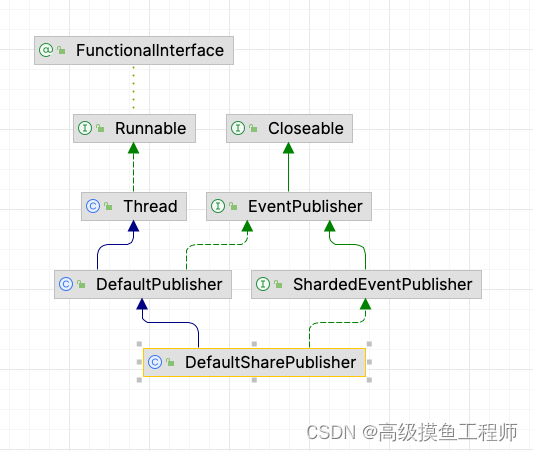
我们来一个个梳理下UML中的类:interface EventPublisher
事件通知的接口,定义了事件通知的一系列方法
/** * Initializes the event publisher. * 初始化 * @param type {@link Event >} * @param bufferSize 消息队列大小 */ void init(Class<? extends Event> type, int bufferSize); /** * The number of currently staged events. * 当前暂存的事件数量 * @return event size */ long currentEventSize(); /** * Add listener. * 添加订阅者 * @param subscriber {@link Subscriber} */ void addSubscriber(Subscriber subscriber); /** * Remove listener. * 移除订阅者 * @param subscriber {@link Subscriber} */ void removeSubscriber(Subscriber subscriber); /** * publish event. * 发布事件 * @param event {@link Event} * @return publish event is success */ boolean publish(Event event); /** * Notify listener. * 通知订阅者 * @param subscriber {@link Subscriber} * @param event {@link Event} */ void notifySubscriber(Subscriber subscriber, Event event);- 1
- 2
- 3
- 4
- 5
- 6
- 7
- 8
- 9
- 10
- 11
- 12
- 13
- 14
- 15
- 16
- 17
- 18
- 19
- 20
- 21
- 22
- 23
- 24
- 25
- 26
- 27
- 28
- 29
- 30
- 31
- 32
- 33
- 34
- 35
- 36
- 37
- 38
- 39
- 40
- 41
- 42
- 43
- 44
class DefaultPublisher
public class DefaultPublisher extends Thread implements EventPublisher- 1
DefaultPublisher是事件发布接口EventPublisher的默认实现,除此之外,还继承了Thread,那么也就意味着DefaultPublisher除了有事件处理能力,本身还是一个线程。先看接口中定义的初始化方法
init是如何实现的,从这里看起会很好的帮助我们理解这个类:@Override public void init(Class<? extends Event> type, int bufferSize) { //设置为守护线程 setDaemon(true); //设置线程名称,一定程度上这可以帮助我们排查问题 setName("nacos.publisher-" + type.getName()); //Event类型 this.eventType = type; //队列长度 this.queueMaxSize = bufferSize; //队列 this.queue = new ArrayBlockingQueue<>(bufferSize); //Thread的start()方法 start(); } //全局变量,用来标识当前Publisher是否初始化完成 private volatile boolean initialized = false; @Override public synchronized void start() { if (!initialized) { // start just called once super.start(); if (queueMaxSize == -1) { queueMaxSize = ringBufferSize; } initialized = true; } }- 1
- 2
- 3
- 4
- 5
- 6
- 7
- 8
- 9
- 10
- 11
- 12
- 13
- 14
- 15
- 16
- 17
- 18
- 19
- 20
- 21
- 22
- 23
- 24
- 25
- 26
- 27
- 28
即然继承了
Thread那么就肯定回去重写关键的run()方法,我们看下是如何重写的:@Override public void run() { openEventHandler(); } void openEventHandler() { try { // This variable is defined to resolve the problem which message overstock in the queue. // 这个变量用于解决队列中消息积压的问题 int waitTimes = 60; // To ensure that messages are not lost, enable EventHandler when // waiting for the first Subscriber to register // 没有关闭 && 没有订阅者 && waitTimes>0 --> 休眠1s,最多可以sleep 60s while (!shutdown && !hasSubscriber() && waitTimes > 0) { ThreadUtils.sleep(1000L); waitTimes--; } while (!shutdown) { //如果没有获取到事件,这里会阻塞 final Event event = queue.take(); //处理事件 receiveEvent(event); UPDATER.compareAndSet(this, lastEventSequence, Math.max(lastEventSequence, event.sequence())); } } catch (Throwable ex) { LOGGER.error("Event listener exception : ", ex); } }- 1
- 2
- 3
- 4
- 5
- 6
- 7
- 8
- 9
- 10
- 11
- 12
- 13
- 14
- 15
- 16
- 17
- 18
- 19
- 20
- 21
- 22
- 23
- 24
- 25
- 26
- 27
- 28
- 29
- 30
可以看到,这里有一个死循环,只要没有收到
shutdown事件,那么就会一直尝试从队列中获取事件去处理。这里获取事件的逻辑是从阻塞队列中取数据,所以当没有时间要处理时,当前线程会阻塞在获取事件的逻辑中,不会对cpu有过多的压力。/** * Receive and notifySubscriber to process the event. * * @param event {@link Event}. */ void receiveEvent(Event event) { final long currentEventSequence = event.sequence(); if (!hasSubscriber()) { LOGGER.warn("[NotifyCenter] the {} is lost, because there is no subscriber.", event); return; } // Notification single event listener for (Subscriber subscriber : subscribers) { if (!subscriber.scopeMatches(event)) { continue; } // Whether to ignore expiration events if (subscriber.ignoreExpireEvent() && lastEventSequence > currentEventSequence) { LOGGER.debug("[NotifyCenter] the {} is unacceptable to this subscriber, because had expire", event.getClass()); continue; } // Because unifying smartSubscriber and subscriber, so here need to think of compatibility. // Remove original judge part of codes. notifySubscriber(subscriber, event); } } @Override public void notifySubscriber(final Subscriber subscriber, final Event event) { LOGGER.debug("[NotifyCenter] the {} will received by {}", event, subscriber); //将订阅者对事件的处理构建成一个Runnable final Runnable job = () -> subscriber.onEvent(event); //获取订阅者处理事件的Executer,这里的设计逻辑是:将异步或者同步的决定权交给订阅者本身, //是否异步处理决定于订阅者对executor()方法的实现方式 final Executor executor = subscriber.executor(); if (executor != null) { executor.execute(job); } else { try { //如果没有executor,那就直接执行Runnable job.run(); } catch (Throwable e) { LOGGER.error("Event callback exception: ", e); } } }- 1
- 2
- 3
- 4
- 5
- 6
- 7
- 8
- 9
- 10
- 11
- 12
- 13
- 14
- 15
- 16
- 17
- 18
- 19
- 20
- 21
- 22
- 23
- 24
- 25
- 26
- 27
- 28
- 29
- 30
- 31
- 32
- 33
- 34
- 35
- 36
- 37
- 38
- 39
- 40
- 41
- 42
- 43
- 44
- 45
- 46
- 47
- 48
- 49
- 50
- 51
- 52
看了这么多代码,简单对
DefaultPublisher做个总结:- 是什么?
- 事件通知的默认实现,用于处理事件通知逻辑
- 继承了线程
- 有什么?
- 订阅者集合
- 事件集合
- 做什么?
- 处理事件通知,同时处理订阅者的相关逻辑(添加/删除)
- 怎么做?
- 初始化方法中会启动线程
- run()处理事件,从自己的事件集合中获取事件,然后交给订阅者去处理
class DefaultSharePublisher
这个类继承了
DefaultPublisher,设计的目的应该是处理一些比较耗时的事件。本身有一个map做缓存,没有什么特别的逻辑。private final Map<Class<? extends SlowEvent>, Set<Subscriber>> subMappings = new ConcurrentHashMap<>();- 1
这个类去处理事件的逻辑还是其父类
DefaultPublisher的notifySubscriber(subscriber, event)方法。我们上文已经看过这个方法了。
回过头再看NotifyCenter
看完
EventPublisher之后,别忘记我们为什么出发🫣。
回过头再看NotifyCenter:我们从接收一个事件开始,从头梳理代码。接收事件
/** * Request publisher publish event Publishers load lazily, calling publisher. Start () only when the event is * actually published. * * @param event class Instances of the event. */ public static boolean publishEvent(final Event event) { try { return publishEvent(event.getClass(), event); } catch (Throwable ex) { LOGGER.error("There was an exception to the message publishing : ", ex); return false; } }- 1
- 2
- 3
- 4
- 5
- 6
- 7
- 8
- 9
- 10
- 11
- 12
- 13
- 14
发布事件
/** * Request publisher publish event Publishers load lazily, calling publisher. * * @param eventType class Instances type of the event type. * @param event event instance. */ private static boolean publishEvent(final Class<? extends Event> eventType, final Event event) { if (ClassUtils.isAssignableFrom(SlowEvent.class, eventType)) { //当前事件如果是SlowEvent,那么交与sharePublisher处理 return INSTANCE.sharePublisher.publish(event); } //获取Event的类名 final String topic = ClassUtils.getCanonicalName(eventType); //根据事件的类名,从map中获取EventPublisher去处理当前事件 EventPublisher publisher = INSTANCE.publisherMap.get(topic); if (publisher != null) { return publisher.publish(event); } if (event.isPluginEvent()) { return true; } LOGGER.warn("There are no [{}] publishers for this event, please register", topic); return false; }- 1
- 2
- 3
- 4
- 5
- 6
- 7
- 8
- 9
- 10
- 11
- 12
- 13
- 14
- 15
- 16
- 17
- 18
- 19
- 20
- 21
- 22
- 23
- 24
- 25
ps:Class.getCanonicalName()的用法
EventPublisher是如何添加到publisherMap中的?
public static void registerSubscriber(final Subscriber consumer) { registerSubscriber(consumer, DEFAULT_PUBLISHER_FACTORY); } public static void registerSubscriber(final Subscriber consumer, final EventPublisherFactory factory) { // If you want to listen to multiple events, you do it separately, // based on subclass's subscribeTypes method return list, it can register to publisher. //SmartSubscriber是为了处理一个订阅者订阅多个事件而设计的 if (consumer instanceof SmartSubscriber) { for (Class<? extends Event> subscribeType : ((SmartSubscriber) consumer).subscribeTypes()) { // For case, producer: defaultSharePublisher -> consumer: smartSubscriber. if (ClassUtils.isAssignableFrom(SlowEvent.class, subscribeType)) { INSTANCE.sharePublisher.addSubscriber(consumer, subscribeType); } else { // For case, producer: defaultPublisher -> consumer: subscriber. addSubscriber(consumer, subscribeType, factory); } } return; } final Class<? extends Event> subscribeType = consumer.subscribeType(); if (ClassUtils.isAssignableFrom(SlowEvent.class, subscribeType)) { INSTANCE.sharePublisher.addSubscriber(consumer, subscribeType); return; } //添加订阅者 addSubscriber(consumer, subscribeType, factory); } private static void addSubscriber(final Subscriber consumer, Class<? extends Event> subscribeType, EventPublisherFactory factory) { final String topic = ClassUtils.getCanonicalName(subscribeType); synchronized (NotifyCenter.class) { // MapUtils.computeIfAbsent is a unsafe method. MapUtil.computeIfAbsent(INSTANCE.publisherMap, topic, factory, subscribeType, ringBufferSize); } EventPublisher publisher = INSTANCE.publisherMap.get(topic); if (publisher instanceof ShardedEventPublisher) { ((ShardedEventPublisher) publisher).addSubscriber(consumer, subscribeType); } else { publisher.addSubscriber(consumer); } }- 1
- 2
- 3
- 4
- 5
- 6
- 7
- 8
- 9
- 10
- 11
- 12
- 13
- 14
- 15
- 16
- 17
- 18
- 19
- 20
- 21
- 22
- 23
- 24
- 25
- 26
- 27
- 28
- 29
- 30
- 31
- 32
- 33
- 34
- 35
- 36
- 37
- 38
- 39
- 40
- 41
- 42
- 43
- 44
最后的一个方法中我们看到了
Map的数据添加逻辑:根据Event的类名做为key,EventPublisher作为value。
同时我们也看到了事件订阅者是如何和事件发布者建立关系的:publisher.addSubscriber(consumer);,publisher中有一个集合,用于存储事件的订阅者。总结
好了,总结下
NotifyCenter:- 是什么?
- 统一的事件处理类,所有的事件通知都借助此类去处理
- 组织事件-发布者的关联关系
- 有什么?
- 事件处理类
EventPublisher - 共享事件处理类
DefaultSharePublisher,用于处理耗时的事件 Map
- 事件处理类
- 做什么?
- 注册发布者到
publisherMap - 接收事件之后交与对应的订阅者处理
- 注册发布者到
- 怎么做?
- 根据
Event的类名去publisherMap中获取对应的EventPublisher,然后发布事件,交与对应的订阅者处理事件
- 根据
本篇主要讲了
NotifyCenter相关的事件代码逻辑,特别对EventPublisher做了详细的分析。我们从中看到了一个事件发布与订阅解耦的设计方式,很多框架中都会使用事件驱动去设计发布-订阅模型,日常工作中如果遇到类似的情景,也可以尝试使用这种方式去实现。 -
相关阅读:
gcc生成shared library及可执行文件
DataV兼容vue3的方法
ESP-IDF学习——1.环境安装与hello-world
WPS pdf文档合并收费?Linux平台采用pdfunite实现pdf文档合并
使用docker快速搭建jenkins
golang学习笔记——日志记录
cocos creator 小游戏允许他人访问本地项目
【案例直击】看快速开发框架如何为医疗行业数字化转型赋能?
化工机械基础复习要点
SpringBoot3快速入门
- 原文地址:https://blog.csdn.net/Paranoia_ZK/article/details/133158895
