-
数据结构入门-13-图
一、图的概述
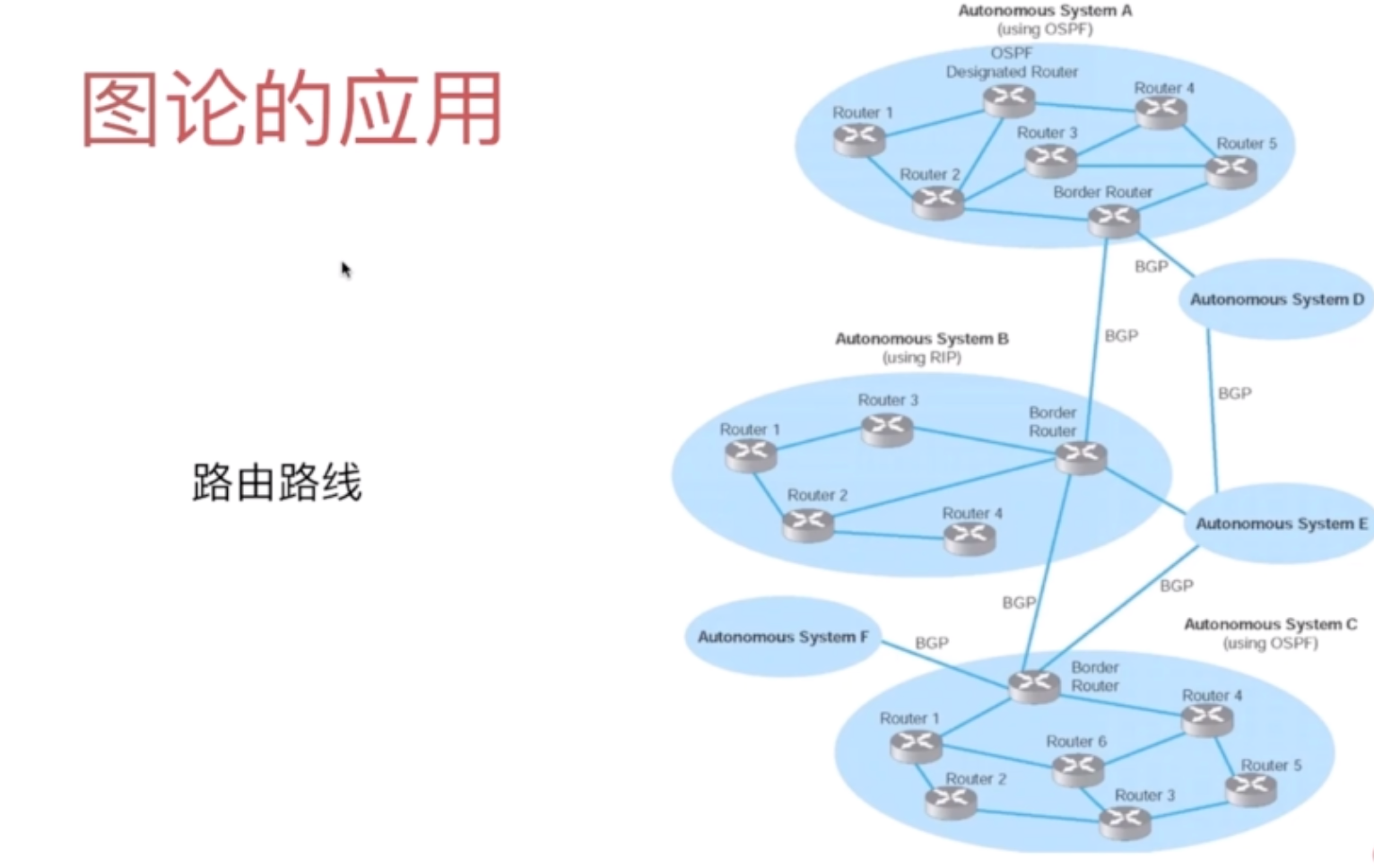
1.1 图论的作用



1.2 图的分类


1.2.1 无向图

1.2.2 有向图


1.2.3 无权图

1.2.4 有劝图

1.3 图的基本概念
- 两点相邻
- 点的邻边
- 路径Path,从一个点到另一个点走过的路
- 环Loop,多个点围城一个圈
- 自环边,自己和自己形成环
- 平行边,重复的边

-
联通分量

-
无环图

树是一种无环图,一个联通的无环图(一个联通分量)就是树 -
连通图的 生成树

V:顶点数

10) 顶点的度degree
顶点相邻的边数

二、树的基本表示
2.1 邻接矩阵


V:顶点数,E:边数
2.1.1 邻接矩阵 表示图
import java.io.*; import java.util.Scanner; public class AdjMatrix { private int V; private int E; private int[][] adj; public AdjMatrix(String filename){ File file = new File(filename); try(Scanner scanner = new Scanner(file)){ V = scanner.nextInt(); adj = new int[V][V]; E = scanner.nextInt(); for(int i = 0; i < E; i ++){ int a = scanner.nextInt(); int b = scanner.nextInt(); adj[a][b] = 1; adj[b][a] = 1; } } catch(IOException e){ e.printStackTrace(); } } @Override public String toString(){ StringBuilder sb = new StringBuilder(); sb.append(String.format("V = %d, E = %d\n", V, E)); for(int i = 0; i < V; i ++){ for(int j = 0; j < V; j ++) sb.append(String.format("%d ", adj[i][j])); sb.append('\n'); } return sb.toString(); } public static void main(String[] args){ AdjMatrix adjMatrix = new AdjMatrix("src/main/java/hGraph/base/file/g.txt"); System.out.print(adjMatrix); } }- 1
- 2
- 3
- 4
- 5
- 6
- 7
- 8
- 9
- 10
- 11
- 12
- 13
- 14
- 15
- 16
- 17
- 18
- 19
- 20
- 21
- 22
- 23
- 24
- 25
- 26
- 27
- 28
- 29
- 30
- 31
- 32
- 33
- 34
- 35
- 36
- 37
- 38
- 39
- 40
- 41
- 42
- 43
- 44
- 45
- 46
- 47
- 48
- 49
- 50
- 51
public int V(){ return V; } public int E(){ return E; } //判断是否有边,两顶点是否相邻 public boolean hasEdge(int v, int w){ validateVertex(v); validateVertex(w); return adj[v][w] == 1; } //查找和顶点v相连的顶点 public ArrayList<Integer> adj(int v){ validateVertex(v); ArrayList<Integer> res = new ArrayList<>(); for(int i = 0; i < V; i ++) if(adj[v][i] == 1) res.add(i); return res; } //查找顶点的度 public int degree(int v){ return adj(v).size(); }- 1
- 2
- 3
- 4
- 5
- 6
- 7
- 8
- 9
- 10
- 11
- 12
- 13
- 14
- 15
- 16
- 17
- 18
- 19
- 20
- 21
- 22
- 23
- 24
- 25
- 26
- 27
2.1.2 邻接矩阵的复杂度

空间复杂度 可以优化,
求一个点的相邻结点 可以优化稀疏图&稠密图
根据边的多少完全图 每个顶点都连接

2.2 邻接表

2.2.1 邻接表的复杂度


2.2.2 邻接表By哈希表

用红黑树实现图import java.io.File; import java.io.IOException; import java.util.TreeSet; import java.util.Scanner; public class AdjSet { private int V; private int E; private TreeSet<Integer>[] adj; public AdjSet(String pathStr){ File file = new File(pathStr); try(Scanner scanner = new Scanner(file)){ V = scanner.nextInt(); if(V < 0) throw new IllegalArgumentException("V must be non-negative"); adj = new TreeSet[V]; for(int i = 0; i < V; i ++) adj[i] = new TreeSet<Integer>(); E = scanner.nextInt(); if(E < 0) throw new IllegalArgumentException("E must be non-negative"); for(int i = 0; i < E; i ++){ int a = scanner.nextInt(); validateVertex(a); int b = scanner.nextInt(); validateVertex(b); if(a == b) throw new IllegalArgumentException("Self Loop is Detected!"); if(adj[a].contains(b)) throw new IllegalArgumentException("Parallel Edges are Detected!"); adj[a].add(b); adj[b].add(a); } } catch(IOException e){ e.printStackTrace(); } } private void validateVertex(int v){ if(v < 0 || v >= V) throw new IllegalArgumentException("vertex " + v + "is invalid"); } public int V(){ return V; } public int E(){ return E; } public boolean hasEdge(int v, int w){ validateVertex(v); validateVertex(w); return adj[v].contains(w); } public Iterable<Integer> adj(int v){ // public TreeSetadj(int v){ validateVertex(v); return adj[v]; } public int degree(int v){ validateVertex(v); return adj[v].size(); } @Override public String toString(){ StringBuilder sb = new StringBuilder(); sb.append(String.format("V = %d, E = %d\n", V, E)); for(int v = 0; v < V; v ++){ sb.append(String.format("%d : ", v)); for(int w : adj[v]) sb.append(String.format("%d ", w)); sb.append('\n'); } return sb.toString(); } public static void main(String[] args){ AdjSet adjSet = new AdjSet("g.txt"); System.out.print(adjSet); } }- 1
- 2
- 3
- 4
- 5
- 6
- 7
- 8
- 9
- 10
- 11
- 12
- 13
- 14
- 15
- 16
- 17
- 18
- 19
- 20
- 21
- 22
- 23
- 24
- 25
- 26
- 27
- 28
- 29
- 30
- 31
- 32
- 33
- 34
- 35
- 36
- 37
- 38
- 39
- 40
- 41
- 42
- 43
- 44
- 45
- 46
- 47
- 48
- 49
- 50
- 51
- 52
- 53
- 54
- 55
- 56
- 57
- 58
- 59
- 60
- 61
- 62
- 63
- 64
- 65
- 66
- 67
- 68
- 69
- 70
- 71
- 72
- 73
- 74
- 75
- 76
- 77
- 78
- 79
- 80
- 81
- 82
- 83
- 84
- 85
- 86
- 87
- 88
- 89
- 90
- 91
- 92
- 93
- 94
- 95
三、图的深度优先遍历
3.1 图深度遍历过程
之前描述过树的遍历


public GraphDFS(Graph G){ this.G = G; visited = new boolean[G.V()]; dfs(0); } private void dfs(int v){ visited[v] = true; order.add(v); for(int w: G.adj(v)) if(!visited[w]) dfs(w); }- 1
- 2
- 3
- 4
- 5
- 6
- 7
- 8
- 9
- 10
- 11
- 12
- 13
- 14
- 15
3.2 图遍历改进

不和0 相连 的顶点,就不会遍历
原因是只针对0 调用
改进:对每一个节点进行调用

public GraphDFS(Graph G){ this.G = G; visited = new boolean[G.V()]; for(int v = 0; v < G.V(); v ++) if(!visited[v]) dfs(v); } private void dfs(int v){ visited[v] = true; pre.add(v); for(int w: G.adj(v)) if(!visited[w]) dfs(w); post.add(v); } public Iterable<Integer> pre(){ return pre; } public Iterable<Integer> post(){ return post; }- 1
- 2
- 3
- 4
- 5
- 6
- 7
- 8
- 9
- 10
- 11
- 12
- 13
- 14
- 15
- 16
- 17
- 18
- 19
- 20
- 21
- 22
- 23
- 24
- 25
- 26
3.3 先中后
在树中有先中后遍历

图也可以分为 先 后序遍历

3.4 复杂度
遍历的复杂度:O(V+E)
四、深度遍历的应用
4.1 求联通分量

4.2 单源路径问题

依然做了深度优先遍历,记录这个顶点的pre:从哪里来的
单源路径:从一个顶点出发的路径,不能反向查找import java.util.ArrayList; import java.util.Collections; public class SingleSourcePath { private Graph G; private int s; private boolean[] visited; private int[] pre; public SingleSourcePath(Graph G, int s){ G.validateVertex(s); this.G = G; this.s = s; visited = new boolean[G.V()]; pre = new int[G.V()]; dfs(s, s); } private void dfs(int v, int parent){ visited[v] = true; pre[v] = parent; for(int w: G.adj(v)) if(!visited[w]) dfs(w, v); } public boolean isConnectedTo(int t){ G.validateVertex(t); return visited[t]; } public Iterable<Integer> path(int t){ ArrayList<Integer> res = new ArrayList<Integer>(); if(!isConnectedTo(t)) return res; int cur = t; while(cur != s){ res.add(cur); cur = pre[cur]; } res.add(s); Collections.reverse(res); return res; } public static void main(String[] args){ Graph g = new Graph("g.txt"); SingleSourcePath sspath = new SingleSourcePath(g, 0); System.out.println("0 -> 6 : " + sspath.path(6)); System.out.println("0 -> 5 : " + sspath.path(5)); } }- 1
- 2
- 3
- 4
- 5
- 6
- 7
- 8
- 9
- 10
- 11
- 12
- 13
- 14
- 15
- 16
- 17
- 18
- 19
- 20
- 21
- 22
- 23
- 24
- 25
- 26
- 27
- 28
- 29
- 30
- 31
- 32
- 33
- 34
- 35
- 36
- 37
- 38
- 39
- 40
- 41
- 42
- 43
- 44
- 45
- 46
- 47
- 48
- 49
- 50
- 51
- 52
- 53
- 54
- 55
- 56
- 57
- 58
- 59
- 60
- 61
- 62

4.3 检测无向图中的环

4.4 二分图检测
二分图:

五、图的广度优先遍历


public GraphBFS(Graph G){ this.G = G; visited = new boolean[G.V()]; for(int v = 0; v < G.V(); v ++) if(!visited[v]) bfs(v); } private void bfs(int s){ Queue<Integer> queue = new LinkedList<>(); queue.add(s); visited[s] = true; while(!queue.isEmpty()){ int v = queue.remove(); order.add(v); for(int w: G.adj(v)) if(!visited[w]){ queue.add(w); visited[w] = true; } } } public Iterable<Integer> order(){ return order; }- 1
- 2
- 3
- 4
- 5
- 6
- 7
- 8
- 9
- 10
- 11
- 12
- 13
- 14
- 15
- 16
- 17
- 18
- 19
- 20
- 21
- 22
- 23
- 24
- 25
- 26
- 27
- 28
- 29
复杂度:O(V+E)
六、图论问题的建模
七、图论和AI
十一、最小生成树
11.1 带权图

/// 暂时只支持无向带权图 public class WeightedGraph implements Cloneable{ private int V; private int E; private TreeMap<Integer, Integer>[] adj; public WeightedGraph(String filename){ File file = new File(filename); try(Scanner scanner = new Scanner(file)){ V = scanner.nextInt(); if(V < 0) throw new IllegalArgumentException("V must be non-negative"); adj = new TreeMap[V]; for(int i = 0; i < V; i ++) adj[i] = new TreeMap<Integer, Integer>(); E = scanner.nextInt(); if(E < 0) throw new IllegalArgumentException("E must be non-negative"); for(int i = 0; i < E; i ++){ int a = scanner.nextInt(); validateVertex(a); int b = scanner.nextInt(); validateVertex(b); int weight = scanner.nextInt(); if(a == b) throw new IllegalArgumentException("Self Loop is Detected!"); if(adj[a].containsKey(b)) throw new IllegalArgumentException("Parallel Edges are Detected!"); adj[a].put(b, weight); adj[b].put(a, weight); } } catch(IOException e){ e.printStackTrace(); } }- 1
- 2
- 3
- 4
- 5
- 6
- 7
- 8
- 9
- 10
- 11
- 12
- 13
- 14
- 15
- 16
- 17
- 18
- 19
- 20
- 21
- 22
- 23
- 24
- 25
- 26
- 27
- 28
- 29
- 30
- 31
- 32
- 33
- 34
- 35
- 36
- 37
- 38
- 39
- 40
十二、最短路径
带权图的最短路径不一定 走的边最少

12.1 迪杰斯特拉算法
12.1.1 Dijkstra原理
-
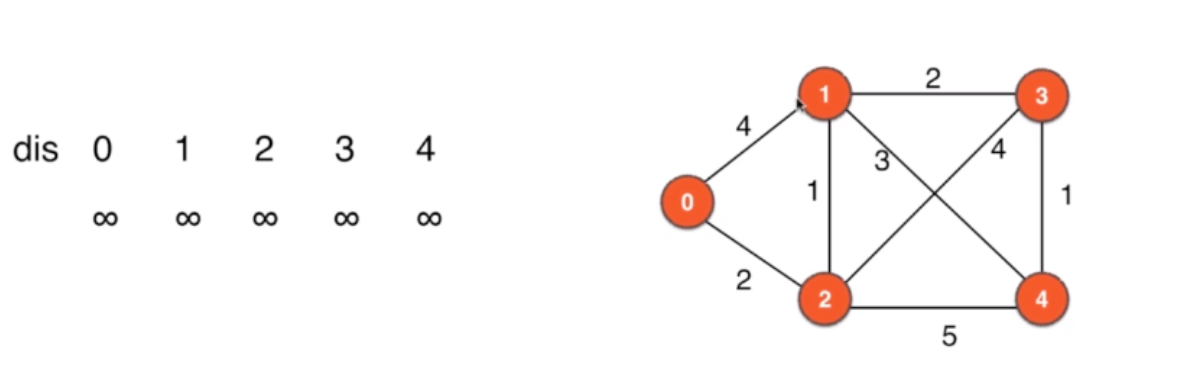
指定dis:源到各个顶点的路径,先初始为MAX
-
找顶点,更新dis

-
找当前最短的路径,确定这个就是到顶点的最短路径:确定2位0到2的最短路径

-
根据2顶点,来做更新

这里更新了2 到各个顶点的路径,1 从 4 更新到了3 -
再从当前的路径中找最小的,为3 顶点1,
所以确定顶点1 的最短路径为3

- 再根据顶点1 ,更新dis

- 确定当前最短的距离为5 ,顶点3

- 更新dis,到顶点4都为6

每轮循环:
- 初始化源到其他顶点的dis,默认都为MAX
- 找到当前没有访问的最短路节点
- 确定这个节点的最短路径就是当前大小
- 根据这个节点的最短路径大小,更新到其他节点的路径长度,如果比dis中的要小,那么就更新dis

#from ChatGPT 1.初始化距离数组dist和标记数组visited。将起始地点设置为起点,其他地点的距离初始化为无穷大,visited数组初始化为false。 2.从起点开始遍历所有地点,选择当前距离最小且未被访问过的地点u。 3.对于地点u,更新与其相邻的地点v的距离,如果新的距离小于原来的距离,则更新距离数组dist和路径数组path。 4.标记地点u为已访问,重复上述过程,直到所有地点都被访问。 5.最终得到起点到每个地点的最短距离和路径。- 1
- 2
- 3
- 4
- 5
- 6
-
相关阅读:
MATLAB程序设计课后作业三、四
STM32笔记—EXTI外部中断
什么是 PWA
kubernetes负载均衡部署
基于JavaSwing开发打小鸟游戏+实验报告 课程设计 大作业 毕业设计
代码随想录算法训练营第七天 |151.翻转字符串里的单词
Hive的开窗函数和Rank
Java集合框架
抄写Linux源码(Day18:读取硬盘前的准备工作有哪些?)
ETL调度同步工具比较-Kettle、DolphinSchedule、DataX
- 原文地址:https://blog.csdn.net/weixin_39381833/article/details/132647203
