-
数据结构——链表
目录
一、链表概述
链表:存储结构上并非连续,元素之间靠指针连接的线性表。
链表可以分为是否带头节点的链表、是否为循环链表、是否为双向链表,但是不带头的单向链表使用较多,本文也是对不带头的单向链表进行详解。
二、模拟实现链表
1、结点
链表是有多个结点组成,结点的成员变量有data和next,结点类为链表类的内部类。
- class Node{
- public int data;
- public Node next;
- public Node(int data){
- this.data=data;
- }
- }
2、遍历链表
定义一个结点指向链表的首元结点,逐个进行遍历,直至链表中某个结点的next为空。
- //遍历链表
- public void display() {
- if(head==null){
- return;
- }
- Node cur=head;
- while(cur!=null){
- System.out.print(cur.data+" ");
- cur=cur.next;
- }
- }
3、获取链表的长度
与遍历链表相似,只是需要设置一个计数器,来求出链表的长度。
- public int size() {
- int count=0;
- Node cur = head;
- while(cur!=null){
- count++;
- cur=cur.next;
- }
- return count;
- }
4、添加元素
(1)、头插法
将待添加的元素插入到链表首部,需要将待插的元素封装为一个结点,将该结点的next指向链表的首部,再将链表的首部指向该结点,那么该结点为链表的首元结点。

- //头插法
- public void addFirst(int data) {
- Node node=new Node(data);
- node.next=head;
- head=node;
- }
(2)、尾插法
将需要插入的元素封装为一个结点,遍历整个链表,让链表的最后一个结点的next指向新增的结点即可。

- //尾插法
- public void addLast(int data) {
- Node node=new Node(data);
- if(head==null){
- head=node;
- return;
- }
- Node cur=head;
- while(cur.next!=null){
- cur=cur.next;
- }
- cur.next=node;
- }
(3)、在指定位置插入元素
可以再定义一个方法获取指定位置的结点,以此得到指定位置的前一个结点,然后新增结点的next为前一个结点的next, 前一个结点的next为新增结点。

- //获取指定位置的结点
- public Node indexNode(int index){
- if(index<0||index>size()){
- throw new PosException("位置不合法!");
- }
- int count=0;
- Node cur = head;
- while(count!=index){
- cur=cur.next;
- count++;
- }
- return cur;
- }
- //任意位置插入,第一个数据节点为0号下标
- public boolean addIndex(int index, int data) {
- if(index==0){
- addFirst(data);
- return true;
- }
- if(index==size()){
- addLast(data);
- return true;
- }
- if(index<0||index>size()){
- throw new PosException("位置不合法!");
- }
- Node cur=indexNode(index-1);
- Node node=new Node(data);
- node.next=cur.next;
- cur.next=node;
- return true;
- }
5、删除元素
(1)、删除第一次出现值为key的结点
首先对特殊情况(链表为空,链表的首元结点为要删除的节点,直接将首元结点指向其下一个结点) 处理,然后找到key结点的前一个结点,让其的next指向next.next。

- //删除第一次出现关键字为key的节点
- public void remove(int key) {
- if(head==null){
- return;
- }
- Node cur=head;
- if(cur.data==key&&cur.next==null){
- head=null;
- return;
- }
- while(cur.next!=null){
- if(cur.next.data==key){
- cur.next=cur.next.next;
- return;
- }
- cur=cur.next;
- }
- System.out.println("链表中不存在"+key+"元素");
- }
(2)、删除所有值为key的结点
首先仍需对特殊情况进行处理(与上述类似),采用双指针,开始时,pre和cur都指向首元结点, 当cur继续像后遍历时,若值为key,则pre.next=cur.next,否则pre=cur。

- //删除所有值为key的结点
- public void removeAllKey(int key) {
- if(head==null){
- return;
- }
- while(head.data==key){
- if(head.next==null){
- head=null;
- }
- head=head.next;
- }
- Node pre=head;
- Node cur=head.next;
- while(cur!=null){
- if(cur.data==key){
- pre.next=cur.next;
- cur=cur.next;
- }else{
- pre=cur;
- cur=cur.next;
- }
- }
- /*if(head.data==key){
- if(head.next==null){
- head=null;
- }
- head=head.next;
- }*/
- }
6、清空链表
直接将首元结点置为null即可。
- public void clear() {
- head=null;
- }
三、常见笔试题
1、单链表转置
对链表为空和链表只有一个首元结点进行处理,定义一个结点cur指向首元结点的next,然后利用头插法的思想,将所有的元素进行转置。
- public ListNode reverseList(ListNode head) {
- if(head==null){
- return null;
- }
- if(head.next==null){
- return head;
- }
- ListNode cur=head.next;
- head.next=null;
- while(cur!=null){
- ListNode node=cur.next;
- cur.next=head;
- head=cur;
- cur=node;
- }
- return head;
- }
2、获取单链表的中间结点
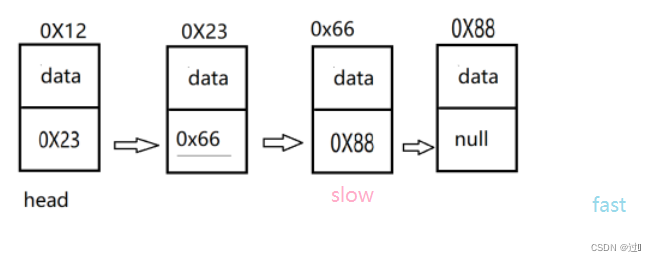
同样需要对特殊情况进行处理,之后不再赘述,利用快慢指针的思想,在进行遍历时,slow向后走一步,fast向后走两步,这里需要考虑到链表长度为奇数和偶数的情况,对于奇数的
情况是fast.next==null,对于偶数的情况是fast==null,故将while的循环条件写为(fast!=null&&fast.next!=null)。

- public ListNode middleNode(ListNode head) {
- if(head==null){
- return null;
- }
- if(head.next==null){
- return head;
- }
- ListNode slow=head.next;
- ListNode fast=head.next.next;
- while(fast!=null&&fast.next!=null){
- slow=slow.next;
- fast=fast.next.next;
- }
- return slow;
- }
3、获取倒数第K个结点
依旧采用快慢指针的思想,首先对k的合法性进行判断,先将fast和slow都指向head,然后将fast指向其后的k个结点,最后进行while循环,fast和slow继续向后进行遍历,循环条件为fast!=null,循环结束后slow指向倒数第k个结点。

- public ListNode FindKthToTail(ListNode head,int k) {
- if(k<=0){
- return null;
- }
- if(head==null){
- return null;
- }
- ListNode slow=head;
- ListNode fast=head;
- int count=0;
- while(count<k){
- if(fast==null){
- return null;
- }
- fast=fast.next;
- count++;
- }
- while(fast!=null){
- slow=slow.next;
- fast=fast.next;
- }
- return slow;
- }
4、合并两个有序链表
需要定义一个新的首元结点,再定义一个结点cur指向该结点然后对两个链表进行遍历,循环条件为两个链表不为空,较小的结点添加到cur结点之后,遍历完成后,若还有链表没有遍历完,则cur.next指向未遍历完链表的首元结点。最后将新链表的首元结点进行删除。

- public ListNode mergeTwoLists(ListNode list1, ListNode list2) {
- ListNode newHead=new ListNode(0);
- ListNode cur=newHead;
- while(list1!=null&&list2!=null){
- if(list1.val<list2.val){
- cur.next=list1;
- list1=list1.next;
- }else{
- cur.next=list2;
- list2=list2.next;
- }
- cur=cur.next;
- }
- if(list1!=null){
- cur.next=list1;
- }
- if(list2!=null){
- cur.next=list2;
- }
- newHead=newHead.next;
- return newHead;
- }
5、判断链表是否为回文
首先需要找到中间结点,然后从中间结点的后一个改变指向,进行翻转,最后进行遍历。

- public boolean chkPalindrome(ListNode head) {
- if(head==null){
- return false;
- }
- if(head.next==null){
- return true;
- }
- ListNode slow=head;
- ListNode fast=head;
- //1、寻找中间结点
- while(fast!=null&&fast.next!=null){
- fast=fast.next.next;
- slow=slow.next;
- }
- //2.翻转
- ListNode cur=slow.next;
- while(cur!=null){
- ListNode curNext=cur.next;
- cur.next=slow;
- slow=cur;//注意:此处不能写slow=slow.next,因为slow后面结点的next指向已发生改变
- cur=curNext;
- }
- //3.判断
- while(head!=slow){
- if(head.val!=slow.val){
- return false;
- }
- if(head.next==slow){
- return true;
- }
- head=head.next;
- slow=slow.next;
- }
- return true;
- }
-
相关阅读:
图扑软件 3D 组态编辑器,低代码零代码构建数字孪生工厂
Amazon云计算AWS之[1]基础存储架构Dynamo
【STM32 HAL】串口中断控制相关
ABAP基础知识 数据读取的缓存
软件概要设计-架构真题(二十五)
聚类的方法、原理以及一般过程
【Nginx】Windows平台下配置Nginx服务实现负载均衡
Go :复制预声明功能的半穷举测试(附完整源码)
Spring知识点讲解 【笔记】
ansible
- 原文地址:https://blog.csdn.net/m0_62404808/article/details/128161510