-
万字博客带你全面剖析Spring的依赖注入
1.写在前面
前面的博客我们已经写了Spring的依赖查找,这篇博客我们来了解写Spring的依赖注入。
2.依赖注入的模式和类型
手动模式 - 配置或者编程的方式, 提前安排注入规则
- XML 资源配置元信息
- Java 注解配置元信息
- API 配置元信息
自动模式 - 实现方提供依赖自动关联的方式, 按照內建的注入规则
- Autowiring( 自动绑定)
依赖注入的类型

3.自动绑定( Autowiring)
官方说明
- The Spring container can autowire relationships between collaborating beans. You can let Spring resolve collaborators (other beans) automatically for your bean by inspecting the contents of the ApplicationContext.
- Spring 容器可以自动装配协作 bean 之间的关系。 您可以让 Spring 通过检查 ApplicationContext 的内容自动为您的 bean 解析协作者(其他 bean)。
优点
- Autowiring can significantly reduce the need to specify properties or constructor arguments.(自动装配可以显着减少指定属性或构造函数参数的需要。)
- Autowiring can update a configuration as your objects evolve.(随着对象的发展,自动装配可以更新配置。)
4.自动绑定( Autowiring) 模式

5.自动绑定( Autowiring) 限制和不足
官方说明
6.Setter 方法注入
实现方法
- 手动模式
- XML 资源配置元信息
- Java 注解配置元信息
- API 配置元信息
- 自动模式
- byName
- byType
下面我们来展示各种代码,具体的如下:
XML 资源配置元信息
<beans xmlns="http://www.springframework.org/schema/beans" xmlns:xsi="http://www.w3.org/2001/XMLSchema-instance" xsi:schemaLocation="http://www.springframework.org/schema/beans https://www.springframework.org/schema/beans/spring-beans.xsd"> <import resource="classpath:/META-INF/dependency-lookup-context.xml"/> <bean class="org.learn.spring.dependency.injection.UserHolder"> <property name="user" ref="superUser"/> bean> beans>- 1
- 2
- 3
- 4
- 5
- 6
- 7
- 8
- 9
- 10
- 11
- 12
- 13
package org.learn.spring.dependency.injection; import org.springframework.beans.factory.support.DefaultListableBeanFactory; import org.springframework.beans.factory.xml.XmlBeanDefinitionReader; // 基于 xml 的setter依赖注入的示例 public class XmlDependencySetterInjectionDemo { public static void main(String[] args) { DefaultListableBeanFactory beanFactory = new DefaultListableBeanFactory(); XmlBeanDefinitionReader beanDefinitionReader = new XmlBeanDefinitionReader(beanFactory); String xmlResourcePath = "classpath:/META-INF/dependency-setter-injection.xml"; // 加载XML资源,解析并生成BeanDefinition beanDefinitionReader.loadBeanDefinitions(xmlResourcePath); // 创建依赖查找并且创建Bean UserHolder userHolder = beanFactory.getBean(UserHolder.class); System.out.println(userHolder); } }- 1
- 2
- 3
- 4
- 5
- 6
- 7
- 8
- 9
- 10
- 11
- 12
- 13
- 14
- 15
- 16
- 17
- 18
- 19
- 20
- 21
Java 注解配置元信息
package org.learn.spring.dependency.injection; import org.learn.spring.ioc.overview.domain.User; import org.springframework.beans.factory.support.DefaultListableBeanFactory; import org.springframework.beans.factory.xml.XmlBeanDefinitionReader; import org.springframework.context.annotation.AnnotationConfigApplicationContext; import org.springframework.context.annotation.Bean; import java.util.Map; // 基于 Annotation 的setter依赖注入的示例 public class AnnotationDependencySetterInjectionDemo { public static void main(String[] args) { // 创建BeanFactory的容器 AnnotationConfigApplicationContext applicationContext = new AnnotationConfigApplicationContext(); // 注册Configuration Class 配置类 applicationContext.register(AnnotationDependencySetterInjectionDemo.class); XmlBeanDefinitionReader beanDefinitionReader = new XmlBeanDefinitionReader(applicationContext); String xmlResourcePath = "classpath:/META-INF/dependency-lookup-context.xml"; // 加载XML资源,解析并生成BeanDefinition beanDefinitionReader.loadBeanDefinitions(xmlResourcePath); // 启动应用上下文 applicationContext.refresh(); // 创建依赖查找并且创建Bean UserHolder userHolder = applicationContext.getBean(UserHolder.class); System.out.println(userHolder); // 显示的关闭spring应用上下文 applicationContext.close(); } @Bean public UserHolder userHolder(User user){ UserHolder userHolder = new UserHolder(); userHolder.setUser(user); return userHolder; } }- 1
- 2
- 3
- 4
- 5
- 6
- 7
- 8
- 9
- 10
- 11
- 12
- 13
- 14
- 15
- 16
- 17
- 18
- 19
- 20
- 21
- 22
- 23
- 24
- 25
- 26
- 27
- 28
- 29
- 30
- 31
- 32
- 33
- 34
- 35
- 36
- 37
- 38
- 39
- 40
- 41
- 42
- 43
API 配置元信息
package org.learn.spring.dependency.injection; import org.learn.spring.ioc.overview.domain.User; import org.springframework.beans.factory.config.BeanDefinition; import org.springframework.beans.factory.support.BeanDefinitionBuilder; import org.springframework.beans.factory.xml.XmlBeanDefinitionReader; import org.springframework.context.annotation.AnnotationConfigApplicationContext; import org.springframework.context.annotation.Bean; // 基于 API 的setter依赖注入的示例 public class ApiDependencySetterInjectionDemo { public static void main(String[] args) { // 创建BeanFactory的容器 AnnotationConfigApplicationContext applicationContext = new AnnotationConfigApplicationContext(); // 生成UserHolder 的BeanDefinition BeanDefinition userHolderBeanDefinition = createUserHolderBeanDefinition(); // 注册UserHolder 的BeanDefinition applicationContext.registerBeanDefinition("userHolder", userHolderBeanDefinition); XmlBeanDefinitionReader beanDefinitionReader = new XmlBeanDefinitionReader(applicationContext); String xmlResourcePath = "classpath:/META-INF/dependency-lookup-context.xml"; // 加载XML资源,解析并生成BeanDefinition beanDefinitionReader.loadBeanDefinitions(xmlResourcePath); // 启动应用上下文 applicationContext.refresh(); // 创建依赖查找并且创建Bean UserHolder userHolder = applicationContext.getBean(UserHolder.class); System.out.println(userHolder); // 显示的关闭spring应用上下文 applicationContext.close(); } // 为UserHolder生成BeanDefinition private static BeanDefinition createUserHolderBeanDefinition() { BeanDefinitionBuilder beanDefinitionBuilder = BeanDefinitionBuilder.genericBeanDefinition(UserHolder.class); beanDefinitionBuilder.addPropertyReference("user", "superUser"); return beanDefinitionBuilder.getBeanDefinition(); } }- 1
- 2
- 3
- 4
- 5
- 6
- 7
- 8
- 9
- 10
- 11
- 12
- 13
- 14
- 15
- 16
- 17
- 18
- 19
- 20
- 21
- 22
- 23
- 24
- 25
- 26
- 27
- 28
- 29
- 30
- 31
- 32
- 33
- 34
- 35
- 36
- 37
- 38
- 39
- 40
- 41
- 42
- 43
- 44
- 45
- 46
- 47
- 48
byName
<beans xmlns="http://www.springframework.org/schema/beans" xmlns:xsi="http://www.w3.org/2001/XMLSchema-instance" xsi:schemaLocation="http://www.springframework.org/schema/beans https://www.springframework.org/schema/beans/spring-beans.xsd"> <import resource="classpath:/META-INF/dependency-lookup-context.xml"/> <bean class="org.learn.spring.dependency.injection.UserHolder" autowire="byName"/> beans>- 1
- 2
- 3
- 4
- 5
- 6
- 7
- 8
- 9
- 10
- 11
package org.learn.spring.dependency.injection; import org.springframework.beans.factory.support.DefaultListableBeanFactory; import org.springframework.beans.factory.xml.XmlBeanDefinitionReader; // byName AutoWring 依赖 setter方法注入示例 public class AutoWringByNameDependencySetterInjectionDemo { public static void main(String[] args) { DefaultListableBeanFactory beanFactory = new DefaultListableBeanFactory(); XmlBeanDefinitionReader beanDefinitionReader = new XmlBeanDefinitionReader(beanFactory); String xmlResourcePath = "classpath:/META-INF/autowring-dependency-setter-injection.xml"; // 加载XML资源,解析并生成BeanDefinition beanDefinitionReader.loadBeanDefinitions(xmlResourcePath); // 创建依赖查找并且创建Bean UserHolder userHolder = beanFactory.getBean(UserHolder.class); System.out.println(userHolder); } }- 1
- 2
- 3
- 4
- 5
- 6
- 7
- 8
- 9
- 10
- 11
- 12
- 13
- 14
- 15
- 16
- 17
- 18
- 19
- 20
- 21
- 22
byType
<beans xmlns="http://www.springframework.org/schema/beans" xmlns:xsi="http://www.w3.org/2001/XMLSchema-instance" xsi:schemaLocation="http://www.springframework.org/schema/beans https://www.springframework.org/schema/beans/spring-beans.xsd"> <import resource="classpath:/META-INF/dependency-lookup-context.xml"/> <bean class="org.learn.spring.dependency.injection.UserHolder" autowire="byType"/> beans>- 1
- 2
- 3
- 4
- 5
- 6
- 7
- 8
- 9
- 10
- 11
package org.learn.spring.dependency.injection; import org.springframework.beans.factory.support.DefaultListableBeanFactory; import org.springframework.beans.factory.xml.XmlBeanDefinitionReader; // byName AutoWring 依赖 setter方法注入示例 public class AutoWringByNameDependencySetterInjectionDemo { public static void main(String[] args) { DefaultListableBeanFactory beanFactory = new DefaultListableBeanFactory(); XmlBeanDefinitionReader beanDefinitionReader = new XmlBeanDefinitionReader(beanFactory); String xmlResourcePath = "classpath:/META-INF/autowring-dependency-setter-injection.xml"; // 加载XML资源,解析并生成BeanDefinition beanDefinitionReader.loadBeanDefinitions(xmlResourcePath); // 创建依赖查找并且创建Bean UserHolder userHolder = beanFactory.getBean(UserHolder.class); System.out.println(userHolder); } }- 1
- 2
- 3
- 4
- 5
- 6
- 7
- 8
- 9
- 10
- 11
- 12
- 13
- 14
- 15
- 16
- 17
- 18
- 19
- 20
- 21
- 22
7.构造器注入
实现方法
- 手动模式
- XML 资源配置元信息
- Java 注解配置元信息
- API 配置元信息
- 自动模式
- constructor
下面来展示示例代码
XML 资源配置元信息
<beans xmlns="http://www.springframework.org/schema/beans" xmlns:xsi="http://www.w3.org/2001/XMLSchema-instance" xsi:schemaLocation="http://www.springframework.org/schema/beans https://www.springframework.org/schema/beans/spring-beans.xsd"> <import resource="classpath:/META-INF/dependency-lookup-context.xml"/> <bean class="org.learn.spring.dependency.injection.UserHolder"> <constructor-arg name="user" ref="superUser"/> bean> beans>- 1
- 2
- 3
- 4
- 5
- 6
- 7
- 8
- 9
- 10
- 11
- 12
- 13
package org.learn.spring.dependency.injection; import org.springframework.beans.factory.support.DefaultListableBeanFactory; import org.springframework.beans.factory.xml.XmlBeanDefinitionReader; // 基于 xml 的Constructor依赖注入的示例 public class XmlDependencyConstructorInjectionDemo { public static void main(String[] args) { DefaultListableBeanFactory beanFactory = new DefaultListableBeanFactory(); XmlBeanDefinitionReader beanDefinitionReader = new XmlBeanDefinitionReader(beanFactory); String xmlResourcePath = "classpath:/META-INF/dependency-constructor-injection.xml"; // 加载XML资源,解析并生成BeanDefinition beanDefinitionReader.loadBeanDefinitions(xmlResourcePath); // 创建依赖查找并且创建Bean UserHolder userHolder = beanFactory.getBean(UserHolder.class); System.out.println(userHolder); } }- 1
- 2
- 3
- 4
- 5
- 6
- 7
- 8
- 9
- 10
- 11
- 12
- 13
- 14
- 15
- 16
- 17
- 18
- 19
- 20
- 21
- 22
Java 注解配置元信息
package org.learn.spring.dependency.injection; import org.learn.spring.ioc.overview.domain.User; import org.springframework.beans.factory.xml.XmlBeanDefinitionReader; import org.springframework.context.annotation.AnnotationConfigApplicationContext; import org.springframework.context.annotation.Bean; // 基于 Annotation 的Constructor依赖注入的示例 public class AnnotationDependencyConstructorInjectionDemo { public static void main(String[] args) { // 创建BeanFactory的容器 AnnotationConfigApplicationContext applicationContext = new AnnotationConfigApplicationContext(); // 注册Configuration Class 配置类 applicationContext.register(AnnotationDependencyConstructorInjectionDemo.class); XmlBeanDefinitionReader beanDefinitionReader = new XmlBeanDefinitionReader(applicationContext); String xmlResourcePath = "classpath:/META-INF/dependency-lookup-context.xml"; // 加载XML资源,解析并生成BeanDefinition beanDefinitionReader.loadBeanDefinitions(xmlResourcePath); // 启动应用上下文 applicationContext.refresh(); // 创建依赖查找并且创建Bean UserHolder userHolder = applicationContext.getBean(UserHolder.class); System.out.println(userHolder); // 显示的关闭spring应用上下文 applicationContext.close(); } @Bean public UserHolder userHolder(User user){ return new UserHolder(user); } }- 1
- 2
- 3
- 4
- 5
- 6
- 7
- 8
- 9
- 10
- 11
- 12
- 13
- 14
- 15
- 16
- 17
- 18
- 19
- 20
- 21
- 22
- 23
- 24
- 25
- 26
- 27
- 28
- 29
- 30
- 31
- 32
- 33
- 34
- 35
- 36
- 37
- 38
API 配置元信息
package org.learn.spring.dependency.injection; import org.springframework.beans.factory.config.BeanDefinition; import org.springframework.beans.factory.support.BeanDefinitionBuilder; import org.springframework.beans.factory.xml.XmlBeanDefinitionReader; import org.springframework.context.annotation.AnnotationConfigApplicationContext; // 基于 API 的Constructor依赖注入的示例 public class ApiDependencyConstructorInjectionDemo { public static void main(String[] args) { // 创建BeanFactory的容器 AnnotationConfigApplicationContext applicationContext = new AnnotationConfigApplicationContext(); // 生成UserHolder 的BeanDefinition BeanDefinition userHolderBeanDefinition = createUserHolderBeanDefinition(); // 注册UserHolder 的BeanDefinition applicationContext.registerBeanDefinition("userHolder", userHolderBeanDefinition); XmlBeanDefinitionReader beanDefinitionReader = new XmlBeanDefinitionReader(applicationContext); String xmlResourcePath = "classpath:/META-INF/dependency-lookup-context.xml"; // 加载XML资源,解析并生成BeanDefinition beanDefinitionReader.loadBeanDefinitions(xmlResourcePath); // 启动应用上下文 applicationContext.refresh(); // 创建依赖查找并且创建Bean UserHolder userHolder = applicationContext.getBean(UserHolder.class); System.out.println(userHolder); // 显示的关闭spring应用上下文 applicationContext.close(); } // 为UserHolder生成BeanDefinition private static BeanDefinition createUserHolderBeanDefinition() { BeanDefinitionBuilder beanDefinitionBuilder = BeanDefinitionBuilder.genericBeanDefinition(UserHolder.class); beanDefinitionBuilder.addConstructorArgReference("superUser"); return beanDefinitionBuilder.getBeanDefinition(); } }- 1
- 2
- 3
- 4
- 5
- 6
- 7
- 8
- 9
- 10
- 11
- 12
- 13
- 14
- 15
- 16
- 17
- 18
- 19
- 20
- 21
- 22
- 23
- 24
- 25
- 26
- 27
- 28
- 29
- 30
- 31
- 32
- 33
- 34
- 35
- 36
- 37
- 38
- 39
- 40
- 41
- 42
- 43
- 44
- 45
constructor
<beans xmlns="http://www.springframework.org/schema/beans" xmlns:xsi="http://www.w3.org/2001/XMLSchema-instance" xsi:schemaLocation="http://www.springframework.org/schema/beans https://www.springframework.org/schema/beans/spring-beans.xsd"> <import resource="classpath:/META-INF/dependency-lookup-context.xml"/> <bean class="org.learn.spring.dependency.injection.UserHolder" autowire="constructor"/> beans>- 1
- 2
- 3
- 4
- 5
- 6
- 7
- 8
- 9
- 10
- 11
package org.learn.spring.dependency.injection; import org.springframework.beans.factory.support.DefaultListableBeanFactory; import org.springframework.beans.factory.xml.XmlBeanDefinitionReader; // constructor AutoWring 依赖 constructor方法注入示例 public class AutoWringConstructorDependencyConstructorInjectionDemo { public static void main(String[] args) { DefaultListableBeanFactory beanFactory = new DefaultListableBeanFactory(); XmlBeanDefinitionReader beanDefinitionReader = new XmlBeanDefinitionReader(beanFactory); String xmlResourcePath = "classpath:/META-INF/autowring-dependency-constructor-injection.xml"; // 加载XML资源,解析并生成BeanDefinition beanDefinitionReader.loadBeanDefinitions(xmlResourcePath); // 创建依赖查找并且创建Bean UserHolder userHolder = beanFactory.getBean(UserHolder.class); System.out.println(userHolder); } }- 1
- 2
- 3
- 4
- 5
- 6
- 7
- 8
- 9
- 10
- 11
- 12
- 13
- 14
- 15
- 16
- 17
- 18
- 19
- 20
- 21
- 22
- 23
8.字段注入
实现方法
- 手动模式
- Java 注解配置元信息
- @Autowired
- @Resource
- @Inject( 可选)
具体的代码如下:
@Autowired
package org.learn.spring.dependency.injection; import org.learn.spring.ioc.overview.domain.User; import org.springframework.beans.factory.annotation.Autowired; import org.springframework.beans.factory.xml.XmlBeanDefinitionReader; import org.springframework.context.annotation.AnnotationConfigApplicationContext; import org.springframework.context.annotation.Bean; // 基于 Annotation 的Field依赖注入的示例 public class AnnotationDependencyFieldInjectionDemo { @Autowired // @Autowired 会忽略静态字段 private UserHolder userHolder; public static void main(String[] args) { // 创建BeanFactory的容器 AnnotationConfigApplicationContext applicationContext = new AnnotationConfigApplicationContext(); // 注册Configuration Class 配置类 -> Spring Bean applicationContext.register(AnnotationDependencyFieldInjectionDemo.class); XmlBeanDefinitionReader beanDefinitionReader = new XmlBeanDefinitionReader(applicationContext); String xmlResourcePath = "classpath:/META-INF/dependency-lookup-context.xml"; // 加载XML资源,解析并生成BeanDefinition beanDefinitionReader.loadBeanDefinitions(xmlResourcePath); // 启动应用上下文 applicationContext.refresh(); // 依赖查找 AnnotationDependencyFieldInjectionDemo Bean AnnotationDependencyFieldInjectionDemo demo = applicationContext.getBean(AnnotationDependencyFieldInjectionDemo.class); // 通过@Autowired字段关联 UserHolder userHolder = demo.userHolder; System.out.println(userHolder); // 显示的关闭spring应用上下文 applicationContext.close(); } @Bean public UserHolder userHolder(User user){ return new UserHolder(user); } }- 1
- 2
- 3
- 4
- 5
- 6
- 7
- 8
- 9
- 10
- 11
- 12
- 13
- 14
- 15
- 16
- 17
- 18
- 19
- 20
- 21
- 22
- 23
- 24
- 25
- 26
- 27
- 28
- 29
- 30
- 31
- 32
- 33
- 34
- 35
- 36
- 37
- 38
- 39
- 40
- 41
- 42
- 43
- 44
- 45
- 46
@Resource
package org.learn.spring.dependency.injection; import org.learn.spring.ioc.overview.domain.User; import org.springframework.beans.factory.annotation.Autowired; import org.springframework.beans.factory.xml.XmlBeanDefinitionReader; import org.springframework.context.annotation.AnnotationConfigApplicationContext; import org.springframework.context.annotation.Bean; import javax.annotation.Resource; // 基于 Annotation 的Field依赖注入的示例 public class AnnotationDependencyFieldInjectionDemo { @Autowired // @Autowired 会忽略静态字段 private UserHolder userHolder; @Resource private UserHolder userHolder2; public static void main(String[] args) { // 创建BeanFactory的容器 AnnotationConfigApplicationContext applicationContext = new AnnotationConfigApplicationContext(); // 注册Configuration Class 配置类 -> Spring Bean applicationContext.register(AnnotationDependencyFieldInjectionDemo.class); XmlBeanDefinitionReader beanDefinitionReader = new XmlBeanDefinitionReader(applicationContext); String xmlResourcePath = "classpath:/META-INF/dependency-lookup-context.xml"; // 加载XML资源,解析并生成BeanDefinition beanDefinitionReader.loadBeanDefinitions(xmlResourcePath); // 启动应用上下文 applicationContext.refresh(); // 依赖查找 AnnotationDependencyFieldInjectionDemo Bean AnnotationDependencyFieldInjectionDemo demo = applicationContext.getBean(AnnotationDependencyFieldInjectionDemo.class); // 通过@Autowired字段关联 UserHolder userHolder = demo.userHolder; System.out.println(userHolder); // 通过@Resource字段关联 UserHolder userHolder2 = demo.userHolder2; System.out.println(userHolder2); // 显示的关闭spring应用上下文 applicationContext.close(); } @Bean public UserHolder userHolder(User user){ return new UserHolder(user); } }- 1
- 2
- 3
- 4
- 5
- 6
- 7
- 8
- 9
- 10
- 11
- 12
- 13
- 14
- 15
- 16
- 17
- 18
- 19
- 20
- 21
- 22
- 23
- 24
- 25
- 26
- 27
- 28
- 29
- 30
- 31
- 32
- 33
- 34
- 35
- 36
- 37
- 38
- 39
- 40
- 41
- 42
- 43
- 44
- 45
- 46
- 47
- 48
- 49
- 50
- 51
- 52
- 53
- 54
9.方法注入
实现方法
- 手动模式
- Java 注解配置元信息
- @Autowired
- @Resource
- @Inject( 可选)
- @Bean
- Java 注解配置元信息
具体的代码如下:
package org.learn.spring.dependency.injection; import org.learn.spring.ioc.overview.domain.User; import org.springframework.beans.factory.annotation.Autowired; import org.springframework.beans.factory.xml.XmlBeanDefinitionReader; import org.springframework.context.annotation.AnnotationConfigApplicationContext; import org.springframework.context.annotation.Bean; import javax.annotation.Resource; // 基于 Annotation 的Method依赖注入的示例 public class AnnotationDependencyMethodInjectionDemo { private UserHolder userHolder; private UserHolder userHolder2; @Autowired public void init1(UserHolder userHolder){ this.userHolder = userHolder; } @Resource public void init2(UserHolder userHolder2){ this.userHolder2 = userHolder2; } public static void main(String[] args) { // 创建BeanFactory的容器 AnnotationConfigApplicationContext applicationContext = new AnnotationConfigApplicationContext(); // 注册Configuration Class 配置类 -> Spring Bean applicationContext.register(AnnotationDependencyMethodInjectionDemo.class); XmlBeanDefinitionReader beanDefinitionReader = new XmlBeanDefinitionReader(applicationContext); String xmlResourcePath = "classpath:/META-INF/dependency-lookup-context.xml"; // 加载XML资源,解析并生成BeanDefinition beanDefinitionReader.loadBeanDefinitions(xmlResourcePath); // 启动应用上下文 applicationContext.refresh(); // 依赖查找 AnnotationDependencyFieldInjectionDemo Bean AnnotationDependencyMethodInjectionDemo demo = applicationContext.getBean(AnnotationDependencyMethodInjectionDemo.class); // 通过@Autowired字段关联 UserHolder userHolder = demo.userHolder; System.out.println(userHolder); // 通过@Resource字段关联 UserHolder userHolder2 = demo.userHolder2; System.out.println(userHolder2); System.out.println(userHolder == userHolder2); // 显示的关闭spring应用上下文 applicationContext.close(); } @Bean public UserHolder userHolder(User user){ return new UserHolder(user); } }- 1
- 2
- 3
- 4
- 5
- 6
- 7
- 8
- 9
- 10
- 11
- 12
- 13
- 14
- 15
- 16
- 17
- 18
- 19
- 20
- 21
- 22
- 23
- 24
- 25
- 26
- 27
- 28
- 29
- 30
- 31
- 32
- 33
- 34
- 35
- 36
- 37
- 38
- 39
- 40
- 41
- 42
- 43
- 44
- 45
- 46
- 47
- 48
- 49
- 50
- 51
- 52
- 53
- 54
- 55
- 56
- 57
- 58
- 59
- 60
- 61
- 62
- 63
- 64
- 65
10.接口回调注入
Aware 系列接口回调
自动模式

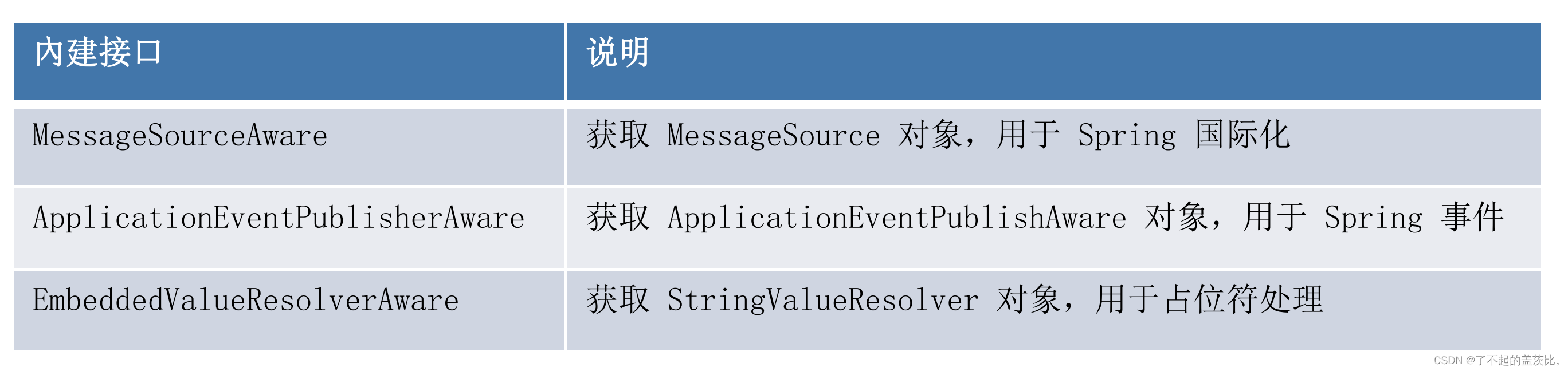
具体的代码如下:
package org.learn.spring.dependency.injection; import org.springframework.beans.BeansException; import org.springframework.beans.factory.BeanFactory; import org.springframework.beans.factory.BeanFactoryAware; import org.springframework.beans.factory.support.DefaultListableBeanFactory; import org.springframework.beans.factory.xml.XmlBeanDefinitionReader; import org.springframework.context.ApplicationContext; import org.springframework.context.ApplicationContextAware; import org.springframework.context.annotation.AnnotationConfigApplicationContext; // 基于 Aware 的接口回调依赖注入的示例 public class AwareInterfaceDependencyInjectionDemo implements BeanFactoryAware, ApplicationContextAware { private static BeanFactory beanFactory; private static ApplicationContext applicationContext; public static void main(String[] args) { // 创建BeanFactory的容器 AnnotationConfigApplicationContext context = new AnnotationConfigApplicationContext(); // 注册Configuration Class 配置类 -> Spring Bean context.register(AwareInterfaceDependencyInjectionDemo.class); // 启动应用上下文 context.refresh(); System.out.println(beanFactory == context.getBeanFactory()); System.out.println(applicationContext == context); // 显示的关闭spring应用上下文 context.close(); } @Override public void setBeanFactory(BeanFactory beanFactory) throws BeansException { AwareInterfaceDependencyInjectionDemo.beanFactory = beanFactory; } @Override public void setApplicationContext(ApplicationContext applicationContext) throws BeansException { AwareInterfaceDependencyInjectionDemo.applicationContext = applicationContext; } }- 1
- 2
- 3
- 4
- 5
- 6
- 7
- 8
- 9
- 10
- 11
- 12
- 13
- 14
- 15
- 16
- 17
- 18
- 19
- 20
- 21
- 22
- 23
- 24
- 25
- 26
- 27
- 28
- 29
- 30
- 31
- 32
- 33
- 34
- 35
- 36
- 37
- 38
- 39
- 40
- 41
- 42
- 43
- 44
11.依赖注入类型选择
注入选型
- 低依赖: 构造器注入
- 多依赖: Setter 方法注入
- 便利性: 字段注入
- 声明类: 方法注入
12.基础类型注入
基础类型
-
原生类型( Primitive) : boolean、 byte、 char、 short、 int、 float、 long、 double
-
标量类型( Scalar) : Number、 Character、 Boolean、 Enum、 Locale、 Charset、 Currency、
Properties、 UUID
-
常规类型( General) : Object、 String、 TimeZone、 Calendar、 Optional 等
-
Spring 类型: Resource、 InputSource、 Formatter 等
具体的代码如下:
<beans xmlns="http://www.springframework.org/schema/beans" xmlns:xsi="http://www.w3.org/2001/XMLSchema-instance" xsi:schemaLocation="http://www.springframework.org/schema/beans https://www.springframework.org/schema/beans/spring-beans.xsd"> <bean id="user" class="org.learn.spring.ioc.overview.domain.User"> <property name="id" value="1"/> <property name="name" value="胡桃"/> <property name="city" value="HANGZHOU"/> <property name="configFileLocation" value="classpath:/META-INF/user-config.properties"/> bean> <bean id="objectFactory" class="org.springframework.beans.factory.config.ObjectFactoryCreatingFactoryBean"> <property name="targetBeanName" value="user"/> bean> <bean id="superUser" class="org.learn.spring.ioc.overview.domain.SuperUser" parent="user" primary="true"> <property name="address" value="璃月"/> bean> beans>- 1
- 2
- 3
- 4
- 5
- 6
- 7
- 8
- 9
- 10
- 11
- 12
- 13
- 14
- 15
- 16
- 17
- 18
- 19
- 20
- 21
package org.learn.spring.ioc.overview.domain; import org.learn.spring.ioc.overview.enums.City; import org.springframework.core.io.Resource; import java.util.Arrays; import java.util.List; // 用户类 public class User { private Long id; private String name; private City city; private Resource configFileLocation; public Long getId() { return id; } public void setId(Long id) { this.id = id; } public String getName() { return name; } public void setName(String name) { this.name = name; } public City getCity() { return city; } public void setCity(City city) { this.city = city; } public Resource getConfigFileLocation() { return configFileLocation; } public void setConfigFileLocation(Resource configFileLocation) { this.configFileLocation = configFileLocation; } public static User createUser(){ User user = new User(); user.setId(1L); user.setName("温蒂"); return user; } @Override public String toString() { return "User{" + "id=" + id + ", name='" + name + '\'' + ", city=" + city + ", configFileLocation=" + configFileLocation + '}'; } }- 1
- 2
- 3
- 4
- 5
- 6
- 7
- 8
- 9
- 10
- 11
- 12
- 13
- 14
- 15
- 16
- 17
- 18
- 19
- 20
- 21
- 22
- 23
- 24
- 25
- 26
- 27
- 28
- 29
- 30
- 31
- 32
- 33
- 34
- 35
- 36
- 37
- 38
- 39
- 40
- 41
- 42
- 43
- 44
- 45
- 46
- 47
- 48
- 49
- 50
- 51
- 52
- 53
- 54
- 55
- 56
- 57
- 58
- 59
- 60
- 61
- 62
- 63
- 64
- 65
- 66
- 67
- 68
- 69
package org.learn.spring.ioc.overview.dependency.lookup; import org.learn.spring.ioc.overview.annotation.Super; import org.learn.spring.ioc.overview.domain.SuperUser; import org.learn.spring.ioc.overview.domain.User; import org.springframework.beans.factory.BeanFactory; import org.springframework.beans.factory.ListableBeanFactory; import org.springframework.beans.factory.ObjectFactory; import org.springframework.context.support.ClassPathXmlApplicationContext; import java.util.Map; // 依赖查找的示例 public class DependencyLookupDemo { public static void main(String[] args) { // 配置XML 配置文件 // 启动spring的应用上下文 BeanFactory beanFactory = new ClassPathXmlApplicationContext("classpath:META-INF/dependency-lookup-context.xml"); // 1.按照名称查找 lookupInRealTime(beanFactory); lookupInLazy(beanFactory); // 2.按照类型查找 lookupByType(beanFactory); lookupCollectionByType(beanFactory); // 3.按照类型和名称查找 lookupByNameAndType(beanFactory); // 4.通过注解查找对象 lookupCollectionByAnnotation(beanFactory); } // 实时查找 private static void lookupInRealTime(BeanFactory beanFactory) { User user = (User) beanFactory.getBean("user"); System.out.println("实时查找:" + user); } // 延时查找 private static void lookupInLazy(BeanFactory beanFactory) { ObjectFactory<User> objectFactory = (ObjectFactory<User>) beanFactory.getBean("objectFactory"); User user = objectFactory.getObject(); System.out.println("延时查找:" + user); } // 按照类型查找 private static void lookupByType(BeanFactory beanFactory) { User user = beanFactory.getBean(User.class); System.out.println("按照类型查找单一对象:" + user); } // 按照类型查找集合 private static void lookupCollectionByType(BeanFactory beanFactory) { if (beanFactory instanceof ListableBeanFactory) { ListableBeanFactory listableBeanFactory = (ListableBeanFactory) beanFactory; Map<String, User> users = listableBeanFactory.getBeansOfType(User.class); System.out.println("按照类型查找到的所有的 User 集合对象:" + users); } } // 按照类型和名称 private static void lookupByNameAndType(BeanFactory beanFactory) { User user = beanFactory.getBean("user", User.class); System.out.println("按照类型和名称查找:" + user); } // 按照注解查找集合对象 private static void lookupCollectionByAnnotation(BeanFactory beanFactory) { if (beanFactory instanceof ListableBeanFactory) { ListableBeanFactory listableBeanFactory = (ListableBeanFactory) beanFactory; Map<String, User> users = (Map) listableBeanFactory.getBeansWithAnnotation(Super.class); System.out.println("按照注解查找到的所有的标注@SuperUser User 集合对象:" + users); } } }- 1
- 2
- 3
- 4
- 5
- 6
- 7
- 8
- 9
- 10
- 11
- 12
- 13
- 14
- 15
- 16
- 17
- 18
- 19
- 20
- 21
- 22
- 23
- 24
- 25
- 26
- 27
- 28
- 29
- 30
- 31
- 32
- 33
- 34
- 35
- 36
- 37
- 38
- 39
- 40
- 41
- 42
- 43
- 44
- 45
- 46
- 47
- 48
- 49
- 50
- 51
- 52
- 53
- 54
- 55
- 56
- 57
- 58
- 59
- 60
- 61
- 62
- 63
- 64
- 65
- 66
- 67
- 68
- 69
- 70
- 71
- 72
- 73
- 74
- 75
- 76
- 77
- 78
- 79
- 80
13.集合类型注入
集合类型
- 数组类型( Array) : 原生类型、 标量类型、 常规类型、 Spring 类型
- 集合类型( Collection)
- Collection: List、 Set( SortedSet、 NavigableSet、 EnumSet)
- Map: Properties
具体的代码如下:
<beans xmlns="http://www.springframework.org/schema/beans" xmlns:xsi="http://www.w3.org/2001/XMLSchema-instance" xsi:schemaLocation="http://www.springframework.org/schema/beans https://www.springframework.org/schema/beans/spring-beans.xsd"> <bean id="user" class="org.learn.spring.ioc.overview.domain.User"> <property name="id" value="1"/> <property name="name" value="胡桃"/> <property name="city" value="HANGZHOU"/> <property name="configFileLocation" value="classpath:/META-INF/user-config.properties"/> <property name="workCities" value="BEIJING,HANGZHOU"/> <property name="lifeCities"> <list> <value>BEIJINGvalue> <value>HANGZHOUvalue> <value>SHANGHAIvalue> list> property> bean> <bean id="objectFactory" class="org.springframework.beans.factory.config.ObjectFactoryCreatingFactoryBean"> <property name="targetBeanName" value="user"/> bean> <bean id="superUser" class="org.learn.spring.ioc.overview.domain.SuperUser" parent="user" primary="true"> <property name="address" value="璃月"/> bean> beans>- 1
- 2
- 3
- 4
- 5
- 6
- 7
- 8
- 9
- 10
- 11
- 12
- 13
- 14
- 15
- 16
- 17
- 18
- 19
- 20
- 21
- 22
- 23
- 24
- 25
- 26
- 27
- 28
- 29
package org.learn.spring.ioc.overview.domain; import org.learn.spring.ioc.overview.enums.City; import org.springframework.core.io.Resource; import java.util.Arrays; import java.util.List; // 用户类 public class User { private Long id; private String name; private City city; private City[] workCities; private List<City> lifeCities; private Resource configFileLocation; public Long getId() { return id; } public void setId(Long id) { this.id = id; } public String getName() { return name; } public void setName(String name) { this.name = name; } public City getCity() { return city; } public void setCity(City city) { this.city = city; } public Resource getConfigFileLocation() { return configFileLocation; } public void setConfigFileLocation(Resource configFileLocation) { this.configFileLocation = configFileLocation; } public City[] getWorkCities() { return workCities; } public void setWorkCities(City[] workCities) { this.workCities = workCities; } public List<City> getLifeCities() { return lifeCities; } public void setLifeCities(List<City> lifeCities) { this.lifeCities = lifeCities; } public static User createUser(){ User user = new User(); user.setId(1L); user.setName("温蒂"); return user; } @Override public String toString() { return "User{" + "id=" + id + ", name='" + name + '\'' + ", city=" + city + ", workCities=" + Arrays.toString(workCities) + ", lifeCities=" + lifeCities + ", configFileLocation=" + configFileLocation + '}'; } }- 1
- 2
- 3
- 4
- 5
- 6
- 7
- 8
- 9
- 10
- 11
- 12
- 13
- 14
- 15
- 16
- 17
- 18
- 19
- 20
- 21
- 22
- 23
- 24
- 25
- 26
- 27
- 28
- 29
- 30
- 31
- 32
- 33
- 34
- 35
- 36
- 37
- 38
- 39
- 40
- 41
- 42
- 43
- 44
- 45
- 46
- 47
- 48
- 49
- 50
- 51
- 52
- 53
- 54
- 55
- 56
- 57
- 58
- 59
- 60
- 61
- 62
- 63
- 64
- 65
- 66
- 67
- 68
- 69
- 70
- 71
- 72
- 73
- 74
- 75
- 76
- 77
- 78
- 79
- 80
- 81
- 82
- 83
- 84
- 85
- 86
- 87
- 88
- 89
- 90
- 91
package org.learn.spring.ioc.overview.dependency.lookup; import org.learn.spring.ioc.overview.annotation.Super; import org.learn.spring.ioc.overview.domain.SuperUser; import org.learn.spring.ioc.overview.domain.User; import org.springframework.beans.factory.BeanFactory; import org.springframework.beans.factory.ListableBeanFactory; import org.springframework.beans.factory.ObjectFactory; import org.springframework.context.support.ClassPathXmlApplicationContext; import java.util.Map; // 依赖查找的示例 public class DependencyLookupDemo { public static void main(String[] args) { // 配置XML 配置文件 // 启动spring的应用上下文 BeanFactory beanFactory = new ClassPathXmlApplicationContext("classpath:META-INF/dependency-lookup-context.xml"); // 1.按照名称查找 lookupInRealTime(beanFactory); lookupInLazy(beanFactory); // 2.按照类型查找 lookupByType(beanFactory); lookupCollectionByType(beanFactory); // 3.按照类型和名称查找 lookupByNameAndType(beanFactory); // 4.通过注解查找对象 lookupCollectionByAnnotation(beanFactory); } // 实时查找 private static void lookupInRealTime(BeanFactory beanFactory) { User user = (User) beanFactory.getBean("user"); System.out.println("实时查找:" + user); } // 延时查找 private static void lookupInLazy(BeanFactory beanFactory) { ObjectFactory<User> objectFactory = (ObjectFactory<User>) beanFactory.getBean("objectFactory"); User user = objectFactory.getObject(); System.out.println("延时查找:" + user); } // 按照类型查找 private static void lookupByType(BeanFactory beanFactory) { User user = beanFactory.getBean(User.class); System.out.println("按照类型查找单一对象:" + user); } // 按照类型查找集合 private static void lookupCollectionByType(BeanFactory beanFactory) { if (beanFactory instanceof ListableBeanFactory) { ListableBeanFactory listableBeanFactory = (ListableBeanFactory) beanFactory; Map<String, User> users = listableBeanFactory.getBeansOfType(User.class); System.out.println("按照类型查找到的所有的 User 集合对象:" + users); } } // 按照类型和名称 private static void lookupByNameAndType(BeanFactory beanFactory) { User user = beanFactory.getBean("user", User.class); System.out.println("按照类型和名称查找:" + user); } // 按照注解查找集合对象 private static void lookupCollectionByAnnotation(BeanFactory beanFactory) { if (beanFactory instanceof ListableBeanFactory) { ListableBeanFactory listableBeanFactory = (ListableBeanFactory) beanFactory; Map<String, User> users = (Map) listableBeanFactory.getBeansWithAnnotation(Super.class); System.out.println("按照注解查找到的所有的标注@SuperUser User 集合对象:" + users); } } }- 1
- 2
- 3
- 4
- 5
- 6
- 7
- 8
- 9
- 10
- 11
- 12
- 13
- 14
- 15
- 16
- 17
- 18
- 19
- 20
- 21
- 22
- 23
- 24
- 25
- 26
- 27
- 28
- 29
- 30
- 31
- 32
- 33
- 34
- 35
- 36
- 37
- 38
- 39
- 40
- 41
- 42
- 43
- 44
- 45
- 46
- 47
- 48
- 49
- 50
- 51
- 52
- 53
- 54
- 55
- 56
- 57
- 58
- 59
- 60
- 61
- 62
- 63
- 64
- 65
- 66
- 67
- 68
- 69
- 70
- 71
- 72
- 73
- 74
- 75
- 76
- 77
- 78
- 79
14.限定注入
使用注解 @Qualifier 限定
- 通过 Bean 名称限定
- 通过分组限定
基于注解 @Qualifier 扩展限定
- 自定义注解 - 如 Spring Cloud @LoadBalanced
具体的代码如下:
package org.learn.spring.dependency.injection.annotation; import org.springframework.beans.factory.annotation.Qualifier; import java.lang.annotation.Documented; import java.lang.annotation.ElementType; import java.lang.annotation.Inherited; import java.lang.annotation.Retention; import java.lang.annotation.RetentionPolicy; import java.lang.annotation.Target; // 用户组 注解 扩展 @Qualifier @Target({ElementType.FIELD, ElementType.METHOD, ElementType.PARAMETER, ElementType.TYPE, ElementType.ANNOTATION_TYPE}) @Retention(RetentionPolicy.RUNTIME) @Inherited @Documented @Qualifier public @interface UserGroup { }- 1
- 2
- 3
- 4
- 5
- 6
- 7
- 8
- 9
- 10
- 11
- 12
- 13
- 14
- 15
- 16
- 17
- 18
- 19
- 20
package org.learn.spring.dependency.injection; import org.learn.spring.dependency.injection.annotation.UserGroup; import org.learn.spring.ioc.overview.domain.User; import org.springframework.beans.factory.annotation.Autowired; import org.springframework.beans.factory.annotation.Qualifier; import org.springframework.beans.factory.xml.XmlBeanDefinitionReader; import org.springframework.context.annotation.AnnotationConfigApplicationContext; import org.springframework.context.annotation.Bean; import java.util.Collection; // Qualifier 注解依赖注入 public class QualifierAnnotationDependencyInjectionDemo { @Autowired private User user; // superUser -> primary @Autowired @Qualifier(value = "user") // 指定Bean 名称或者id注入 private User nameUser; // 整体应用上下文存在4个 User类型的Bean: // superUser // user // user1 -> @Qualifier // user2 -> @Qualifier @Autowired private Collection<User> allUsers; // 2 Bean superUser + user @Autowired @Qualifier private Collection<User> qualifiedUsers; // 2 Bean = user1 + user2 -> 4 Bean = user1 + user2 + user3 + user4 @Autowired @UserGroup private Collection<User> groupedUsers; // 2 Bean = user3 + user4 @Bean @Qualifier // 进行逻辑分组 public User user1(){ return createUser(7L); } @Bean @Qualifier // 进行逻辑分组 public User user2(){ return createUser(8L); } @Bean @UserGroup public User user3(){ return createUser(9L); } @Bean @UserGroup public User user4(){ return createUser(10L); } public static User createUser(Long id){ User user = new User(); user.setId(id); return user; } public static void main(String[] args) { // 创建BeanFactory的容器 AnnotationConfigApplicationContext applicationContext = new AnnotationConfigApplicationContext(); // 注册Configuration Class 配置类 -> Spring Bean applicationContext.register(QualifierAnnotationDependencyInjectionDemo.class); XmlBeanDefinitionReader beanDefinitionReader = new XmlBeanDefinitionReader(applicationContext); String xmlResourcePath = "classpath:/META-INF/dependency-lookup-context.xml"; // 加载XML资源,解析并生成BeanDefinition beanDefinitionReader.loadBeanDefinitions(xmlResourcePath); // 启动应用上下文 applicationContext.refresh(); // 依赖查找 QualifierAnnotationDependencyInjectionDemo Bean QualifierAnnotationDependencyInjectionDemo demo = applicationContext.getBean(QualifierAnnotationDependencyInjectionDemo.class); // 期待输出superUser Bean System.out.println("demo.user = " + demo.user); // 期待输出user Bean System.out.println("demo.nameUser = " + demo.nameUser); // 期待输出2 Bean superUser + user System.out.println("demo.allUsers = " + demo.allUsers); // 期待输出2 Bean user1 user2 System.out.println("demo.qualifiedUsers = " + demo.qualifiedUsers); // 期待输出2 Bean user3 user4 System.out.println("demo.groupedUsers = " + demo.groupedUsers); // 显示的关闭spring应用上下文 applicationContext.close(); } }- 1
- 2
- 3
- 4
- 5
- 6
- 7
- 8
- 9
- 10
- 11
- 12
- 13
- 14
- 15
- 16
- 17
- 18
- 19
- 20
- 21
- 22
- 23
- 24
- 25
- 26
- 27
- 28
- 29
- 30
- 31
- 32
- 33
- 34
- 35
- 36
- 37
- 38
- 39
- 40
- 41
- 42
- 43
- 44
- 45
- 46
- 47
- 48
- 49
- 50
- 51
- 52
- 53
- 54
- 55
- 56
- 57
- 58
- 59
- 60
- 61
- 62
- 63
- 64
- 65
- 66
- 67
- 68
- 69
- 70
- 71
- 72
- 73
- 74
- 75
- 76
- 77
- 78
- 79
- 80
- 81
- 82
- 83
- 84
- 85
- 86
- 87
- 88
- 89
- 90
- 91
- 92
- 93
- 94
- 95
- 96
- 97
- 98
- 99
- 100
- 101
- 102
- 103
- 104
- 105
- 106
- 107
- 108
- 109
15.延迟依赖注入
使用 API ObjectFactory 延迟注入
- 单一类型
- 集合类型
使用 API ObjectProvider 延迟注入( 推荐)
- 单一类型
- 集合类型
具体的代码如下:
package org.learn.spring.dependency.injection; import org.learn.spring.dependency.injection.annotation.UserGroup; import org.learn.spring.ioc.overview.domain.User; import org.springframework.beans.factory.ObjectFactory; import org.springframework.beans.factory.ObjectProvider; import org.springframework.beans.factory.annotation.Autowired; import org.springframework.beans.factory.annotation.Qualifier; import org.springframework.beans.factory.xml.XmlBeanDefinitionReader; import org.springframework.context.annotation.AnnotationConfigApplicationContext; import org.springframework.context.annotation.Bean; import java.util.Collection; import java.util.Set; // ObjectProvider 实现延迟依赖注入 public class LazyAnnotationDependencyInjectionDemo { @Autowired private User user; // 实时注入 @Autowired private ObjectProvider<User> userObjectProvider; // 延迟注入 @Autowired private ObjectFactory<Set<User>> usersObjectFactory; public static void main(String[] args) { // 创建BeanFactory的容器 AnnotationConfigApplicationContext applicationContext = new AnnotationConfigApplicationContext(); // 注册Configuration Class 配置类 -> Spring Bean applicationContext.register(LazyAnnotationDependencyInjectionDemo.class); XmlBeanDefinitionReader beanDefinitionReader = new XmlBeanDefinitionReader(applicationContext); String xmlResourcePath = "classpath:/META-INF/dependency-lookup-context.xml"; // 加载XML资源,解析并生成BeanDefinition beanDefinitionReader.loadBeanDefinitions(xmlResourcePath); // 启动应用上下文 applicationContext.refresh(); // 依赖查找 LazyAnnotationDependencyInjectionDemo Bean LazyAnnotationDependencyInjectionDemo demo = applicationContext.getBean(LazyAnnotationDependencyInjectionDemo.class); // 期待输出superUser Bean System.out.println("demo.user = " + demo.user); // 期待输出superUser Bean System.out.println("demo.userObjectProvider = " + demo.userObjectProvider.getObject()); // 继承ObjectFactory中的方法 // 期待输出superUser User Bean System.out.println("demo.usersObjectFactory = " + demo.usersObjectFactory.getObject()); demo.userObjectProvider.stream().forEach(System.out::println); // 显示的关闭spring应用上下文 applicationContext.close(); } }- 1
- 2
- 3
- 4
- 5
- 6
- 7
- 8
- 9
- 10
- 11
- 12
- 13
- 14
- 15
- 16
- 17
- 18
- 19
- 20
- 21
- 22
- 23
- 24
- 25
- 26
- 27
- 28
- 29
- 30
- 31
- 32
- 33
- 34
- 35
- 36
- 37
- 38
- 39
- 40
- 41
- 42
- 43
- 44
- 45
- 46
- 47
- 48
- 49
- 50
- 51
- 52
- 53
- 54
- 55
- 56
- 57
- 58
- 59
- 60
- 61
- 62
16.依赖处理过程
基础知识
- 入口 - DefaultListableBeanFactory#resolveDependency
- 依赖描述符 - DependencyDescriptor
- 自定绑定候选对象处理器 - AutowireCandidateResolver
先来简单的分析下对应的源码,具体的代码如下:
/* * descriptor ——依赖项的描述符(字段/方法/构造函数) requestingBeanName – 声明给定依赖项的 bean 的名称 autowiredBeanNames – 应该将所有自动装配 bean 的名称(用于解析给定的依赖项)添加到的集合 typeConverter – 类型转换器 */ @Override @Nullable public Object resolveDependency(DependencyDescriptor descriptor, @Nullable String requestingBeanName, @Nullable Set<String> autowiredBeanNames, @Nullable TypeConverter typeConverter) throws BeansException { descriptor.initParameterNameDiscovery(getParameterNameDiscoverer()); if (Optional.class == descriptor.getDependencyType()) { return createOptionalDependency(descriptor, requestingBeanName); } else if (ObjectFactory.class == descriptor.getDependencyType() || ObjectProvider.class == descriptor.getDependencyType()) { return new DependencyObjectProvider(descriptor, requestingBeanName); } else if (javaxInjectProviderClass == descriptor.getDependencyType()) { return new Jsr330Factory().createDependencyProvider(descriptor, requestingBeanName); } else { Object result = getAutowireCandidateResolver().getLazyResolutionProxyIfNecessary( descriptor, requestingBeanName); if (result == null) { result = doResolveDependency(descriptor, requestingBeanName, autowiredBeanNames, typeConverter); } return result; } }- 1
- 2
- 3
- 4
- 5
- 6
- 7
- 8
- 9
- 10
- 11
- 12
- 13
- 14
- 15
- 16
- 17
- 18
- 19
- 20
- 21
- 22
- 23
- 24
- 25
- 26
- 27
- 28
- 29
- 30
- 31
我们先来看第一个参数
DependencyDescriptor依赖的描述符,我们先打开对应的代码,先看对应的属性,具体的如下:public class DependencyDescriptor extends InjectionPoint implements Serializable { // 被注入的类、容器 private final Class<?> declaringClass; // 注入的方法的名称 @Nullable private String methodName; // 注入的方法的参数类型 @Nullable private Class<?>[] parameterTypes; // 注入的参数的索引 private int parameterIndex; // 注入的字段的名称 @Nullable private String fieldName; // 是否是必须注入的 对应的@Autowired注解中的值 private final boolean required; // 对应的是@Lazy注解中的值 private final boolean eager; // 嵌入的层次 private int nestingLevel = 1; // 包含的类 @Nullable private Class<?> containingClass; // 泛型的内容,后面的内容会讲 @Nullable private transient volatile ResolvableType resolvableType; // 类型的描述 @Nullable private transient volatile TypeDescriptor typeDescriptor; }- 1
- 2
- 3
- 4
- 5
- 6
- 7
- 8
- 9
- 10
- 11
- 12
- 13
- 14
- 15
- 16
- 17
- 18
- 19
- 20
- 21
- 22
- 23
- 24
- 25
- 26
- 27
- 28
- 29
- 30
- 31
- 32
- 33
- 34
- 35
- 36
- 37
- 38
- 39
- 40
- 41
- 42
上面只是简单的分析了一下,比较模糊,下面我们通过一个简单的例子和debug的方式来帮助我们更深层次的理解,具体的例子如下:
package org.learn.spring.dependency.injection; import org.learn.spring.ioc.overview.domain.User; import org.springframework.beans.factory.ObjectFactory; import org.springframework.beans.factory.ObjectProvider; import org.springframework.beans.factory.annotation.Autowired; import org.springframework.beans.factory.xml.XmlBeanDefinitionReader; import org.springframework.context.annotation.AnnotationConfigApplicationContext; import java.util.Set; // 注解实现延迟依赖注入处理过程 public class AnnotationDependencyInjectionResolutionDemo { @Autowired // 依赖查找(处理) private User user; // DependencyDescriptor -> // 必须(required = true) // (eager = true) 实时注入 // 通过类型(User.class) // 字段名称("user") // 是否是首要的(primary = true) public static void main(String[] args) { // 创建BeanFactory的容器 AnnotationConfigApplicationContext applicationContext = new AnnotationConfigApplicationContext(); // 注册Configuration Class 配置类 -> Spring Bean applicationContext.register(AnnotationDependencyInjectionResolutionDemo.class); XmlBeanDefinitionReader beanDefinitionReader = new XmlBeanDefinitionReader(applicationContext); String xmlResourcePath = "classpath:/META-INF/dependency-lookup-context.xml"; // 加载XML资源,解析并生成BeanDefinition beanDefinitionReader.loadBeanDefinitions(xmlResourcePath); // 启动应用上下文 applicationContext.refresh(); // 依赖查找 LazyAnnotationDependencyInjectionDemo Bean AnnotationDependencyInjectionResolutionDemo demo = applicationContext.getBean(AnnotationDependencyInjectionResolutionDemo.class); // 期待输出superUser Bean System.out.println("demo.user = " + demo.user); // 显示的关闭spring应用上下文 applicationContext.close(); } }- 1
- 2
- 3
- 4
- 5
- 6
- 7
- 8
- 9
- 10
- 11
- 12
- 13
- 14
- 15
- 16
- 17
- 18
- 19
- 20
- 21
- 22
- 23
- 24
- 25
- 26
- 27
- 28
- 29
- 30
- 31
- 32
- 33
- 34
- 35
- 36
- 37
- 38
- 39
- 40
- 41
- 42
- 43
- 44
- 45
- 46
- 47
- 48
- 49
- 50
- 51
我们在
DefaultListableBeanFactory#resolveDependency方法中加入对应的断点,然后Debug,就可以看到如下的截图,看看我们之前猜测的DependencyDescriptor是否是对的,具体的内容如下:
我们继续拿出之前的代码,具体的如下:
@Override @Nullable public Object resolveDependency(DependencyDescriptor descriptor, @Nullable String requestingBeanName, @Nullable Set<String> autowiredBeanNames, @Nullable TypeConverter typeConverter) throws BeansException { // 这儿是字段注入,所以这个方法直接返回 descriptor.initParameterNameDiscovery(getParameterNameDiscoverer()); // descriptor.getDependencyType() 获取依赖的类型 if (Optional.class == descriptor.getDependencyType()) { return createOptionalDependency(descriptor, requestingBeanName); } else if (ObjectFactory.class == descriptor.getDependencyType() || ObjectProvider.class == descriptor.getDependencyType()) { return new DependencyObjectProvider(descriptor, requestingBeanName); } else if (javaxInjectProviderClass == descriptor.getDependencyType()) { return new Jsr330Factory().createDependencyProvider(descriptor, requestingBeanName); } else { Object result = getAutowireCandidateResolver().getLazyResolutionProxyIfNecessary( descriptor, requestingBeanName); if (result == null) { result = doResolveDependency(descriptor, requestingBeanName, autowiredBeanNames, typeConverter); } return result; } }- 1
- 2
- 3
- 4
- 5
- 6
- 7
- 8
- 9
- 10
- 11
- 12
- 13
- 14
- 15
- 16
- 17
- 18
- 19
- 20
- 21
- 22
- 23
- 24
- 25
- 26
descriptor.getDependencyType()是获取依赖的类型,具体的内容如下:public Class<?> getDependencyType() { // 这里的field 是等于user if (this.field != null) { // 这儿的层级是等于1,所以直接返回的user if (this.nestingLevel > 1) { Type type = this.field.getGenericType(); for (int i = 2; i <= this.nestingLevel; i++) { if (type instanceof ParameterizedType) { Type[] args = ((ParameterizedType) type).getActualTypeArguments(); type = args[args.length - 1]; } } if (type instanceof Class) { return (Class<?>) type; } else if (type instanceof ParameterizedType) { Type arg = ((ParameterizedType) type).getRawType(); if (arg instanceof Class) { return (Class<?>) arg; } } return Object.class; } else { // 直接返回user return this.field.getType(); } } else { return obtainMethodParameter().getNestedParameterType(); } }- 1
- 2
- 3
- 4
- 5
- 6
- 7
- 8
- 9
- 10
- 11
- 12
- 13
- 14
- 15
- 16
- 17
- 18
- 19
- 20
- 21
- 22
- 23
- 24
- 25
- 26
- 27
- 28
- 29
- 30
- 31
- 32
由于
descriptor.getDependencyType()返回的是user类型,所以上面的resolveDependency的四个if判断的类型都是不满足的,直接走最后一个判断。代码如下:// 这个方法返回 null,后面再说 Object result = getAutowireCandidateResolver().getLazyResolutionProxyIfNecessary(descriptor, requestingBeanName); if (result == null) { result = doResolveDependency(descriptor, requestingBeanName, autowiredBeanNames, typeConverter); } return result;- 1
- 2
- 3
- 4
- 5
- 6
然后会直接调用
doResolveDependency(descriptor, requestingBeanName, autowiredBeanNames, typeConverter);方法,具体的内容如下:@Nullable public Object doResolveDependency(DependencyDescriptor descriptor, @Nullable String beanName, @Nullable Set<String> autowiredBeanNames, @Nullable TypeConverter typeConverter) throws BeansException { // 只有多次嵌套的时候这儿才不会返回null InjectionPoint previousInjectionPoint = ConstructorResolver.setCurrentInjectionPoint(descriptor); try { // 快捷方式这儿也是没有的,返回的是null Object shortcut = descriptor.resolveShortcut(this); if (shortcut != null) { return shortcut; } // 这儿返回的是user类型 Class<?> type = descriptor.getDependencyType(); // 这儿返回的也是null,后面我们会讲 Object value = getAutowireCandidateResolver().getSuggestedValue(descriptor); if (value != null) { if (value instanceof String) { String strVal = resolveEmbeddedValue((String) value); BeanDefinition bd = (beanName != null && containsBean(beanName) ? getMergedBeanDefinition(beanName) : null); value = evaluateBeanDefinitionString(strVal, bd); } TypeConverter converter = (typeConverter != null ? typeConverter : getTypeConverter()); try { return converter.convertIfNecessary(value, type, descriptor.getTypeDescriptor()); } catch (UnsupportedOperationException ex) { // A custom TypeConverter which does not support TypeDescriptor resolution... return (descriptor.getField() != null ? converter.convertIfNecessary(value, type, descriptor.getField()) : converter.convertIfNecessary(value, type, descriptor.getMethodParameter())); } } // 直接跳到这儿执行 // 这儿判断是否要注入的是多个bean,也是null Object multipleBeans = resolveMultipleBeans(descriptor, beanName, autowiredBeanNames, typeConverter); if (multipleBeans != null) { return multipleBeans; } // 这儿方法中的beanName 等于的是 annotationDependencyInjectionResolutionDemo 也是被注入的beanName // type 是User.class // descriptor 是前面我们的DependencyDescriptor.class Map<String, Object> matchingBeans = findAutowireCandidates(beanName, type, descriptor); if (matchingBeans.isEmpty()) { if (isRequired(descriptor)) { raiseNoMatchingBeanFound(type, descriptor.getResolvableType(), descriptor); } return null; } String autowiredBeanName; Object instanceCandidate; if (matchingBeans.size() > 1) { autowiredBeanName = determineAutowireCandidate(matchingBeans, descriptor); if (autowiredBeanName == null) { if (isRequired(descriptor) || !indicatesMultipleBeans(type)) { return descriptor.resolveNotUnique(descriptor.getResolvableType(), matchingBeans); } else { // In case of an optional Collection/Map, silently ignore a non-unique case: // possibly it was meant to be an empty collection of multiple regular beans // (before 4.3 in particular when we didn't even look for collection beans). return null; } } instanceCandidate = matchingBeans.get(autowiredBeanName); } else { // We have exactly one match. Map.Entry<String, Object> entry = matchingBeans.entrySet().iterator().next(); autowiredBeanName = entry.getKey(); instanceCandidate = entry.getValue(); } if (autowiredBeanNames != null) { autowiredBeanNames.add(autowiredBeanName); } if (instanceCandidate instanceof Class) { instanceCandidate = descriptor.resolveCandidate(autowiredBeanName, type, this); } Object result = instanceCandidate; if (result instanceof NullBean) { if (isRequired(descriptor)) { raiseNoMatchingBeanFound(type, descriptor.getResolvableType(), descriptor); } result = null; } if (!ClassUtils.isAssignableValue(type, result)) { throw new BeanNotOfRequiredTypeException(autowiredBeanName, type, instanceCandidate.getClass()); } return result; } finally { ConstructorResolver.setCurrentInjectionPoint(previousInjectionPoint); } }- 1
- 2
- 3
- 4
- 5
- 6
- 7
- 8
- 9
- 10
- 11
- 12
- 13
- 14
- 15
- 16
- 17
- 18
- 19
- 20
- 21
- 22
- 23
- 24
- 25
- 26
- 27
- 28
- 29
- 30
- 31
- 32
- 33
- 34
- 35
- 36
- 37
- 38
- 39
- 40
- 41
- 42
- 43
- 44
- 45
- 46
- 47
- 48
- 49
- 50
- 51
- 52
- 53
- 54
- 55
- 56
- 57
- 58
- 59
- 60
- 61
- 62
- 63
- 64
- 65
- 66
- 67
- 68
- 69
- 70
- 71
- 72
- 73
- 74
- 75
- 76
- 77
- 78
- 79
- 80
- 81
- 82
- 83
- 84
- 85
- 86
- 87
- 88
- 89
- 90
- 91
- 92
- 93
- 94
- 95
- 96
- 97
- 98
- 99
- 100
- 101
- 102
这儿我们需要了解是
findAutowireCandidates(beanName, type, descriptor);方法,具体的内容如下:protected Map<String, Object> findAutowireCandidates( @Nullable String beanName, Class<?> requiredType, DependencyDescriptor descriptor) { // 这儿是查找对应的beanName // this DefaultListableBeanFactory // requiredType User.class // true 查找的时候包含非单例的Bean // descriptor.isEager() 是否是非延迟加载 // 这儿返回的beanName 应该是两个 一个 user 一个是superUser // 这儿是有序的,这儿的顺序就是你定义的顺序 String[] candidateNames = BeanFactoryUtils.beanNamesForTypeIncludingAncestors( this, requiredType, true, descriptor.isEager()); Map<String, Object> result = new LinkedHashMap<>(candidateNames.length); // 这儿代码我们不需要看,与我们的主流程没有任何关系,直接跳过 for (Map.Entry<Class<?>, Object> classObjectEntry : this.resolvableDependencies.entrySet()) { Class<?> autowiringType = classObjectEntry.getKey(); if (autowiringType.isAssignableFrom(requiredType)) { Object autowiringValue = classObjectEntry.getValue(); autowiringValue = AutowireUtils.resolveAutowiringValue(autowiringValue, requiredType); if (requiredType.isInstance(autowiringValue)) { result.put(ObjectUtils.identityToString(autowiringValue), autowiringValue); break; } } } // 直接跳到这个地方 // 这儿遍历两次,将刚刚找出来的beanName,然后找到对应的Class 添加到reslut中去 for (String candidate : candidateNames) { if (!isSelfReference(beanName, candidate) && isAutowireCandidate(candidate, descriptor)) { addCandidateEntry(result, candidate, descriptor, requiredType); } } // 这儿的长度是2,直接返回 if (result.isEmpty()) { boolean multiple = indicatesMultipleBeans(requiredType); // Consider fallback matches if the first pass failed to find anything... DependencyDescriptor fallbackDescriptor = descriptor.forFallbackMatch(); for (String candidate : candidateNames) { if (!isSelfReference(beanName, candidate) && isAutowireCandidate(candidate, fallbackDescriptor) && (!multiple || getAutowireCandidateResolver().hasQualifier(descriptor))) { addCandidateEntry(result, candidate, descriptor, requiredType); } } if (result.isEmpty() && !multiple) { // Consider self references as a final pass... // but in the case of a dependency collection, not the very same bean itself. for (String candidate : candidateNames) { if (isSelfReference(beanName, candidate) && (!(descriptor instanceof MultiElementDescriptor) || !beanName.equals(candidate)) && isAutowireCandidate(candidate, fallbackDescriptor)) { addCandidateEntry(result, candidate, descriptor, requiredType); } } } } return result; }- 1
- 2
- 3
- 4
- 5
- 6
- 7
- 8
- 9
- 10
- 11
- 12
- 13
- 14
- 15
- 16
- 17
- 18
- 19
- 20
- 21
- 22
- 23
- 24
- 25
- 26
- 27
- 28
- 29
- 30
- 31
- 32
- 33
- 34
- 35
- 36
- 37
- 38
- 39
- 40
- 41
- 42
- 43
- 44
- 45
- 46
- 47
- 48
- 49
- 50
- 51
- 52
- 53
- 54
- 55
- 56
- 57
上面的流程走完了,我们在回到原来的代码,具体的如下:
@Nullable public Object doResolveDependency(DependencyDescriptor descriptor, @Nullable String beanName, @Nullable Set<String> autowiredBeanNames, @Nullable TypeConverter typeConverter) throws BeansException { // 只有多次嵌套的时候这儿才不会返回null InjectionPoint previousInjectionPoint = ConstructorResolver.setCurrentInjectionPoint(descriptor); try { // 快捷方式这儿也是没有的,返回的是null Object shortcut = descriptor.resolveShortcut(this); if (shortcut != null) { return shortcut; } // 这儿返回的是user类型 Class<?> type = descriptor.getDependencyType(); // 这儿返回的也是null,后面我们会讲 Object value = getAutowireCandidateResolver().getSuggestedValue(descriptor); if (value != null) { if (value instanceof String) { String strVal = resolveEmbeddedValue((String) value); BeanDefinition bd = (beanName != null && containsBean(beanName) ? getMergedBeanDefinition(beanName) : null); value = evaluateBeanDefinitionString(strVal, bd); } TypeConverter converter = (typeConverter != null ? typeConverter : getTypeConverter()); try { return converter.convertIfNecessary(value, type, descriptor.getTypeDescriptor()); } catch (UnsupportedOperationException ex) { // A custom TypeConverter which does not support TypeDescriptor resolution... return (descriptor.getField() != null ? converter.convertIfNecessary(value, type, descriptor.getField()) : converter.convertIfNecessary(value, type, descriptor.getMethodParameter())); } } // 直接跳到这儿执行 // 这儿判断是否要注入的是多个bean,也是null Object multipleBeans = resolveMultipleBeans(descriptor, beanName, autowiredBeanNames, typeConverter); if (multipleBeans != null) { return multipleBeans; } // 这儿方法中的beanName 等于的是 annotationDependencyInjectionResolutionDemo 也是被注入的beanName // type 是User.class // descriptor 是前面我们的DependencyDescriptor.class Map<String, Object> matchingBeans = findAutowireCandidates(beanName, type, descriptor); // 这个map的长度是2,这个判断是不会进的,继续往下走 if (matchingBeans.isEmpty()) { if (isRequired(descriptor)) { raiseNoMatchingBeanFound(type, descriptor.getResolvableType(), descriptor); } return null; } String autowiredBeanName; Object instanceCandidate; // 会走到这儿 if (matchingBeans.size() > 1) { // 这儿会找到首要的Bean,就是Primary autowiredBeanName = determineAutowireCandidate(matchingBeans, descriptor); if (autowiredBeanName == null) { if (isRequired(descriptor) || !indicatesMultipleBeans(type)) { return descriptor.resolveNotUnique(descriptor.getResolvableType(), matchingBeans); } else { // In case of an optional Collection/Map, silently ignore a non-unique case: // possibly it was meant to be an empty collection of multiple regular beans // (before 4.3 in particular when we didn't even look for collection beans). return null; } } // 这儿找到了superUser instanceCandidate = matchingBeans.get(autowiredBeanName); } else { // We have exactly one match. Map.Entry<String, Object> entry = matchingBeans.entrySet().iterator().next(); autowiredBeanName = entry.getKey(); instanceCandidate = entry.getValue(); } // 添加到对应autowiredBeanNames 添加的内容是superUser if (autowiredBeanNames != null) { autowiredBeanNames.add(autowiredBeanName); } // superUser 直接getBean 这儿直接转成一个Bean对象 if (instanceCandidate instanceof Class) { instanceCandidate = descriptor.resolveCandidate(autowiredBeanName, type, this); } Object result = instanceCandidate; if (result instanceof NullBean) { if (isRequired(descriptor)) { raiseNoMatchingBeanFound(type, descriptor.getResolvableType(), descriptor); } result = null; } if (!ClassUtils.isAssignableValue(type, result)) { throw new BeanNotOfRequiredTypeException(autowiredBeanName, type, instanceCandidate.getClass()); } // 最终返回了 return result; } finally { ConstructorResolver.setCurrentInjectionPoint(previousInjectionPoint); } }- 1
- 2
- 3
- 4
- 5
- 6
- 7
- 8
- 9
- 10
- 11
- 12
- 13
- 14
- 15
- 16
- 17
- 18
- 19
- 20
- 21
- 22
- 23
- 24
- 25
- 26
- 27
- 28
- 29
- 30
- 31
- 32
- 33
- 34
- 35
- 36
- 37
- 38
- 39
- 40
- 41
- 42
- 43
- 44
- 45
- 46
- 47
- 48
- 49
- 50
- 51
- 52
- 53
- 54
- 55
- 56
- 57
- 58
- 59
- 60
- 61
- 62
- 63
- 64
- 65
- 66
- 67
- 68
- 69
- 70
- 71
- 72
- 73
- 74
- 75
- 76
- 77
- 78
- 79
- 80
- 81
- 82
- 83
- 84
- 85
- 86
- 87
- 88
- 89
- 90
- 91
- 92
- 93
- 94
- 95
- 96
- 97
- 98
- 99
- 100
- 101
- 102
- 103
- 104
- 105
- 106
- 107
- 108
- 109
上面的源码分析,是注入一个简单的,下面我们来分析下注入集合的。将原来的示例代码修改如下:
package org.learn.spring.dependency.injection; import org.learn.spring.ioc.overview.domain.User; import org.springframework.beans.factory.ObjectFactory; import org.springframework.beans.factory.ObjectProvider; import org.springframework.beans.factory.annotation.Autowired; import org.springframework.beans.factory.xml.XmlBeanDefinitionReader; import org.springframework.context.annotation.AnnotationConfigApplicationContext; import java.util.Collection; import java.util.Map; import java.util.Set; // 注解实现延迟依赖注入处理过程 public class AnnotationDependencyInjectionResolutionDemo { @Autowired // 依赖查找(处理) private User user; // DependencyDescriptor -> // 必须(required = true) // (eager = true) 实时注入 // 通过类型(User.class) // 字段名称("user") // 是否是首要的(primary = true) @Autowired // 集合类型的依赖注入 private Map<String, User> users; // user superUser public static void main(String[] args) { // 创建BeanFactory的容器 AnnotationConfigApplicationContext applicationContext = new AnnotationConfigApplicationContext(); // 注册Configuration Class 配置类 -> Spring Bean applicationContext.register(AnnotationDependencyInjectionResolutionDemo.class); XmlBeanDefinitionReader beanDefinitionReader = new XmlBeanDefinitionReader(applicationContext); String xmlResourcePath = "classpath:/META-INF/dependency-lookup-context.xml"; // 加载XML资源,解析并生成BeanDefinition beanDefinitionReader.loadBeanDefinitions(xmlResourcePath); // 启动应用上下文 applicationContext.refresh(); // 依赖查找 LazyAnnotationDependencyInjectionDemo Bean AnnotationDependencyInjectionResolutionDemo demo = applicationContext.getBean(AnnotationDependencyInjectionResolutionDemo.class); // 期待输出superUser Bean System.out.println("demo.user = " + demo.user); // 显示的关闭spring应用上下文 applicationContext.close(); } }- 1
- 2
- 3
- 4
- 5
- 6
- 7
- 8
- 9
- 10
- 11
- 12
- 13
- 14
- 15
- 16
- 17
- 18
- 19
- 20
- 21
- 22
- 23
- 24
- 25
- 26
- 27
- 28
- 29
- 30
- 31
- 32
- 33
- 34
- 35
- 36
- 37
- 38
- 39
- 40
- 41
- 42
- 43
- 44
- 45
- 46
- 47
- 48
- 49
- 50
- 51
- 52
- 53
- 54
- 55
前面的代码都是一样的,我们直接看如下的代码:
@Nullable public Object doResolveDependency(DependencyDescriptor descriptor, @Nullable String beanName, @Nullable Set<String> autowiredBeanNames, @Nullable TypeConverter typeConverter) throws BeansException { // 只有多次嵌套的时候这儿才不会返回null InjectionPoint previousInjectionPoint = ConstructorResolver.setCurrentInjectionPoint(descriptor); try { // 快捷方式这儿也是没有的,返回的是null Object shortcut = descriptor.resolveShortcut(this); if (shortcut != null) { return shortcut; } // 这儿返回的是user类型 Class<?> type = descriptor.getDependencyType(); // 这儿返回的也是null,后面我们会讲 Object value = getAutowireCandidateResolver().getSuggestedValue(descriptor); if (value != null) { if (value instanceof String) { String strVal = resolveEmbeddedValue((String) value); BeanDefinition bd = (beanName != null && containsBean(beanName) ? getMergedBeanDefinition(beanName) : null); value = evaluateBeanDefinitionString(strVal, bd); } TypeConverter converter = (typeConverter != null ? typeConverter : getTypeConverter()); try { return converter.convertIfNecessary(value, type, descriptor.getTypeDescriptor()); } catch (UnsupportedOperationException ex) { // A custom TypeConverter which does not support TypeDescriptor resolution... return (descriptor.getField() != null ? converter.convertIfNecessary(value, type, descriptor.getField()) : converter.convertIfNecessary(value, type, descriptor.getMethodParameter())); } } // 直接跳到这儿执行 // 这儿判断是否要注入的是多个bean,我们先跳到这个方法中看对应的代码 Object multipleBeans = resolveMultipleBeans(descriptor, beanName, autowiredBeanNames, typeConverter); if (multipleBeans != null) { return multipleBeans; } Map<String, Object> matchingBeans = findAutowireCandidates(beanName, type, descriptor); if (matchingBeans.isEmpty()) { if (isRequired(descriptor)) { raiseNoMatchingBeanFound(type, descriptor.getResolvableType(), descriptor); } return null; } String autowiredBeanName; Object instanceCandidate; if (matchingBeans.size() > 1) { autowiredBeanName = determineAutowireCandidate(matchingBeans, descriptor); if (autowiredBeanName == null) { if (isRequired(descriptor) || !indicatesMultipleBeans(type)) { return descriptor.resolveNotUnique(descriptor.getResolvableType(), matchingBeans); } else { // In case of an optional Collection/Map, silently ignore a non-unique case: // possibly it was meant to be an empty collection of multiple regular beans // (before 4.3 in particular when we didn't even look for collection beans). return null; } } instanceCandidate = matchingBeans.get(autowiredBeanName); } else { // We have exactly one match. Map.Entry<String, Object> entry = matchingBeans.entrySet().iterator().next(); autowiredBeanName = entry.getKey(); instanceCandidate = entry.getValue(); } if (autowiredBeanNames != null) { autowiredBeanNames.add(autowiredBeanName); } if (instanceCandidate instanceof Class) { instanceCandidate = descriptor.resolveCandidate(autowiredBeanName, type, this); } Object result = instanceCandidate; if (result instanceof NullBean) { if (isRequired(descriptor)) { raiseNoMatchingBeanFound(type, descriptor.getResolvableType(), descriptor); } result = null; } if (!ClassUtils.isAssignableValue(type, result)) { throw new BeanNotOfRequiredTypeException(autowiredBeanName, type, instanceCandidate.getClass()); } return result; } finally { ConstructorResolver.setCurrentInjectionPoint(previousInjectionPoint); } }- 1
- 2
- 3
- 4
- 5
- 6
- 7
- 8
- 9
- 10
- 11
- 12
- 13
- 14
- 15
- 16
- 17
- 18
- 19
- 20
- 21
- 22
- 23
- 24
- 25
- 26
- 27
- 28
- 29
- 30
- 31
- 32
- 33
- 34
- 35
- 36
- 37
- 38
- 39
- 40
- 41
- 42
- 43
- 44
- 45
- 46
- 47
- 48
- 49
- 50
- 51
- 52
- 53
- 54
- 55
- 56
- 57
- 58
- 59
- 60
- 61
- 62
- 63
- 64
- 65
- 66
- 67
- 68
- 69
- 70
- 71
- 72
- 73
- 74
- 75
- 76
- 77
- 78
- 79
- 80
- 81
- 82
- 83
- 84
- 85
- 86
- 87
- 88
- 89
- 90
- 91
- 92
- 93
- 94
- 95
- 96
- 97
- 98
- 99
- 100
- 101
这儿直接调用的
resolveMultipleBeans(descriptor, beanName, autowiredBeanNames, typeConverter);这个方法,具体的代码如下:@Nullable private Object resolveMultipleBeans(DependencyDescriptor descriptor, @Nullable String beanName, @Nullable Set<String> autowiredBeanNames, @Nullable TypeConverter typeConverter) { // 这儿的获取的类型是map final Class<?> type = descriptor.getDependencyType(); // 判断不满足 直接跳过 if (descriptor instanceof StreamDependencyDescriptor) { Map<String, Object> matchingBeans = findAutowireCandidates(beanName, type, descriptor); if (autowiredBeanNames != null) { autowiredBeanNames.addAll(matchingBeans.keySet()); } Stream<Object> stream = matchingBeans.keySet().stream() .map(name -> descriptor.resolveCandidate(name, type, this)) .filter(bean -> !(bean instanceof NullBean)); if (((StreamDependencyDescriptor) descriptor).isOrdered()) { stream = stream.sorted(adaptOrderComparator(matchingBeans)); } return stream; } // 判断不满足 直接跳过 else if (type.isArray()) { Class<?> componentType = type.getComponentType(); ResolvableType resolvableType = descriptor.getResolvableType(); Class<?> resolvedArrayType = resolvableType.resolve(type); if (resolvedArrayType != type) { componentType = resolvableType.getComponentType().resolve(); } if (componentType == null) { return null; } Map<String, Object> matchingBeans = findAutowireCandidates(beanName, componentType, new MultiElementDescriptor(descriptor)); if (matchingBeans.isEmpty()) { return null; } if (autowiredBeanNames != null) { autowiredBeanNames.addAll(matchingBeans.keySet()); } TypeConverter converter = (typeConverter != null ? typeConverter : getTypeConverter()); Object result = converter.convertIfNecessary(matchingBeans.values(), resolvedArrayType); if (result instanceof Object[]) { Comparator<Object> comparator = adaptDependencyComparator(matchingBeans); if (comparator != null) { Arrays.sort((Object[]) result, comparator); } } return result; } // 判断不满足 直接跳过 else if (Collection.class.isAssignableFrom(type) && type.isInterface()) { Class<?> elementType = descriptor.getResolvableType().asCollection().resolveGeneric(); if (elementType == null) { return null; } Map<String, Object> matchingBeans = findAutowireCandidates(beanName, elementType, new MultiElementDescriptor(descriptor)); if (matchingBeans.isEmpty()) { return null; } if (autowiredBeanNames != null) { autowiredBeanNames.addAll(matchingBeans.keySet()); } TypeConverter converter = (typeConverter != null ? typeConverter : getTypeConverter()); Object result = converter.convertIfNecessary(matchingBeans.values(), type); if (result instanceof List) { Comparator<Object> comparator = adaptDependencyComparator(matchingBeans); if (comparator != null) { ((List<?>) result).sort(comparator); } } return result; } // 直接跳到这个地方 else if (Map.class == type) { // 获取Map的类型 ResolvableType mapType = descriptor.getResolvableType().asMap(); // 获取 Map的key 的类型 String.class Class<?> keyType = mapType.resolveGeneric(0); // 判断不成立 继续 if (String.class != keyType) { return null; } // 获取 Map的value的类型 User.class Class<?> valueType = mapType.resolveGeneric(1); // 判断不成立 继续 if (valueType == null) { return null; } // 将这个value的类型调用前面我们讲过的方法 和前面的逻辑是一样的,进行查找,这个时候返回是user superUser Map<String, Object> matchingBeans = findAutowireCandidates(beanName, valueType, new MultiElementDescriptor(descriptor)); // 这儿查找出来了,不会空,继续 if (matchingBeans.isEmpty()) { return null; } // 这儿也不是空,直接将对应beanName添加到autowiredBeanNames 返回 if (autowiredBeanNames != null) { autowiredBeanNames.addAll(matchingBeans.keySet()); } return matchingBeans; } else { return null; } }- 1
- 2
- 3
- 4
- 5
- 6
- 7
- 8
- 9
- 10
- 11
- 12
- 13
- 14
- 15
- 16
- 17
- 18
- 19
- 20
- 21
- 22
- 23
- 24
- 25
- 26
- 27
- 28
- 29
- 30
- 31
- 32
- 33
- 34
- 35
- 36
- 37
- 38
- 39
- 40
- 41
- 42
- 43
- 44
- 45
- 46
- 47
- 48
- 49
- 50
- 51
- 52
- 53
- 54
- 55
- 56
- 57
- 58
- 59
- 60
- 61
- 62
- 63
- 64
- 65
- 66
- 67
- 68
- 69
- 70
- 71
- 72
- 73
- 74
- 75
- 76
- 77
- 78
- 79
- 80
- 81
- 82
- 83
- 84
- 85
- 86
- 87
- 88
- 89
- 90
- 91
- 92
- 93
- 94
- 95
- 96
- 97
- 98
- 99
- 100
- 101
- 102
- 103
- 104
- 105
- 106
- 107
- 108
由于这儿返回不是null,所以
doResolveDependency()也不会走接下来的逻辑,直接返回,这样就找到了。还有
Optional、ObjectFactory,ObjectProvider,Lazy的情况,我这儿就不讲了,感兴趣的可以去看看。需要注意的是如果是Lazy的话,返回的是代理的对象,只有在使用的时候,才会初始化。17.@Autowired 注入
@Autowired 注入规则
- 非静态字段
- 非静态方法
- 构造器
@Autowired 注入过程
- 元信息解析
- 依赖查找
- 依赖注入( 字段、 方法)
前面的代码我们主要分析的是依赖的查找的过程,但是
@Autowired注入过程还有两个比较重要的过程,一个是元信息解析,还有一个是依赖的注入。这个时候我们需要通过idea的调用栈来得到这一部分的答案。主要调用的是AutowiredAnnotationBeanPostProcessor#AutowiredFieldElement#inject的方法,具体的代码如下:@Override protected void inject(Object bean, @Nullable String beanName, @Nullable PropertyValues pvs) throws Throwable { // 需要注入的filed Field field = (Field) this.member; Object value; // 默认是false,直接跳过 if (this.cached) { value = resolvedCachedArgument(beanName, this.cachedFieldValue); } else { // 创建DependencyDescriptor 依赖描述 DependencyDescriptor desc = new DependencyDescriptor(field, this.required); // 设置包含的类 AnnotationDependencyInjectionResolutionDemo.class desc.setContainingClass(bean.getClass()); // 装配的beanName 后面会进行查找 Set<String> autowiredBeanNames = new LinkedHashSet<>(1); Assert.state(beanFactory != null, "No BeanFactory available"); // 获取类型转换器 TypeConverter typeConverter = beanFactory.getTypeConverter(); try { // 依赖的查找,前面讲的 value = beanFactory.resolveDependency(desc, beanName, autowiredBeanNames, typeConverter); } catch (BeansException ex) { throw new UnsatisfiedDependencyException(null, beanName, new InjectionPoint(field), ex); } // 这儿是处理缓存,查找出来就缓存起来 synchronized (this) { if (!this.cached) { if (value != null || this.required) { this.cachedFieldValue = desc; registerDependentBeans(beanName, autowiredBeanNames); if (autowiredBeanNames.size() == 1) { String autowiredBeanName = autowiredBeanNames.iterator().next(); if (beanFactory.containsBean(autowiredBeanName) && beanFactory.isTypeMatch(autowiredBeanName, field.getType())) { this.cachedFieldValue = new ShortcutDependencyDescriptor( desc, autowiredBeanName, field.getType()); } } } else { this.cachedFieldValue = null; } this.cached = true; } } } // 找到了,通过反射的方法创建对应的file,然后set进去。 if (value != null) { ReflectionUtils.makeAccessible(field); field.set(bean, value); } }- 1
- 2
- 3
- 4
- 5
- 6
- 7
- 8
- 9
- 10
- 11
- 12
- 13
- 14
- 15
- 16
- 17
- 18
- 19
- 20
- 21
- 22
- 23
- 24
- 25
- 26
- 27
- 28
- 29
- 30
- 31
- 32
- 33
- 34
- 35
- 36
- 37
- 38
- 39
- 40
- 41
- 42
- 43
- 44
- 45
- 46
- 47
- 48
- 49
- 50
- 51
- 52
- 53
- 54
这个时候我们需要通过对应的调用栈继续往上查找,先看到的是
org.springframework.beans.factory.annotation.AutowiredAnnotationBeanPostProcessor#postProcessMergedBeanDefinition具体的代码如下:public void postProcessMergedBeanDefinition(RootBeanDefinition beanDefinition, Class<?> beanType, String beanName) { InjectionMetadata metadata = findAutowiringMetadata(beanName, beanType, null); metadata.checkConfigMembers(beanDefinition); }- 1
- 2
- 3
- 4
我们需要看
findAutowiringMetadata(beanName, beanType, null);元数据的解析。代码的如下:private InjectionMetadata findAutowiringMetadata(String beanName, Class<?> clazz, @Nullable PropertyValues pvs) { // Fall back to class name as cache key, for backwards compatibility with custom callers. // 获取的 缓存的key String cacheKey = (StringUtils.hasLength(beanName) ? beanName : clazz.getName()); // Quick check on the concurrent map first, with minimal locking. // 从缓存中取值,第一次肯定为空 InjectionMetadata metadata = this.injectionMetadataCache.get(cacheKey); if (InjectionMetadata.needsRefresh(metadata, clazz)) { synchronized (this.injectionMetadataCache) { // 再次从缓存中取值,还是为空 metadata = this.injectionMetadataCache.get(cacheKey); if (InjectionMetadata.needsRefresh(metadata, clazz)) { if (metadata != null) { metadata.clear(pvs); } // 构建元数据 metadata = buildAutowiringMetadata(clazz); this.injectionMetadataCache.put(cacheKey, metadata); } } } return metadata; }- 1
- 2
- 3
- 4
- 5
- 6
- 7
- 8
- 9
- 10
- 11
- 12
- 13
- 14
- 15
- 16
- 17
- 18
- 19
- 20
- 21
- 22
- 23
private InjectionMetadata buildAutowiringMetadata(final Class<?> clazz) { if (!AnnotationUtils.isCandidateClass(clazz, this.autowiredAnnotationTypes)) { return InjectionMetadata.EMPTY; } List<InjectionMetadata.InjectedElement> elements = new ArrayList<>(); Class<?> targetClass = clazz; do { final List<InjectionMetadata.InjectedElement> currElements = new ArrayList<>(); // 通过递归的查找 @Autowired 的属性,直至查找Object.class ReflectionUtils.doWithLocalFields(targetClass, field -> { // 查找对应的属性是否有 @Autowired 的注解 MergedAnnotation<?> ann = findAutowiredAnnotation(field); if (ann != null) { // 这儿我们也可以看出是不支持 static的属性 if (Modifier.isStatic(field.getModifiers())) { if (logger.isInfoEnabled()) { logger.info("Autowired annotation is not supported on static fields: " + field); } return; } // 判断是否是required boolean required = determineRequiredStatus(ann); currElements.add(new AutowiredFieldElement(field, required)); } }); // 通过递归的查找 @Autowired 的方法,直至查找Object.class ReflectionUtils.doWithLocalMethods(targetClass, method -> { Method bridgedMethod = BridgeMethodResolver.findBridgedMethod(method); if (!BridgeMethodResolver.isVisibilityBridgeMethodPair(method, bridgedMethod)) { return; } MergedAnnotation<?> ann = findAutowiredAnnotation(bridgedMethod); if (ann != null && method.equals(ClassUtils.getMostSpecificMethod(method, clazz))) { if (Modifier.isStatic(method.getModifiers())) { if (logger.isInfoEnabled()) { logger.info("Autowired annotation is not supported on static methods: " + method); } return; } if (method.getParameterCount() == 0) { if (logger.isInfoEnabled()) { logger.info("Autowired annotation should only be used on methods with parameters: " + method); } } boolean required = determineRequiredStatus(ann); PropertyDescriptor pd = BeanUtils.findPropertyForMethod(bridgedMethod, clazz); currElements.add(new AutowiredMethodElement(method, required, pd)); } }); elements.addAll(0, currElements); targetClass = targetClass.getSuperclass(); } while (targetClass != null && targetClass != Object.class); return InjectionMetadata.forElements(elements, clazz); }- 1
- 2
- 3
- 4
- 5
- 6
- 7
- 8
- 9
- 10
- 11
- 12
- 13
- 14
- 15
- 16
- 17
- 18
- 19
- 20
- 21
- 22
- 23
- 24
- 25
- 26
- 27
- 28
- 29
- 30
- 31
- 32
- 33
- 34
- 35
- 36
- 37
- 38
- 39
- 40
- 41
- 42
- 43
- 44
- 45
- 46
- 47
- 48
- 49
- 50
- 51
- 52
- 53
- 54
- 55
- 56
- 57
- 58
- 59
- 60
- 61
- 62
通过上面的分析,元信息解析是
org.springframework.beans.factory.annotation.AutowiredAnnotationBeanPostProcessor#postProcessMergedBeanDefinition,依赖查找,依赖注入( 字段、 方法)是org.springframework.beans.factory.annotation.AutowiredAnnotationBeanPostProcessor#postProcessProperties18.@Inject 注入
@Inject 注入过程
- 如果 JSR-330 存在于 ClassPath 中, 复用 AutowiredAnnotationBeanPostProcessor 实现
我们可以看下
AutowiredAnnotationBeanPostProcessor,这个类可以处理的注解是@Value、@Autowired、@Inject,具体的如下:public AutowiredAnnotationBeanPostProcessor() { this.autowiredAnnotationTypes.add(Autowired.class); this.autowiredAnnotationTypes.add(Value.class); try { this.autowiredAnnotationTypes.add((Class<? extends Annotation>) ClassUtils.forName("javax.inject.Inject", AutowiredAnnotationBeanPostProcessor.class.getClassLoader())); logger.trace("JSR-330 'javax.inject.Inject' annotation found and supported for autowiring"); } catch (ClassNotFoundException ex) { // JSR-330 API not available - simply skip. } }- 1
- 2
- 3
- 4
- 5
- 6
- 7
- 8
- 9
- 10
- 11
- 12
那么是怎么去针对出现多个对应的注解查找呢?
findAutowiredAnnotation(AccessibleObject ao)我们需要看的方法如下:@Nullable private MergedAnnotation<?> findAutowiredAnnotation(AccessibleObject ao) { MergedAnnotations annotations = MergedAnnotations.from(ao); // autowiredAnnotationTypes 是LinkedHashSet是有序的,这儿的插入的属性是Autowired Value Inject // 所以如果一个字段或者方法上出现多个这个注解优先处理Autowired注解 for (Class<? extends Annotation> type : this.autowiredAnnotationTypes) { MergedAnnotation<?> annotation = annotations.get(type); if (annotation.isPresent()) { return annotation; } } return null; }- 1
- 2
- 3
- 4
- 5
- 6
- 7
- 8
- 9
- 10
- 11
- 12
- 13
这个时候我们简单的演示一个例子。具体的如下:
<project xmlns="http://maven.apache.org/POM/4.0.0" xmlns:xsi="http://www.w3.org/2001/XMLSchema-instance" xsi:schemaLocation="http://maven.apache.org/POM/4.0.0 http://maven.apache.org/maven-v4_0_0.xsd"> <parent> <artifactId>learn-spring-coreartifactId> <groupId>org.learn.springgroupId> <version>1.0-SNAPSHOTversion> parent> <modelVersion>4.0.0modelVersion> <artifactId>dependency-injectionartifactId> <dependencies> <dependency> <groupId>${groupId}groupId> <artifactId>ioc-container-overviewartifactId> <version>${version}version> <scope>compilescope> dependency> <dependency> <groupId>javax.injectgroupId> <artifactId>javax.injectartifactId> <version>1version> dependency> dependencies> project>- 1
- 2
- 3
- 4
- 5
- 6
- 7
- 8
- 9
- 10
- 11
- 12
- 13
- 14
- 15
- 16
- 17
- 18
- 19
- 20
- 21
- 22
- 23
- 24
- 25
- 26
- 27
package org.learn.spring.dependency.injection; import org.learn.spring.ioc.overview.domain.User; import org.springframework.beans.factory.ObjectFactory; import org.springframework.beans.factory.ObjectProvider; import org.springframework.beans.factory.annotation.Autowired; import org.springframework.beans.factory.xml.XmlBeanDefinitionReader; import org.springframework.context.annotation.AnnotationConfigApplicationContext; import javax.inject.Inject; import java.util.Collection; import java.util.Map; import java.util.Set; // 注解实现延迟依赖注入处理过程 public class AnnotationDependencyInjectionResolutionDemo { @Autowired // 依赖查找(处理) private User user; // DependencyDescriptor -> // 必须(required = true) // (eager = true) 实时注入 // 通过类型(User.class) // 字段名称("user") // 是否是首要的(primary = true) @Autowired // 集合类型的依赖注入 private Map<String, User> users; // user superUser @Inject private User injectUser; public static void main(String[] args) { // 创建BeanFactory的容器 AnnotationConfigApplicationContext applicationContext = new AnnotationConfigApplicationContext(); // 注册Configuration Class 配置类 -> Spring Bean applicationContext.register(AnnotationDependencyInjectionResolutionDemo.class); XmlBeanDefinitionReader beanDefinitionReader = new XmlBeanDefinitionReader(applicationContext); String xmlResourcePath = "classpath:/META-INF/dependency-lookup-context.xml"; // 加载XML资源,解析并生成BeanDefinition beanDefinitionReader.loadBeanDefinitions(xmlResourcePath); // 启动应用上下文 applicationContext.refresh(); // 依赖查找 LazyAnnotationDependencyInjectionDemo Bean AnnotationDependencyInjectionResolutionDemo demo = applicationContext.getBean(AnnotationDependencyInjectionResolutionDemo.class); // 期待输出superUser Bean System.out.println("demo.injectUser = " + demo.injectUser); // 显示的关闭spring应用上下文 applicationContext.close(); } }- 1
- 2
- 3
- 4
- 5
- 6
- 7
- 8
- 9
- 10
- 11
- 12
- 13
- 14
- 15
- 16
- 17
- 18
- 19
- 20
- 21
- 22
- 23
- 24
- 25
- 26
- 27
- 28
- 29
- 30
- 31
- 32
- 33
- 34
- 35
- 36
- 37
- 38
- 39
- 40
- 41
- 42
- 43
- 44
- 45
- 46
- 47
- 48
- 49
- 50
- 51
- 52
- 53
- 54
- 55
- 56
- 57
- 58
- 59
19.Java通用注解注入原理
CommonAnnotationBeanPostProcessor- 注入注解
- javax.xml.ws.WebServiceRef
- javax.ejb.EJB
- javax.annotation.Resource
- 生命周期注解
- javax.annotation.PostConstruct
- javax.annotation.PreDestroy
其实
CommonAnnotationBeanPostProcessor的处理和AutowiredAnnotationBeanPostProcessor的处理是差不多,这儿我们看下不同的地方,具体的如下:先来看下处理的类型:
static { try { @SuppressWarnings("unchecked") Class<? extends Annotation> clazz = (Class<? extends Annotation>) ClassUtils.forName("javax.xml.ws.WebServiceRef", CommonAnnotationBeanPostProcessor.class.getClassLoader()); webServiceRefClass = clazz; } catch (ClassNotFoundException ex) { webServiceRefClass = null; } try { @SuppressWarnings("unchecked") Class<? extends Annotation> clazz = (Class<? extends Annotation>) ClassUtils.forName("javax.ejb.EJB", CommonAnnotationBeanPostProcessor.class.getClassLoader()); ejbRefClass = clazz; } catch (ClassNotFoundException ex) { ejbRefClass = null; } // @Resource 注解 resourceAnnotationTypes.add(Resource.class); // @WebServiceRef 注解 if (webServiceRefClass != null) { resourceAnnotationTypes.add(webServiceRefClass); } // @EJB 注解 if (ejbRefClass != null) { resourceAnnotationTypes.add(ejbRefClass); } }- 1
- 2
- 3
- 4
- 5
- 6
- 7
- 8
- 9
- 10
- 11
- 12
- 13
- 14
- 15
- 16
- 17
- 18
- 19
- 20
- 21
- 22
- 23
- 24
- 25
- 26
- 27
- 28
- 29
- 30
- 31
- 32
public CommonAnnotationBeanPostProcessor() { setOrder(Ordered.LOWEST_PRECEDENCE - 3); // @PostConstruct注解 setInitAnnotationType(PostConstruct.class); // @PreDestroy 注解 setDestroyAnnotationType(PreDestroy.class); // @WebServiceContext 注解 ignoreResourceType("javax.xml.ws.WebServiceContext"); }- 1
- 2
- 3
- 4
- 5
- 6
- 7
- 8
- 9
然后就是元数据的解析,具体的如下:
@Override public void postProcessMergedBeanDefinition(RootBeanDefinition beanDefinition, Class<?> beanType, String beanName) { // 调用父类的postProcessMergedBeanDefinition的方法,主要的是处理生命周期的元数据 super.postProcessMergedBeanDefinition(beanDefinition, beanType, beanName); InjectionMetadata metadata = findResourceMetadata(beanName, beanType, null); metadata.checkConfigMembers(beanDefinition); }- 1
- 2
- 3
- 4
- 5
- 6
- 7
我们先来看看生命周期的元数据的处理,具体的如下:
@Override public void postProcessMergedBeanDefinition(RootBeanDefinition beanDefinition, Class<?> beanType, String beanName) { LifecycleMetadata metadata = findLifecycleMetadata(beanType); metadata.checkConfigMembers(beanDefinition); }- 1
- 2
- 3
- 4
- 5
private LifecycleMetadata findLifecycleMetadata(Class<?> clazz) { if (this.lifecycleMetadataCache == null) { // Happens after deserialization, during destruction... return buildLifecycleMetadata(clazz); } // Quick check on the concurrent map first, with minimal locking. LifecycleMetadata metadata = this.lifecycleMetadataCache.get(clazz); if (metadata == null) { synchronized (this.lifecycleMetadataCache) { metadata = this.lifecycleMetadataCache.get(clazz); if (metadata == null) { metadata = buildLifecycleMetadata(clazz); this.lifecycleMetadataCache.put(clazz, metadata); } return metadata; } } return metadata; }- 1
- 2
- 3
- 4
- 5
- 6
- 7
- 8
- 9
- 10
- 11
- 12
- 13
- 14
- 15
- 16
- 17
- 18
- 19
- 20
private LifecycleMetadata buildLifecycleMetadata(final Class<?> clazz) { if (!AnnotationUtils.isCandidateClass(clazz, Arrays.asList(this.initAnnotationType, this.destroyAnnotationType))) { return this.emptyLifecycleMetadata; } List<LifecycleElement> initMethods = new ArrayList<>(); List<LifecycleElement> destroyMethods = new ArrayList<>(); Class<?> targetClass = clazz; do { final List<LifecycleElement> currInitMethods = new ArrayList<>(); final List<LifecycleElement> currDestroyMethods = new ArrayList<>(); ReflectionUtils.doWithLocalMethods(targetClass, method -> { if (this.initAnnotationType != null && method.isAnnotationPresent(this.initAnnotationType)) { LifecycleElement element = new LifecycleElement(method); currInitMethods.add(element); if (logger.isTraceEnabled()) { logger.trace("Found init method on class [" + clazz.getName() + "]: " + method); } } if (this.destroyAnnotationType != null && method.isAnnotationPresent(this.destroyAnnotationType)) { currDestroyMethods.add(new LifecycleElement(method)); if (logger.isTraceEnabled()) { logger.trace("Found destroy method on class [" + clazz.getName() + "]: " + method); } } }); initMethods.addAll(0, currInitMethods); destroyMethods.addAll(currDestroyMethods); targetClass = targetClass.getSuperclass(); } while (targetClass != null && targetClass != Object.class); return (initMethods.isEmpty() && destroyMethods.isEmpty() ? this.emptyLifecycleMetadata : new LifecycleMetadata(clazz, initMethods, destroyMethods)); }- 1
- 2
- 3
- 4
- 5
- 6
- 7
- 8
- 9
- 10
- 11
- 12
- 13
- 14
- 15
- 16
- 17
- 18
- 19
- 20
- 21
- 22
- 23
- 24
- 25
- 26
- 27
- 28
- 29
- 30
- 31
- 32
- 33
- 34
- 35
- 36
- 37
- 38
- 39
上面的代码熟悉嘛?和前面的
AutowiredAnnotationBeanPostProcessor几乎是一样的,这儿我不做过多的赘述了。然后处理完了生命周期的函数,我们再来看看需要注入的数据的处理。具体的如下:private InjectionMetadata findResourceMetadata(String beanName, final Class<?> clazz, @Nullable PropertyValues pvs) { // Fall back to class name as cache key, for backwards compatibility with custom callers. String cacheKey = (StringUtils.hasLength(beanName) ? beanName : clazz.getName()); // Quick check on the concurrent map first, with minimal locking. InjectionMetadata metadata = this.injectionMetadataCache.get(cacheKey); if (InjectionMetadata.needsRefresh(metadata, clazz)) { synchronized (this.injectionMetadataCache) { metadata = this.injectionMetadataCache.get(cacheKey); if (InjectionMetadata.needsRefresh(metadata, clazz)) { if (metadata != null) { metadata.clear(pvs); } metadata = buildResourceMetadata(clazz); this.injectionMetadataCache.put(cacheKey, metadata); } } } return metadata; }- 1
- 2
- 3
- 4
- 5
- 6
- 7
- 8
- 9
- 10
- 11
- 12
- 13
- 14
- 15
- 16
- 17
- 18
- 19
private InjectionMetadata buildResourceMetadata(final Class<?> clazz) { if (!AnnotationUtils.isCandidateClass(clazz, resourceAnnotationTypes)) { return InjectionMetadata.EMPTY; } List<InjectionMetadata.InjectedElement> elements = new ArrayList<>(); Class<?> targetClass = clazz; do { final List<InjectionMetadata.InjectedElement> currElements = new ArrayList<>(); ReflectionUtils.doWithLocalFields(targetClass, field -> { if (webServiceRefClass != null && field.isAnnotationPresent(webServiceRefClass)) { if (Modifier.isStatic(field.getModifiers())) { throw new IllegalStateException("@WebServiceRef annotation is not supported on static fields"); } currElements.add(new WebServiceRefElement(field, field, null)); } else if (ejbRefClass != null && field.isAnnotationPresent(ejbRefClass)) { if (Modifier.isStatic(field.getModifiers())) { throw new IllegalStateException("@EJB annotation is not supported on static fields"); } currElements.add(new EjbRefElement(field, field, null)); } else if (field.isAnnotationPresent(Resource.class)) { if (Modifier.isStatic(field.getModifiers())) { throw new IllegalStateException("@Resource annotation is not supported on static fields"); } if (!this.ignoredResourceTypes.contains(field.getType().getName())) { currElements.add(new ResourceElement(field, field, null)); } } }); ReflectionUtils.doWithLocalMethods(targetClass, method -> { Method bridgedMethod = BridgeMethodResolver.findBridgedMethod(method); if (!BridgeMethodResolver.isVisibilityBridgeMethodPair(method, bridgedMethod)) { return; } if (method.equals(ClassUtils.getMostSpecificMethod(method, clazz))) { if (webServiceRefClass != null && bridgedMethod.isAnnotationPresent(webServiceRefClass)) { if (Modifier.isStatic(method.getModifiers())) { throw new IllegalStateException("@WebServiceRef annotation is not supported on static methods"); } if (method.getParameterCount() != 1) { throw new IllegalStateException("@WebServiceRef annotation requires a single-arg method: " + method); } PropertyDescriptor pd = BeanUtils.findPropertyForMethod(bridgedMethod, clazz); currElements.add(new WebServiceRefElement(method, bridgedMethod, pd)); } else if (ejbRefClass != null && bridgedMethod.isAnnotationPresent(ejbRefClass)) { if (Modifier.isStatic(method.getModifiers())) { throw new IllegalStateException("@EJB annotation is not supported on static methods"); } if (method.getParameterCount() != 1) { throw new IllegalStateException("@EJB annotation requires a single-arg method: " + method); } PropertyDescriptor pd = BeanUtils.findPropertyForMethod(bridgedMethod, clazz); currElements.add(new EjbRefElement(method, bridgedMethod, pd)); } else if (bridgedMethod.isAnnotationPresent(Resource.class)) { if (Modifier.isStatic(method.getModifiers())) { throw new IllegalStateException("@Resource annotation is not supported on static methods"); } Class<?>[] paramTypes = method.getParameterTypes(); if (paramTypes.length != 1) { throw new IllegalStateException("@Resource annotation requires a single-arg method: " + method); } if (!this.ignoredResourceTypes.contains(paramTypes[0].getName())) { PropertyDescriptor pd = BeanUtils.findPropertyForMethod(bridgedMethod, clazz); currElements.add(new ResourceElement(method, bridgedMethod, pd)); } } } }); elements.addAll(0, currElements); targetClass = targetClass.getSuperclass(); } while (targetClass != null && targetClass != Object.class); return InjectionMetadata.forElements(elements, clazz); }- 1
- 2
- 3
- 4
- 5
- 6
- 7
- 8
- 9
- 10
- 11
- 12
- 13
- 14
- 15
- 16
- 17
- 18
- 19
- 20
- 21
- 22
- 23
- 24
- 25
- 26
- 27
- 28
- 29
- 30
- 31
- 32
- 33
- 34
- 35
- 36
- 37
- 38
- 39
- 40
- 41
- 42
- 43
- 44
- 45
- 46
- 47
- 48
- 49
- 50
- 51
- 52
- 53
- 54
- 55
- 56
- 57
- 58
- 59
- 60
- 61
- 62
- 63
- 64
- 65
- 66
- 67
- 68
- 69
- 70
- 71
- 72
- 73
- 74
- 75
- 76
- 77
- 78
- 79
- 80
- 81
- 82
- 83
流程也是一样的,这儿也不做过多的赘述,我们再来看依赖查找和依赖的注入的流程,具体的如下:
@Override public PropertyValues postProcessProperties(PropertyValues pvs, Object bean, String beanName) { InjectionMetadata metadata = findResourceMetadata(beanName, bean.getClass(), pvs); try { metadata.inject(bean, beanName, pvs); } catch (Throwable ex) { throw new BeanCreationException(beanName, "Injection of resource dependencies failed", ex); } return pvs; }- 1
- 2
- 3
- 4
- 5
- 6
- 7
- 8
- 9
- 10
- 11
流程是一样的,这儿也不做过多的赘述。我们需要了解的是生命周期的函数的处理。前面的已经生成对应的
LifecycleMetadata那么在什么地方调用呢?可以看到
InitDestroyAnnotationBeanPostProcessor中的调用。具体的代码如下:初始化的方法
public Object postProcessBeforeInitialization(Object bean, String beanName) throws BeansException { LifecycleMetadata metadata = findLifecycleMetadata(bean.getClass()); try { metadata.invokeInitMethods(bean, beanName); } catch (InvocationTargetException ex) { throw new BeanCreationException(beanName, "Invocation of init method failed", ex.getTargetException()); } catch (Throwable ex) { throw new BeanCreationException(beanName, "Failed to invoke init method", ex); } return bean; }- 1
- 2
- 3
- 4
- 5
- 6
- 7
- 8
- 9
- 10
- 11
- 12
- 13
销毁的方法
@Override public void postProcessBeforeDestruction(Object bean, String beanName) throws BeansException { LifecycleMetadata metadata = findLifecycleMetadata(bean.getClass()); try { metadata.invokeDestroyMethods(bean, beanName); } catch (InvocationTargetException ex) { String msg = "Destroy method on bean with name '" + beanName + "' threw an exception"; if (logger.isDebugEnabled()) { logger.warn(msg, ex.getTargetException()); } else { logger.warn(msg + ": " + ex.getTargetException()); } } catch (Throwable ex) { logger.warn("Failed to invoke destroy method on bean with name '" + beanName + "'", ex); } }- 1
- 2
- 3
- 4
- 5
- 6
- 7
- 8
- 9
- 10
- 11
- 12
- 13
- 14
- 15
- 16
- 17
- 18
- 19
20.自定义依赖注入注解
基于
AutowiredAnnotationBeanPostProcessor实现自定义实现
-
生命周期处理
-
InstantiationAwareBeanPostProcessor -
MergedBeanDefinitionPostProcessor
-
-
元数据
InjectedElementInjectionMetadata
第一种方式可以通过元注解的方式,具体的如下:
package org.learn.spring.dependency.injection.annotation; import org.springframework.beans.factory.annotation.Autowired; import java.lang.annotation.Documented; import java.lang.annotation.ElementType; import java.lang.annotation.Retention; import java.lang.annotation.RetentionPolicy; import java.lang.annotation.Target; // 自定义注解 @Target({ElementType.CONSTRUCTOR, ElementType.METHOD, ElementType.FIELD}) @Retention(RetentionPolicy.RUNTIME) @Documented @Autowired public @interface MyAutowired { boolean required() default true; }- 1
- 2
- 3
- 4
- 5
- 6
- 7
- 8
- 9
- 10
- 11
- 12
- 13
- 14
- 15
- 16
- 17
- 18
- 19
- 20
package org.learn.spring.dependency.injection; import org.learn.spring.dependency.injection.annotation.MyAutowired; import org.learn.spring.ioc.overview.domain.User; import org.springframework.beans.factory.ObjectFactory; import org.springframework.beans.factory.ObjectProvider; import org.springframework.beans.factory.annotation.Autowired; import org.springframework.beans.factory.annotation.AutowiredAnnotationBeanPostProcessor; import org.springframework.beans.factory.xml.XmlBeanDefinitionReader; import org.springframework.context.annotation.AnnotationConfigApplicationContext; import org.springframework.context.annotation.Bean; import javax.inject.Inject; import java.util.Collection; import java.util.Map; import java.util.Set; // 注解实现延迟依赖注入处理过程 public class AnnotationDependencyInjectionResolutionDemo { @Autowired // 依赖查找(处理) private User user; // DependencyDescriptor -> // 必须(required = true) // (eager = true) 实时注入 // 通过类型(User.class) // 字段名称("user") // 是否是首要的(primary = true) @Autowired // 集合类型的依赖注入 private Map<String, User> users; // user superUser @MyAutowired private User injectUser; public static void main(String[] args) { // 创建BeanFactory的容器 AnnotationConfigApplicationContext applicationContext = new AnnotationConfigApplicationContext(); // 注册Configuration Class 配置类 -> Spring Bean applicationContext.register(AnnotationDependencyInjectionResolutionDemo.class); XmlBeanDefinitionReader beanDefinitionReader = new XmlBeanDefinitionReader(applicationContext); String xmlResourcePath = "classpath:/META-INF/dependency-lookup-context.xml"; // 加载XML资源,解析并生成BeanDefinition beanDefinitionReader.loadBeanDefinitions(xmlResourcePath); // 启动应用上下文 applicationContext.refresh(); // 依赖查找 LazyAnnotationDependencyInjectionDemo Bean AnnotationDependencyInjectionResolutionDemo demo = applicationContext.getBean(AnnotationDependencyInjectionResolutionDemo.class); // 期待输出superUser Bean System.out.println("demo.injectUser = " + demo.injectUser); // 显示的关闭spring应用上下文 applicationContext.close(); } }- 1
- 2
- 3
- 4
- 5
- 6
- 7
- 8
- 9
- 10
- 11
- 12
- 13
- 14
- 15
- 16
- 17
- 18
- 19
- 20
- 21
- 22
- 23
- 24
- 25
- 26
- 27
- 28
- 29
- 30
- 31
- 32
- 33
- 34
- 35
- 36
- 37
- 38
- 39
- 40
- 41
- 42
- 43
- 44
- 45
- 46
- 47
- 48
- 49
- 50
- 51
- 52
- 53
- 54
- 55
- 56
- 57
- 58
- 59
- 60
- 61
- 62
- 63
通过自定义注解的方式,具体的代码如下:
package org.learn.spring.dependency.injection; import org.learn.spring.dependency.injection.annotation.InjectUser; import org.learn.spring.dependency.injection.annotation.MyAutowired; import org.learn.spring.ioc.overview.domain.User; import org.springframework.beans.factory.ObjectFactory; import org.springframework.beans.factory.ObjectProvider; import org.springframework.beans.factory.annotation.Autowired; import org.springframework.beans.factory.annotation.AutowiredAnnotationBeanPostProcessor; import org.springframework.beans.factory.xml.XmlBeanDefinitionReader; import org.springframework.context.annotation.AnnotationConfigApplicationContext; import org.springframework.context.annotation.Bean; import javax.inject.Inject; import java.lang.annotation.Annotation; import java.util.Arrays; import java.util.Collection; import java.util.LinkedHashSet; import java.util.Map; import java.util.Set; import static org.springframework.context.annotation.AnnotationConfigUtils.AUTOWIRED_ANNOTATION_PROCESSOR_BEAN_NAME; // 注解实现延迟依赖注入处理过程 public class AnnotationDependencyInjectionResolutionDemo { @Autowired // 依赖查找(处理) private User user; // DependencyDescriptor -> // 必须(required = true) // (eager = true) 实时注入 // 通过类型(User.class) // 字段名称("user") // 是否是首要的(primary = true) @Autowired // 集合类型的依赖注入 private Map<String, User> users; // user superUser @Inject private User injectUser; @InjectUser private User myInjectUser; // 标记成static字段的话,会提前初始化 @Bean(value = AUTOWIRED_ANNOTATION_PROCESSOR_BEAN_NAME) public static AutowiredAnnotationBeanPostProcessor beanPostProcessor(){ AutowiredAnnotationBeanPostProcessor autowiredAnnotationBeanPostProcessor = new AutowiredAnnotationBeanPostProcessor(); // @Autowired + @Inject + 新的注解@InjectUser处理 Set<Class<? extends Annotation>> autowiredAnnotationTypes = new LinkedHashSet<>(Arrays.asList(Autowired.class, Inject.class, InjectUser.class)); autowiredAnnotationBeanPostProcessor.setAutowiredAnnotationTypes(autowiredAnnotationTypes); return autowiredAnnotationBeanPostProcessor; } public static void main(String[] args) { // 创建BeanFactory的容器 AnnotationConfigApplicationContext applicationContext = new AnnotationConfigApplicationContext(); // 注册Configuration Class 配置类 -> Spring Bean applicationContext.register(AnnotationDependencyInjectionResolutionDemo.class); XmlBeanDefinitionReader beanDefinitionReader = new XmlBeanDefinitionReader(applicationContext); String xmlResourcePath = "classpath:/META-INF/dependency-lookup-context.xml"; // 加载XML资源,解析并生成BeanDefinition beanDefinitionReader.loadBeanDefinitions(xmlResourcePath); // 启动应用上下文 applicationContext.refresh(); // 依赖查找 LazyAnnotationDependencyInjectionDemo Bean AnnotationDependencyInjectionResolutionDemo demo = applicationContext.getBean(AnnotationDependencyInjectionResolutionDemo.class); // 期待输出superUser Bean System.out.println("demo.user = " + demo.user); System.out.println("demo.injectUser = " + demo.injectUser); System.out.println("demo.myInjectUser = " + demo.myInjectUser); // 显示的关闭spring应用上下文 applicationContext.close(); } }- 1
- 2
- 3
- 4
- 5
- 6
- 7
- 8
- 9
- 10
- 11
- 12
- 13
- 14
- 15
- 16
- 17
- 18
- 19
- 20
- 21
- 22
- 23
- 24
- 25
- 26
- 27
- 28
- 29
- 30
- 31
- 32
- 33
- 34
- 35
- 36
- 37
- 38
- 39
- 40
- 41
- 42
- 43
- 44
- 45
- 46
- 47
- 48
- 49
- 50
- 51
- 52
- 53
- 54
- 55
- 56
- 57
- 58
- 59
- 60
- 61
- 62
- 63
- 64
- 65
- 66
- 67
- 68
- 69
- 70
- 71
- 72
- 73
- 74
- 75
- 76
- 77
- 78
- 79
- 80
- 81
- 82
- 83
- 84
但是上面的代码如果
Inject.class如果不存在时候就会报错,不安全,那么我们可以改成如下的:package org.learn.spring.dependency.injection; import org.learn.spring.dependency.injection.annotation.InjectUser; import org.learn.spring.dependency.injection.annotation.MyAutowired; import org.learn.spring.ioc.overview.domain.User; import org.springframework.beans.factory.ObjectFactory; import org.springframework.beans.factory.ObjectProvider; import org.springframework.beans.factory.annotation.Autowired; import org.springframework.beans.factory.annotation.AutowiredAnnotationBeanPostProcessor; import org.springframework.beans.factory.xml.XmlBeanDefinitionReader; import org.springframework.context.annotation.AnnotationConfigApplicationContext; import org.springframework.context.annotation.Bean; import org.springframework.core.Ordered; import org.springframework.core.annotation.Order; import javax.inject.Inject; import java.lang.annotation.Annotation; import java.util.Arrays; import java.util.Collection; import java.util.LinkedHashSet; import java.util.Map; import java.util.Set; import static org.springframework.context.annotation.AnnotationConfigUtils.AUTOWIRED_ANNOTATION_PROCESSOR_BEAN_NAME; // 注解实现延迟依赖注入处理过程 public class AnnotationDependencyInjectionResolutionDemo { @Autowired // 依赖查找(处理) private User user; // DependencyDescriptor -> // 必须(required = true) // (eager = true) 实时注入 // 通过类型(User.class) // 字段名称("user") // 是否是首要的(primary = true) @Autowired // 集合类型的依赖注入 private Map<String, User> users; // user superUser @Inject private User injectUser; @InjectUser private User myInjectUser; // 标记成static字段的话,会提前初始化 /*@Bean(value = AUTOWIRED_ANNOTATION_PROCESSOR_BEAN_NAME) public static AutowiredAnnotationBeanPostProcessor beanPostProcessor(){ AutowiredAnnotationBeanPostProcessor autowiredAnnotationBeanPostProcessor = new AutowiredAnnotationBeanPostProcessor(); // @Autowired + @Inject + 新的注解@InjectUser处理 Set- 1
- 2
- 3
- 4
- 5
- 6
- 7
- 8
- 9
- 10
- 11
- 12
- 13
- 14
- 15
- 16
- 17
- 18
- 19
- 20
- 21
- 22
- 23
- 24
- 25
- 26
- 27
- 28
- 29
- 30
- 31
- 32
- 33
- 34
- 35
- 36
- 37
- 38
- 39
- 40
- 41
- 42
- 43
- 44
- 45
- 46
- 47
- 48
- 49
- 50
- 51
- 52
- 53
- 54
- 55
- 56
- 57
- 58
- 59
- 60
- 61
- 62
- 63
- 64
- 65
- 66
- 67
- 68
- 69
- 70
- 71
- 72
- 73
- 74
- 75
- 76
- 77
- 78
- 79
- 80
- 81
- 82
- 83
- 84
- 85
- 86
- 87
- 88
- 89
- 90
- 91
- 92
- 93
- 94
- 95
21.面试题
有多少种依赖注入的方式?
- 构造器注入
- Setter 注入
- 字段注入
- 方法注入
- 接口回调注入
你偏好构造器注入还是 Setter 注入?
两种依赖注入的方式均可使用, 如果是必须依赖的话, 那么推荐使用构造器注入, Setter 注入用于可选依赖。
-
相关阅读:
8.Docker MySQL 主从复制
禾匠商城系统 企业转账到零钱 修改成 商家转账到零钱
使用Spring进行文件的上传和下载
【linux内核调试】- centos7安装systemtap
Vue入门简介(带你打开Vue的大门)
牛客多校4 N Particle Arts
初见JAVA —— 最基础的变量,选择,循环语句,数组,方法,输入与输出等
【软考 系统架构设计师】项目管理⑤ 软件配置管理
Linux补充知识:
CompletionService 和 CompletableFuture
- 原文地址:https://blog.csdn.net/qq_36434742/article/details/128021441

